Home / Blog / Waivers & compliance
Charters, lodges, clays ranges, guide services
Release of Liability Form for Outdoor Businesses: Parts, Wording and Weak Spots
What goes into a liability release for a charter boat, lodge, clays course or guide service, how to write it so guests understand it, and the reasons courts set these forms aside.
A release of liability form is the page a guest signs before stepping onto your boat, walking the sporting clays course or heading out from the lodge with a guide. It asks the guest to accept the risks of the activity and give up certain claims against your business. Done well, it is one layer of protection alongside insurance, training and safe operations. Done badly, it is a page of fine print nobody reads and a court may ignore.
This guide breaks the form into its working parts, shows how to write each one in language a tired guest at 5:30 a.m. will actually understand, and explains the common reasons releases fail. It is general information, not legal advice. Release law is state law, so have an attorney licensed where you operate draft or review your final form.
Short answer
A release of liability form is a signed agreement in which a participant accepts the known risks of an activity and gives up the right to sue the business for ordinary negligence. Strong forms identify the parties and activity, describe specific risks, use clear release language, and are signed before participation. They usually cannot excuse gross negligence or intentional misconduct.
What a release of liability form actually does
Lawyers call the core of the form an exculpatory clause. Cornell Law School's Legal Information Institute defines an exculpatory clause as a contract provision that releases or limits one party's liability for certain damages. A release is the guest agreeing, in advance, not to hold you responsible for injuries that come from the risks of the activity and from ordinary mistakes.
That is narrower than many operators assume. A release does not:
- Replace liability insurance. Claims can still be filed, and defending them costs money even when the form holds.
- Excuse reckless conduct. Courts commonly refuse to enforce releases that try to cover gross negligence or intentional misconduct.
- Fix unsafe operations. A form signed by a guest who was put on an overloaded boat in a small craft advisory is not much help.
Think of the form as one of three layers: safe practices, insurance, and a clear signed agreement. Our guide to outfitter insurance covers the second layer, and charter boat insurance covers the marine side.
The nine parts of a strong release
Most well-built forms for outdoor businesses contain the same building blocks, in roughly this order.
- Parties. Your legal business name, plus the people you want covered: owners, guides, captains, crew, employees and landowners whose property you use.
- Activity description. What the guest is doing: a half-day inshore fishing trip, a guided upland hunt, a round of sporting clays, a lodge stay with horseback rides.
- Risk disclosure. Specific, named risks of that activity. More on this below.
- Assumption of risk. The guest states they understand those risks and choose to participate anyway.
- Release and waiver. The guest gives up claims against the named parties for injuries arising from the activity, including ordinary negligence where state law permits.
- Indemnity. The guest agrees to cover your costs if their own actions cause a claim, for example if they injure another guest.
- Rules and medical statement. The guest agrees to follow safety instructions and confirms they have disclosed medical conditions that affect participation.
- Severability and governing law. If one sentence is struck down, the rest survives; the law of your state applies.
- Signature block. Printed name, signature, date, and a parent or guardian block for minors.
The sections that follow take the parts that cause the most trouble one at a time.

Writing risks guests can picture
Generic language such as "any and all risks, known or unknown" gives a guest nothing to picture. Specific risks show the guest was told what could actually happen. Write the list for your own operation. A few examples by business type:
| Business | Risks worth naming |
|---|---|
| Fishing charter | Slips on wet decks, hooks and gaffs, fish with teeth or spines, sudden weather, seasickness, distance from medical care, boarding from a dock |
| Sporting clays or skeet range | Firearm discharge, falling shot, noise, flying target fragments, uneven ground between stations, golf cart travel |
| Hunting or fishing lodge | Wildlife encounters, stairs and decks, wood stoves, horseback or ATV transport, remote location |
| Guided river or lake trip | Cold water, current, wading, capsizing, sun and heat, lightning |
Keep the list honest. Do not bury the real risks among dozens of unlikely ones. Update it when your operation changes: a new boat, a new course layout, a new activity at the lodge.
The hunting version of this list is long enough to need its own form. See our breakdown of a hunting liability waiver for firearms, tree stands and field risks.
Plain language beats legalese
Courts look at whether a guest could understand what they were signing. The LII entry on a release quotes a California court holding that a valid release must be simple enough for a layperson to understand and must give notice of its import, and another noting that print size matters in assessing a release.
Practical rules for drafting:
- Use the word "release" and say plainly what the guest is giving up, including the right to sue for negligence if your attorney says your state allows it.
- Write short sentences. One idea per sentence.
- Use a readable type size. No light gray text, no tiny footer paragraphs.
- Put the release language in its own titled section, not hidden in a booking confirmation.
- Avoid stacking synonyms ("release, waive, discharge, relinquish") unless your attorney wants them.
Before and after
Before: "Participant hereby irrevocably releases, waives, discharges and covenants not to sue Releasees from any and all liability whatsoever."
After: "By signing, you give up the right to sue [Business], its owners, captains and crew for injuries that happen during this trip, including injuries caused by their ordinary carelessness."
The second version tells the guest exactly what they are agreeing to in words they would use themselves. Your attorney will adjust the exact wording for your state.
Signatures, witnesses, minors and timing
Who signs, when, and how you keep the record all affect whether a form helps you later.
Every participant signs
A single signature from the person who booked does not bind the rest of the group. Each adult on the charter, each shooter on the course, each guest riding at the lodge signs their own form.
Minors
How much weight a parent's signature carries on behalf of a child is a state law question. Include a parent or guardian block regardless, and ask your attorney how it is treated in your state and whether a separate indemnity from the parent is worth adding.
Witnesses
Witness lines are not always required, but a staff initial or a timestamp showing when and where the form was signed can help prove the guest had time to read it.
Timing
Get signatures before the day of the trip whenever you can. A form handed over on a rocking dock with the engine running is easier to challenge than one the guest reviewed at home days earlier. Pair it with a spoken safety briefing on the day.
Questions, language and reading time
Give guests a real chance to ask questions. A captain who says "read this, and ask me anything before you sign" creates a better record than one who points at the signature line. If a meaningful share of your guests read another language more comfortably, ask your attorney about offering a translated version, so nobody can later claim they did not understand the release of liability form they signed.
Do not change the form on the fly. A guide who crosses out a paragraph to keep a group moving has created a new, unreviewed document. If something in the form does not fit a trip, fix the master version with your attorney before the next season rather than editing it at the dock.
Storage matters too. Keep every signed form, matched to the date and trip, for as long as your attorney and insurer recommend. Our post on the electronic waiver covers signing on a phone or tablet and the record that comes with it.

Why a release of liability form fails in court
When releases are thrown out, the reasons tend to repeat. The LII notes that a court may refuse to enforce an exculpatory clause that is overly broad, violates public policy, is not clearly disclosed, or attempts to waive liability for gross negligence or intentional misconduct. LII describes gross negligence as a lack of care that shows reckless disregard for the safety or lives of others.
| Failure point | What it looks like | How to reduce the risk |
|---|---|---|
| Ambiguity | The form never clearly says the guest is giving up negligence claims | Plain release wording reviewed by an attorney |
| Hidden terms | Release buried in tiny print or inside unrelated terms | Separate, titled section with readable type |
| Overreach | Tries to cover gross negligence or intentional harm | Do not claim more than your state allows |
| Wrong parties | Names the company but not the captain or the landowner | List everyone you want covered |
| Wrong activity | Form describes fishing; injury happened on a lodge ATV ride | Describe every activity guests take part in |
| Missing signature | One guest never signed | Track signatures per guest before departure |
| Fraud or pressure | Guest misled about what the form was | Explain it honestly; let them read it |
Courts also scrutinize these clauses closely because they let a business avoid responsibility for its own carelessness. Write the release of liability form expecting a skeptical reader.
One form or several? Matching the release to how you operate
Small operations often start with one release of liability form for everything. That works until the business grows a second line: the charter adds sunset cruises, the clays range adds a pro shop with rental guns, the lodge adds guided trail rides. Each new activity brings risks the original form never described.
Multi-activity lodges and camps
A lodge can either use one comprehensive form that lists every activity, or a core form plus short activity addenda. The addendum approach keeps the main document readable and lets you add a horseback or ATV section only for guests who sign up for it. Ask your attorney which structure suits your state.
Spectators and non-participants
A spouse riding along on a charter without fishing, a friend watching from behind the clays station, a child staying at the lodge while a parent hunts: these people face real risks too. Decide whether they sign the same form or a shorter visitor release, and make sure the parties and activities sections actually cover them.
Equipment rentals
If you rent shotguns, rods, waders or kayaks, the release should cover the use of rented gear, and a separate rental agreement can handle damage and return terms. Keep the two purposes distinct so the safety release does not get tangled with a dispute over a lost reel.
Repeat guests and annual forms
Members of a clays club or regulars who fish with you every month may sign an annual release. If you go that route, have them confirm each visit that nothing has changed in their health and that they still agree to the terms. A fresh signature each season also captures updates to your risk list.
Corporate and group bookings
When a company books a team outing, the person who paid is not signing for everyone. Send the release of liability form to every attendee individually ahead of the date, and do not let the group leave until each one is signed.
Release of liability form outline you can take to an attorney
Use this outline as a starting structure for a conversation with your lawyer, not as a finished document.
- Title: "Release of Liability, Assumption of Risk and Indemnity Agreement."
- Parties: Business legal name; covered persons (owners, staff, guides, captains, crew, landowners, agents).
- Participant information: Name, date of birth, contact, emergency contact.
- Activities covered: Every activity, including transport and lodging.
- Specific risks: Your operation's real list.
- Assumption of risk statement.
- Release and waiver of claims.
- Indemnity.
- Medical disclosure and consent to emergency treatment.
- Rules, alcohol and conduct: Your right to end the trip for unsafe behavior.
- Photo consent, if you use guest photos.
- Severability and governing law.
- Acknowledgment: a line where the signer confirms they read the form, understood it and signed voluntarily.
- Signatures: Participant, date; parent or guardian block for minors.
Ask your attorney if any state statute covers your activity that limits liability for that activity and whether the form should reference it.
Keeping signed forms organized across trips
A well-drafted form only helps if you can produce the signed copy for the right guest and the right date. Paper forms in a tackle box or a lodge drawer get wet, lost and mixed up between seasons.
HuntReserve lets you upload your own waiver. When a guest books, the lead guest gets a link to add the rest of the party, and each person fills in their details and signs on their phone. Every signer gets a copy by email, and guests under 18 sign with a parent or guardian co-signing on the same form. On the morning of the trip, the Check-In Board shows who has signed and who still needs to, with one-click reminders. For lodges and camps without signal, Camp Mode on a tablet captures signatures offline and syncs later.
Charter captains can see how this fits a dock operation on our fishing charter and guide software page, and you can browse all features. When you are ready, get started.
Frequently asked questions
Is a release of liability form legally binding?
It can be, but enforceability depends on state law and on how the form is written and signed. Courts generally look for clear language, specific risks, a voluntary signature and no attempt to excuse gross negligence or intentional misconduct. Some states are far more skeptical of releases than others, so have a local attorney review your form.
What is the difference between a waiver and a release?
In everyday use the words overlap, and many forms use both. A release is the guest giving up existing or future claims. A waiver is giving up a right, such as the right to sue. Most outdoor business forms combine a release, a waiver, an assumption of risk statement and an indemnity clause in one document.
Does a liability release protect a business from gross negligence?
Generally no. Courts often refuse to enforce release language that tries to cover gross negligence or intentional misconduct. Gross negligence is a reckless disregard for the safety of others, a much higher bar than an ordinary mistake. Insurance and safe operations are the protection for that kind of claim, not the form.
Does every person in a group need to sign?
Yes. A signature binds the person who signed it, not their friends or family. Every adult participant should sign their own form, and minors should have a parent or guardian sign for them. Track signatures by name before the trip so nobody leaves the dock or the lodge without one.
How long should a business keep signed releases?
Keep them at least as long as the period during which a guest could file a claim in your state, and longer if your insurer asks. Claims involving minors can sometimes be filed years later. Ask your attorney and insurance agent for a retention period, then store forms so you can find one by guest name and trip date.
Sources
- Cornell Law School LII: Exculpatory clause
- Cornell Law School LII: Release
- Cornell Law School LII: Gross negligence
Rules, fees and policies change. This guide was checked against the official sources above in October 2026. It is general information, not legal, tax or insurance advice: confirm the current details with the agency or a licensed professional before you rely on them.
Keep reading
More from the HuntReserve blog
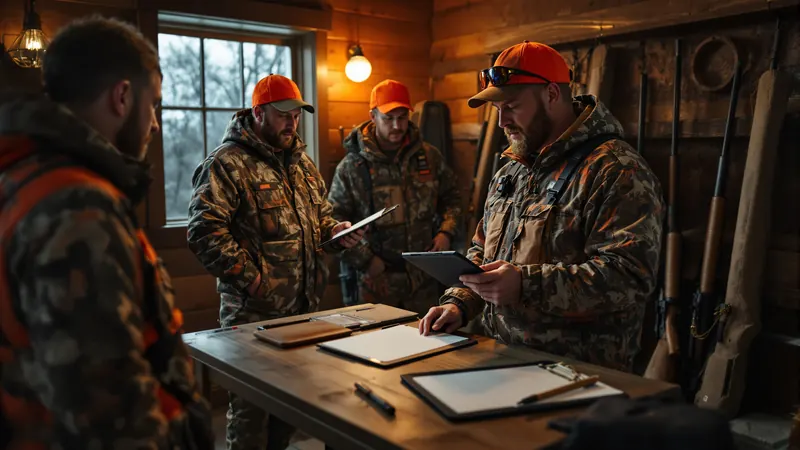
Hunting Liability Waiver: What Yours Should Cover, Clause by Clause
The hunting specific risks, clauses and signing habits that belong in an outfitter's waiver, from tree stands and firearms to minors, guardians, medical consent and how state law can change the picture.
12 min read
The Electronic Waiver for Hunts and Charters: Signing, Proof and Storage
What federal e-signature law says, what a signing process should be able to prove, how guardians co-sign for minors, and how to collect signatures at a camp with no cell signal.
12 min read
Outfitter Insurance: The Coverages a Guide Service Actually Needs
A plain breakdown of the policies a hunting outfit carries, from general liability to horses, trucks, lodges and guides, plus what federal land permits require and what underwriters will ask you.
13 min readSpend the season in the field.
Let HuntReserve run the office.
Tell us about your outfit. We'll call you, walk you through it with your own hunts and get you set up.