Home / Blog / Waivers & compliance
Waivers and compliance for hunting outfits
Hunting Liability Waiver: What Yours Should Cover, Clause by Clause
The hunting specific risks, clauses and signing habits that belong in an outfitter's waiver, from tree stands and firearms to minors, guardians, medical consent and how state law can change the picture.
A hunting liability waiver is the document every hunter in the party signs before they step into a blind, climb a stand or load a rifle on your property. Done well, it tells the hunter in plain words what can go wrong on a hunt and records that they understood and accepted those risks.
This guide is about what goes inside a hunting waiver specifically: the risks that are unique to guided and fee hunting, the clauses that usually appear, and the state law questions that decide how much any of it is worth. It is general information, not legal advice, and no waiver is certain to be enforced. Have an attorney licensed in your state draft or review yours.
Short answer
A hunting liability waiver should name the inherent risks of hunting (firearms and archery equipment, tree stands, animals, terrain, water and weather), include the hunter's assumption of those risks, a release and often an indemnity clause, medical treatment consent, rules the hunter agrees to follow, and guardian signatures for minors, all written to fit your state's law.
Why a hunting waiver is different from a generic release
A generic release from an office supply store talks about "activities" and "premises." A court reading it after an accident on a hunt will ask a simple question: did the hunter know what they were agreeing to? A form that never mentions loaded firearms, ladder stands, swinging muzzles in a dove field or a wounded hog in thick cover makes that question harder to answer in your favor.
Hunting has a specific risk profile. Guests handle weapons around other people. They climb in the dark. They walk unfamiliar ground with heavy packs, ride in boats before daylight in cold water, and sit near dogs, horses and wild animals that can bite, kick or charge. A good hunting liability waiver names those things in words a first time hunter understands.
If you need the general anatomy of a release document, such as headings, signature blocks and drafting tips that apply to any outdoor business, our release of liability form guide covers that. This post stays on the hunting specific content.
The inherent risks section: name them
The heart of any hunting liability waiver is a list of risks that come with hunting no matter how careful the outfitter is. Tailor it to the hunts you actually sell. A list that reads like it was written for someone else's operation is weaker than one that matches your ground.
| Risk area | Examples to describe in plain words |
|---|---|
| Firearms and archery | Accidental discharge, ricochet, misidentified targets, broadhead cuts, hearing damage, malfunctioning equipment |
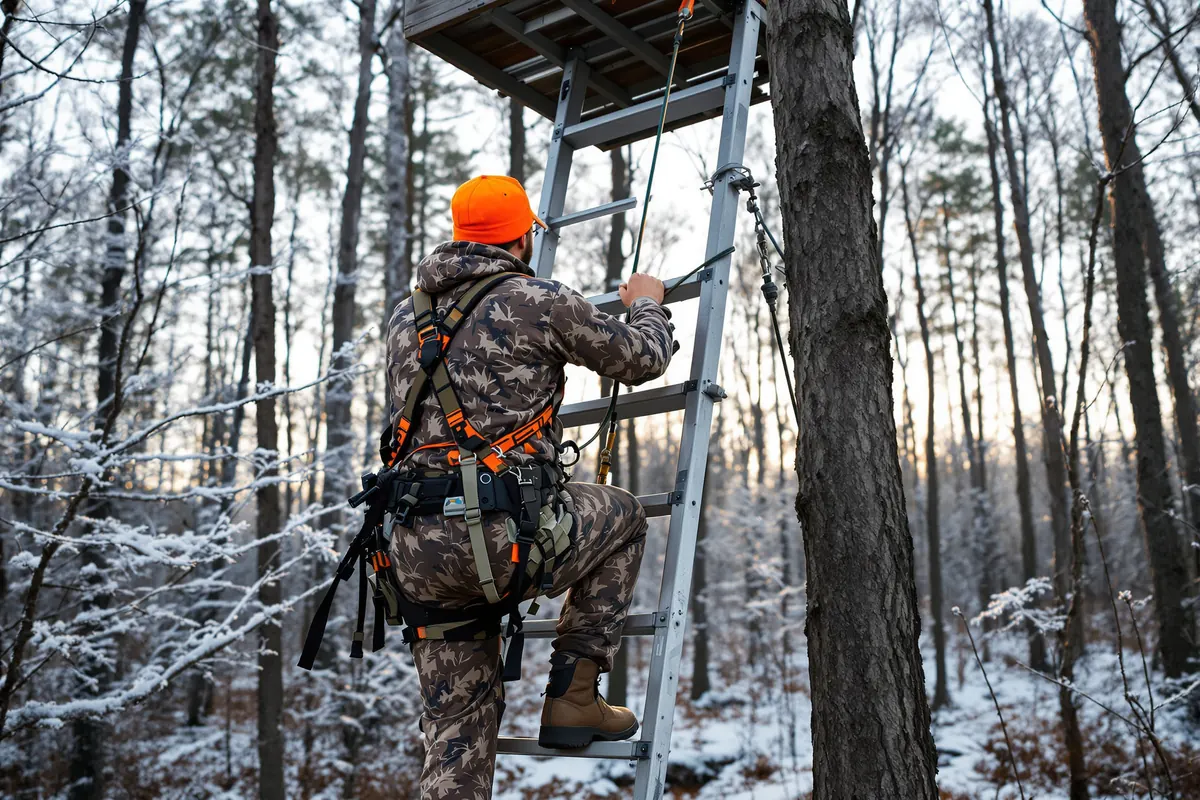
| Tree stands, ladder stands and box blinds | Falls while climbing, entering or leaving a stand, harness misuse, ladder failure, weather damage to stands |
| Animals | Wounded game, hogs, snakes, insects, dogs used in the hunt, horses and mules |
| Terrain and travel | Uneven ground, steep slopes, fences, creek crossings, walking in the dark, vehicle and UTV rides |
| Water | Boat rides to blinds, cold water, flooded timber, wading, ice |
| Weather and remoteness | Heat, cold, lightning, sudden storms, delayed medical care because of distance and no cell signal |
| Other hunters | Actions of others in the party or on neighboring property |
Remoteness deserves its own sentence. A hunter who has a heart attack in a box blind two hours from the nearest hospital faces a different situation than one in a city gym, and the waiver should say so plainly.
Core clauses most hunting waivers include
Attorneys draft these differently, and the wording that works in one state may not work in another. These are the building blocks you will usually see in a hunting liability waiver:
- Acknowledgement and assumption of risk. The hunter states they understand the risks listed and choose to take part anyway.
- Release. The hunter releases the outfitter, landowner, guides and staff from claims for injury or loss, to the extent the law allows. Many forms name the landowner and lease holder explicitly, since they are often separate people from the outfitter.
- Indemnity. The hunter agrees to cover the outfitter's costs if the hunter's own actions cause a claim, such as shooting a fellow guest.
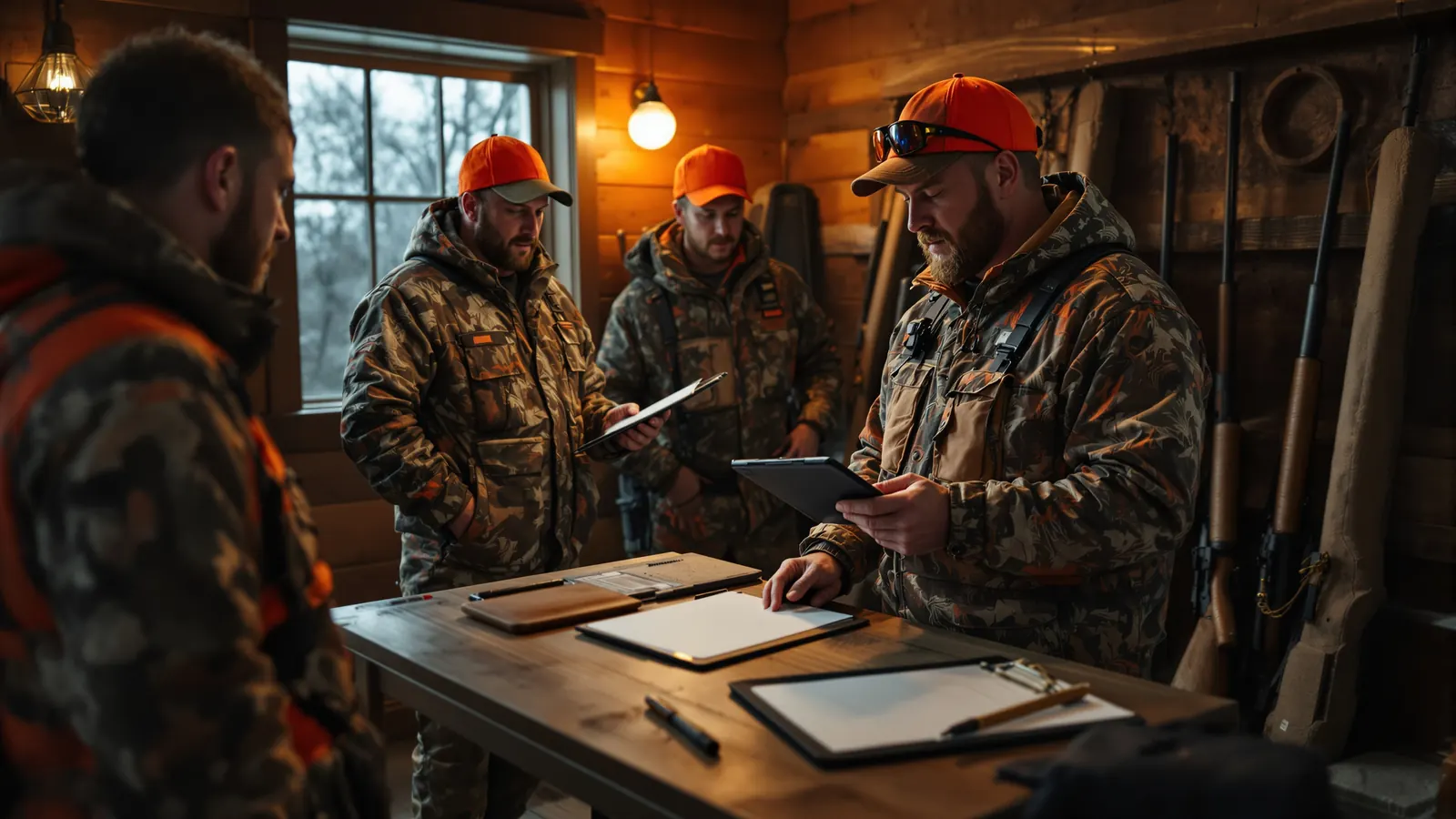
- Rules and instructions. The hunter agrees to follow safety rules, guide instructions and game laws, and that the outfitter can end the hunt for unsafe conduct.
- Fitness and disclosure. The hunter confirms they have disclosed medical conditions and medications relevant to the hunt.
- Medical consent. Permission for staff to arrange first aid and transport, and acknowledgement that the hunter pays for that care.
- Alcohol and drugs. A clear rule that impairment ends the hunt.
- Photo and property. Optional, but common: permission to use photos, and a statement on guest property and firearms left in camp.
- Severability and governing law. If one clause fails, the rest stand, and which state's law applies.
- Signature, date and printed name. For each adult, with a guardian block for minors.
Read the finished list of clauses out loud once. If a guide could not explain a clause to a hunter in one sentence at the truck, it probably needs rewriting before it goes in front of an attorney for final review.
Keep each clause short. Courts in many states look at whether the language is clear and conspicuous, and a hunter skimming a wall of small print at 5 a.m. is not the reader you want to defend later.
Minors, guardians and youth hunts
Youth hunts are one of the best things an outfit can offer and one of the trickiest for paperwork. States differ widely on whether a parent can give up a child's future injury claims by signing in advance. Some allow it in limited circumstances, some do not, and the answer can depend on the activity and whether the business is commercial.
Because of that, a youth section usually does more than ask for a parent's signature. Common elements:
- The parent or guardian signs for themselves and on behalf of the minor, on the same form.
- The guardian confirms the youth meets your state's hunter education or apprentice rules and will be supervised as the law requires.
- The guardian agrees to the medical consent and to stay within the distance or supervision rules you set.
- A statement that the guardian will indemnify the outfitter for claims brought on the child's behalf, where your attorney thinks that helps.
Treat the youth section as a question for your attorney, not a template choice. Our post on running a youth hunt covers the operational side: shorter days, mentor ratios and gear. In HuntReserve, hunters under 18 sign with a parent or guardian co-signing on the same waiver, so the record of both signatures stays together.
Add-ons by hunt type
One hunting liability waiver rarely fits every hunt an outfit sells. Many operators keep a core form and add a short addendum for each hunt type, so the risks a hunter reads match the hunt they booked. Some examples of what those addenda usually describe:
Waterfowl
Boat rides in the dark, cold water and hypothermia, layout blinds, retrieving dogs working around shooters, decoy spreads in moving water, and ice. If hunters wade, say so, and say who supplies waders and life jackets.
Dove and other driven wingshooting
Low birds that pull shooters across the line, pellets falling on neighboring stations, heat, fire ants and snakes along field edges, and the need for eye and ear protection. Spacing rules belong here too.
Backcountry big game
Horseback travel and pack animals, altitude, long distances from medical care, river crossings, bears and other large predators, and spike camps with stoves and lanterns.
Hog hunting
Night hunting where it is legal, thermal and night vision equipment, catch dogs, and the real risk of a wounded boar in thick brush. Disease exposure when field dressing is worth a line as well.
Alligator hunts
Boats at night, lines and snatch hooks under tension, a live animal brought alongside the boat, and the specific dispatch methods your state allows. Our alligator hunting license guide covers the state rules that shape those hunts.
Keep each addendum to a few short paragraphs and have the hunter sign or initial it along with the main hunting liability waiver. If you run several hunt types, a hunter booking a combo package should see every relevant section.
How state law shapes a hunting liability waiver
No document is stronger than the law of the state where the hunt happens. A few patterns are worth understanding before you talk with your attorney.
Gross negligence and public policy
Courts in many states refuse to enforce a release for gross negligence, reckless or intentional conduct, and some look hard at releases offered by businesses that serve the public. A waiver is one layer of protection, not a shield against poor safety practices.
Recreational use statutes usually stop at paid hunts
Many states protect landowners who open land for recreation, but those protections often shrink or disappear when the landowner charges money. Wisconsin is a clear example. Its recreational immunity statute, section 895.52, lists hunting as a recreational activity and limits owner liability, but the protection does not apply to a private owner who collects payment for recreational use of the property when the aggregate value received in the year exceeds $2,000. A fee hunting operation should assume that kind of statute is not its main protection and check its own state's version.
Federal land rules can override your form
On National Forest System land, the permit sets the terms. The Eldorado National Forest outfitting and guiding page states that appropriately worded acknowledgement of risk forms are acceptable, but that it does not allow waiver of liability forms for guiding where the guide has full custody and control of clients. If you hold a federal permit, ask the permit administrator what wording is allowed before you hand hunters a release.
Getting every hunter to sign before the hunt
The best hunting liability waiver in the world does not help if a hunter never signed it. The weak points are predictable: a friend who joins the party at the last minute, the hunter who arrives after dark and goes straight to bed, or the observer who rides along and "isn't really hunting." Everyone on the property for the hunt should sign, including non-shooting guests.
Practical habits that close those gaps:
- Send the waiver with the booking confirmation, not at the lodge door, so hunters read it at home without pressure.
- Make each hunter sign individually. A lead hunter cannot sign for adult friends.
- Re-sign every season, or whenever you change the form.
- Check signatures at the morning briefing before anyone gets in a truck.
In HuntReserve, the lead hunter gets a link to add the party, and each hunter fills in their details, signs your waiver on screen and gets a copy by email. The Check-In Board shows who has signed and who has not, with one-click reminders. At a camp with no signal, Camp Mode captures signatures and guardian co-signatures on a tablet offline and syncs them later. The legal mechanics of e-signing, like consent and audit trails, are covered in our electronic waiver guide.
Storing and updating your hunting liability waiver
A signed waiver is only useful if you can find it. Claims can surface long after the season ends, and the time limits for filing suits vary by state. Ask your attorney how long to keep signed copies, then keep them at least that long.
A sound storage routine:
- File each signed waiver by hunter and hunt date, with the version of the form they signed.
- Keep old versions of the form itself, so you can show what a hunter agreed to in a given year.
- Store a copy away from camp. A lodge fire should not take your records with it.
- Note any incident on the same record as the waiver, with the date and witnesses.
Review the form each off season. Add new hunt types before you sell them: a waiver written for whitetail stands will not describe a night hog hunt with thermal optics or a boat ride to a flooded timber blind. Your insurance agent may also ask for wording changes, and our post on outfitter insurance explains how the waiver and the policy work together.
Pairing the waiver with a safety culture
A hunting liability waiver records that a hunter accepted risks you could not remove. It does not excuse risks you could have removed. Courts and juries notice the difference between an outfit that briefs every hunter, inspects its stands and enforces harness rules, and one that relies on paperwork.
Things that support the document:
- A written safety briefing delivered before every hunt, covering zones of fire, muzzle control, stand and harness rules and what to do in an emergency.
- A stand inspection log for the season.
- Guides trained in first aid, with a plan for reaching help where there is no signal.
- Clear rules for dogs, boats and vehicles, enforced the same way for every guest.
For dove and other wingshooting operations, field placement and shooter spacing matter as much as the form. Our dove and wingshooting software page shows how check-in, waivers and payments run together on a busy opening weekend. The full feature list is on the features page, and when you want your own waiver uploaded and signed by every hunter before they arrive, get started with HuntReserve.
Frequently asked questions
Is a hunting liability waiver legally binding?
It can be, but enforceability depends on state law, the wording, how it was presented and what happened. Many courts will not enforce a release for gross negligence or intentional conduct, and some states limit releases offered by businesses to the public. Treat it as one layer of protection and have an attorney in your state review it.
Does every hunter in the group need to sign?
Yes, as a practice. Each adult should sign their own waiver, because one person generally cannot sign away another adult's rights. Observers, photographers and non-shooting guests on the hunt should sign too. Minors need a parent or guardian to sign with them, subject to your state's rules on parental waivers.
Can a parent sign a waiver for a child on a hunt?
States treat this differently. Some enforce a parent's advance release of a child's claims in certain settings, while others will not. A guardian co-signature is still standard practice because it documents consent, medical permission and supervision. Ask an attorney licensed in your state how a youth section should be worded.
Should the landowner be named in the waiver?
Usually it helps to name every party a hunter might bring a claim against, which often includes the landowner, the lease holder, the outfitter, guides and staff. Many landowners ask for this in the lease. Your attorney can confirm the right names and how to describe each relationship.
How often should hunters re-sign the waiver?
A common practice is once per season, plus any time the form changes or the hunter books a different type of hunt with new risks. Keeping each signed version tied to the hunt date makes it easier to show exactly what a hunter agreed to if a question comes up later.
Sources
- Wisconsin Statutes s. 895.52, Recreational activities; limitation of property owners' liability
- USDA Forest Service, Eldorado National Forest: Special Use Permits for Outfitting and Guiding
Rules, fees and policies change. This guide was checked against the official sources above in October 2026. It is general information, not legal, tax or insurance advice: confirm the current details with the agency or a licensed professional before you rely on them.
Keep reading
More from the HuntReserve blog
Release of Liability Form for Outdoor Businesses: Parts, Wording and Weak Spots
What goes into a liability release for a charter boat, lodge, clays course or guide service, how to write it so guests understand it, and the reasons courts set these forms aside.
12 min read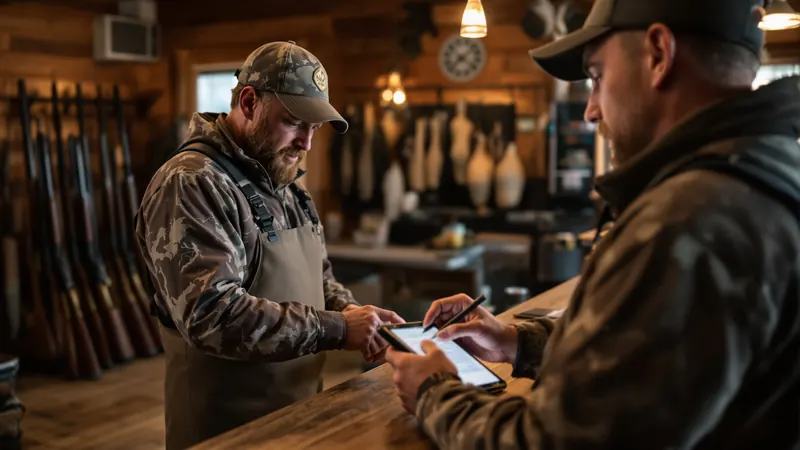
The Electronic Waiver for Hunts and Charters: Signing, Proof and Storage
What federal e-signature law says, what a signing process should be able to prove, how guardians co-sign for minors, and how to collect signatures at a camp with no cell signal.
12 min read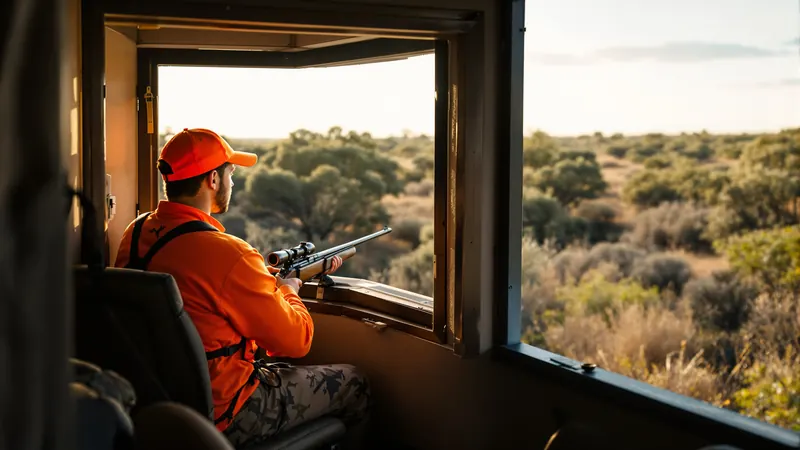
How to Run a Youth Hunt That Brings Families Back
Youth-only seasons, apprentice licenses, hunter education, supervision ratios, guardian waivers and a day plan built around a young hunter's attention span and comfort.
12 min readSpend the season in the field.
Let HuntReserve run the office.
Tell us about your outfit. We'll call you, walk you through it with your own hunts and get you set up.