Home / Blog / Running your outfit
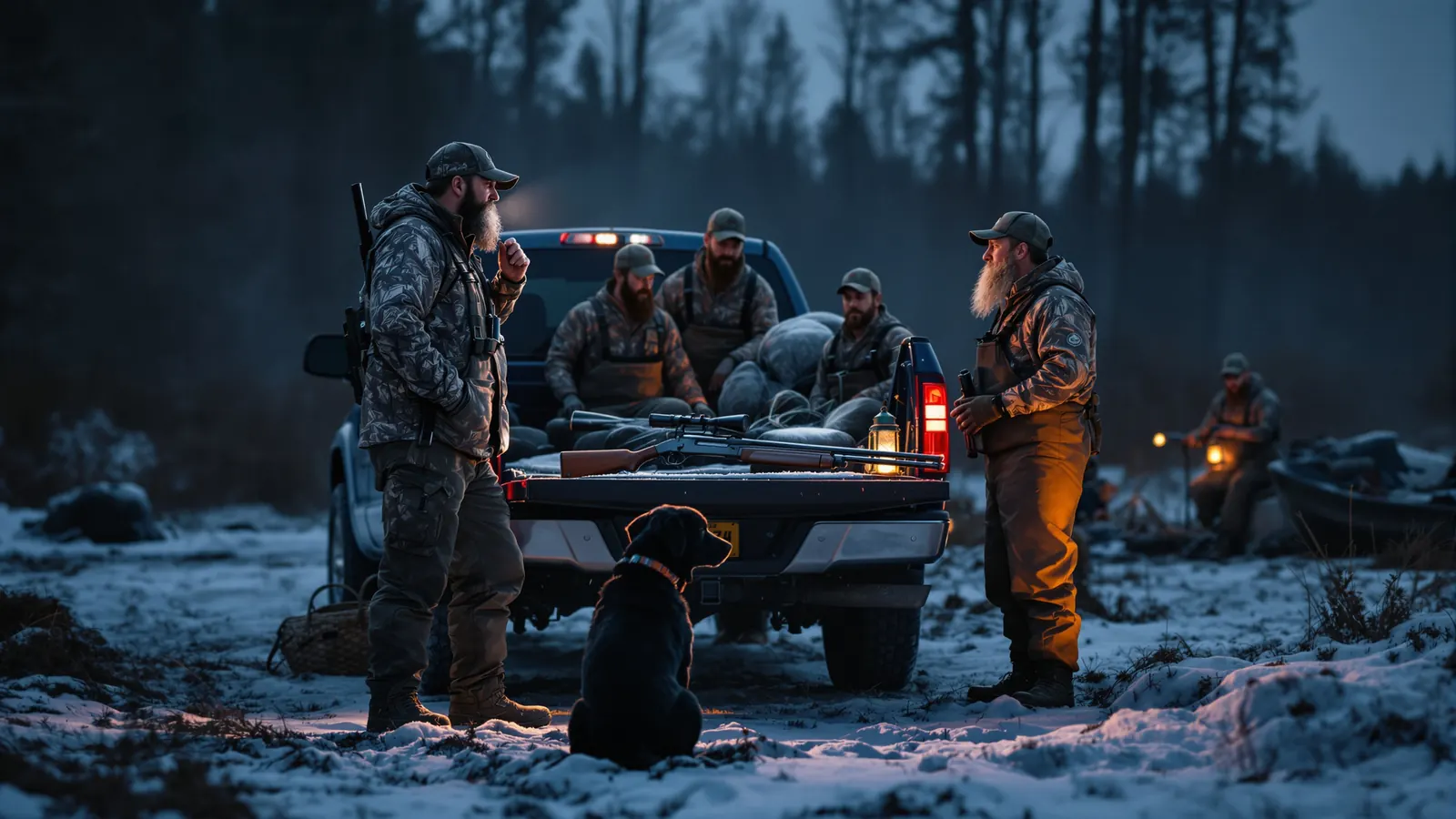
Ten minutes at the truck tailgate
How to Run a Pre-Hunt Safety Briefing Your Hunters Will Remember
A field-tested structure for the talk before every guided hunt or trip: guns, shooting lanes, stands, boats, dogs, weather and what to do if something goes wrong.
A safety briefing is the ten minutes at the tailgate that decides how the rest of the morning goes. Hunters are cold, excited and half listening, the guide is thinking about wind and decoys, and the temptation is to skip it for clients who have hunted with you before. That is exactly when people get hurt.
This guide lays out what a good pre-hunt talk covers, how to adapt it to a duck blind, a dove field, a deer stand or a boat, a script outline your guides can follow word for word, and how to keep a record that it happened.
Short answer
A pre-hunt safety briefing should cover firearm handling, each hunter's zone of fire, the specific setup (blind, field, stand or boat), harness or life jacket rules, dogs, weather limits and emergency signals. Keep it short, deliver it every time, ask hunters to repeat key rules back, and record who attended.
Why the safety briefing happens every hunt, even with regulars
Repeat clients are your best customers and your biggest blind spot. They know the property, they know the guide, and they assume nothing has changed. But the blind was rebuilt, the dog is new, the water is higher, or the party includes a son-in-law who has never shot over decoys. The safety briefing exists for the conditions of this hunt, not for the hunters in general.
A consistent safety briefing also protects your guides. When every guide delivers the same core rules in the same order, nobody has to decide on a dark morning which points matter. New guides learn the standard from day one, and veterans stop improvising.
What a briefing is not
- It is not a hunter education course. You are reinforcing rules, not teaching from zero.
- It is not a lecture. If it runs much past ten or fifteen minutes, hunters stop listening.
- It is not a substitute for your waiver, your insurance or your emergency plan. It sits alongside them.
Before you start talking: set the stage
The best safety briefing is planned the night before. Look at who is coming, what they told you during registration, and what the forecast says, then adjust the talk to fit.
- Headcount and names. Know who is in the party. A safety briefing delivered to five people when six are hunting is a briefing one person missed.
- Experience levels. First-timers, youth hunters and hunters new to a method (first time in a layout blind, first time in a ladder stand) need extra attention, and the guide should know who they are before the talk.
- Medical notes. If a hunter mentioned a heart condition, an allergy to bee stings or a bad knee, the guide needs that information quietly, not announced to the group.
- Conditions. Wind direction, temperature, water level, ice, fog and lightning risk all change the talk.
- Location. Deliver it in daylight or under good light, away from the boat ramp traffic, with guns cased or unloaded.
If your bookings run through HuntReserve, the hunt record already holds each hunter's registration details, and the field conditions panel shows the hourly forecast, wind, pressure trend and sunrise for the hunt date. A guide who reads that before bed shows up with the right safety briefing in mind.
The firearm block: rules that never change
Start with the rules every hunter has heard, because hearing them again in your voice resets the group. Texas Parks and Wildlife's shooting safety rules are a clean set to work from. Paraphrased for a tailgate:
- Always point the muzzle in a safe direction.
- Treat every firearm as if it were loaded.
- Be sure of your target and what is in front of and beyond it.
- Keep firearms unloaded when not in use.
- Never climb a fence, tree or ladder with a loaded firearm.
- Know your safe zone of fire and stay inside it.
- Wear fluorescent orange where it is required or useful for being seen.
- No alcohol or drugs before or during the hunt.
Then add the rules specific to your operation: where guns are loaded and unloaded, whether actions stay open in the truck or the boat, who carries what, and how shells are handled. Say them as house rules, not suggestions. Hunters accept firm rules better when they hear the reason, so add a sentence of why to each one.
On fluorescent orange, requirements differ by state, by season and by game, and some states allow fluorescent pink. Tell hunters what applies on your ground, and check the current rules with your state wildlife agency each season.
Zones of fire for blinds, fields, lines and stands
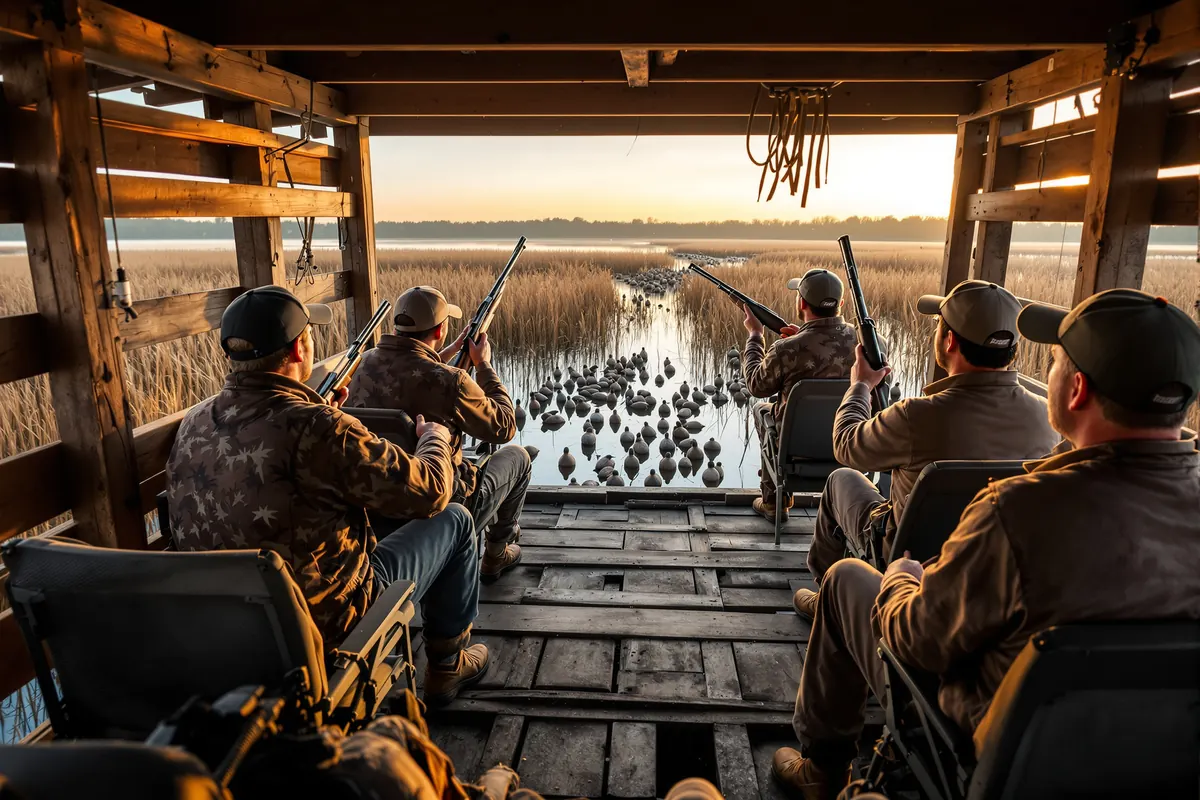
Swinging past a safe stopping point is the classic group-hunt mistake, and it is the part of the safety briefing that needs the most precision. Texas Parks and Wildlife's firearm safety lesson recommends assigning each hunter a safe zone of fire before the hunt starts and passing on any bird that flushes between or behind the group. The way you assign zones depends on the setup:
| Setup | How to assign zones | Specific warnings |
|---|---|---|
| Duck or goose blind | Number positions left to right; each hunter shoots only birds in front of their position | Nobody stands to shoot unless the guide calls it; no shooting behind the blind; dog and guide positions stated out loud |
| Layout blinds | Each hunter takes the arc in front of their blind; sit up and shoot only on the call | No swinging across the next layout; stay seated while loading |
| Dove field | Space stations so hunters cannot reach each other with shot; point out every neighbor | No low shots; watch for people walking to pick up birds |
| Upland walking line | Keep the line straight; each hunter covers the area in front; agree on what happens when the line bends | Unload to cross fences and ditches; no shooting at birds flying back over the line |
| Deer stand or box blind | Show the shooting lanes and the directions where other stands, roads or houses sit | Never shoot toward a known stand; know the backstop |
Walk new hunters through their arc physically. Point at the edges: "From that dead cypress to the end of the decoys, nothing outside that." A zone is easier to remember when it is tied to something they can see.
Tree stands, ladders and climbing
Stand hunting adds a second way to get hurt that has nothing to do with the gun, and the safety briefing for a deer camp should give it equal time. The Alabama Department of Conservation's hunting safety guidance is specific, and it is worth repeating close to word for word:
- Attach the full-body harness the moment your feet leave the ground and stay attached until you are back down. Most falls happen while climbing up or down or stepping into and out of the stand.
- A harness that is worn but not attached to the tree will not save you.
- Inspect the harness before each use, and never use a damaged or expired one.
- Keep three points of contact on the steps or ladder before moving.
- Use a haul line to raise and lower an unloaded firearm or bow.
- Carry a signaling device, such as a phone or whistle, where you can reach it while hanging in the harness.
For an outfitter, this is also the moment to say who checks the stands, when they were last inspected, and what a hunter should do if a strap, step or platform looks wrong. Give them permission to refuse a stand. A hunter who climbs down and texts the guide has done the right thing, and they should hear that from you before the hunt.
On the water: boats and life jackets
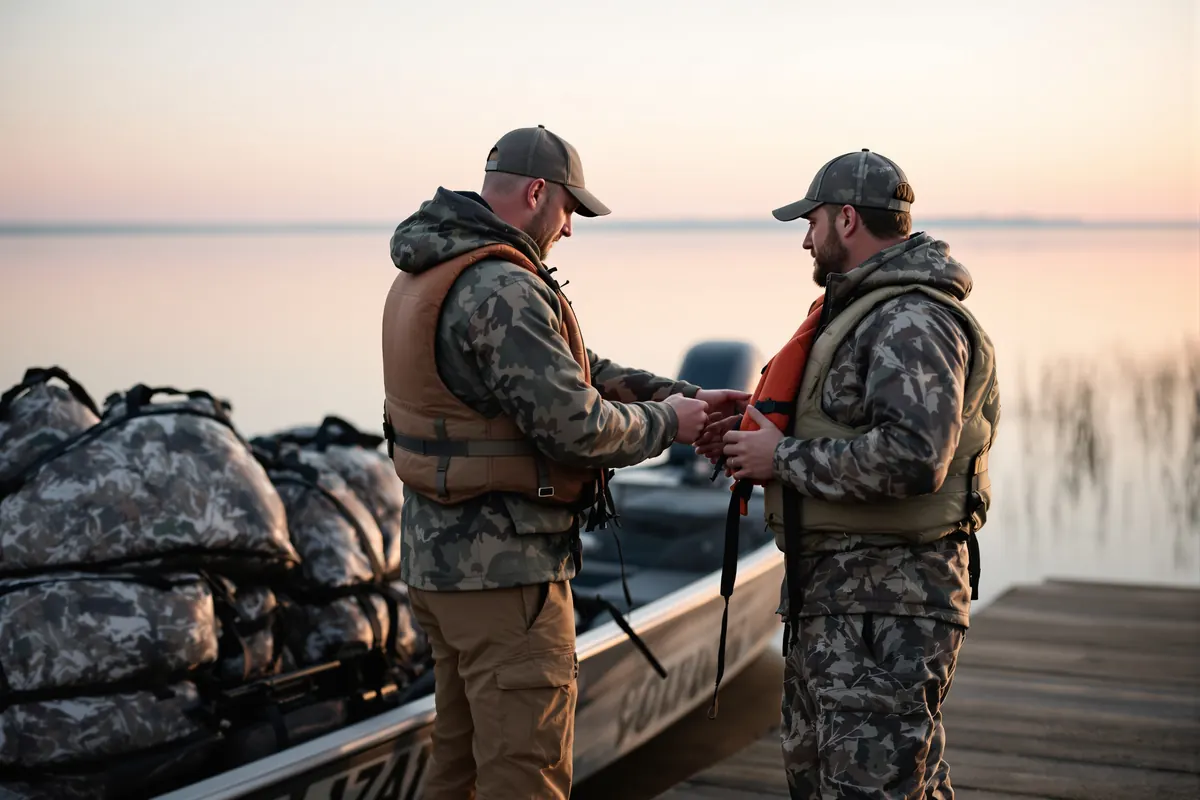
Waterfowl hunts and fishing charters both put clients in boats, often before sunrise in cold water. The talk changes once a boat is involved. The U.S. Coast Guard's life jacket guidance states that a boat must carry a Coast Guard approved wearable life jacket for each person on board, that wearables must be readily accessible, and that under federal law children under 13 must wear one while underway, with exceptions below deck or in an enclosed cabin. States can add their own rules, so check with your state boating agency.
What to cover before the boat leaves
- Where the life jackets are and how to put one on, demonstrated, not described
- Your operation's wear rule (many guides require jackets on while running in the dark, whatever the minimum is)
- Guns cased and unloaded while running, and where they ride
- Where each person sits and why, including weight balance in a small boat
- What to do if someone goes overboard: who throws, who steers, who calls
- Cold water: falling in waders, keeping calm, and how the guide will get them out
Waterfowl operations that run several boats each morning should make sure every boat captain gives the same talk; our waterfowl outfitter software page shows how guides see their own hunts and hunter details. Charter captains carry their own legal duties on top of this; our fishing charter software page covers how trips, waivers and reminders run on the charter side.
Dogs, weather and emergency signals
The last block of the safety briefing covers everything that can change mid-hunt.
Dogs
Tell hunters where the dog will be, whether it retrieves on command or on its own, and the one rule that matters most: no shot at a low bird when the dog is moving. Ask hunters not to call, feed or pet a working dog unless the handler says so.
Weather calls
Explain in advance who decides to pull out and what triggers it: lightning, rising wind on open water, fog that hides the boat route, heat in an early-season dove field. Saying it up front means nobody argues when the guide calls it.
Signals
- A single agreed word for "stop shooting now" that everyone repeats out loud
- How hunters signal an injury or a problem when they are spread out (radio, whistle, text)
- A meeting point if the group gets separated, and who counts heads there
- Where the first aid kit is and who on staff is trained to use it
The full plan for injuries, evacuation and a property with no cell signal belongs in a written document; our emergency action plan guide covers that in depth. The safety briefing just tells hunters the parts they need to act on.
A sample safety briefing script outline
Here is an outline guides can print, laminate and keep in the truck. Adjust the specific items for your property and species, and keep the order so the safety briefing becomes routine.
- Welcome and headcount. Names, who is new, who has hunted this setup before.
- Today's plan. Where you are going, how you will get there, when you expect to finish.
- Conditions. Temperature, wind, water, anything that changes the plan.
- Firearm rules. The core rules plus house rules for loading, unloading and transport.
- Positions and zones of fire. Assign them now, out loud, and repeat them at the blind or field.
- Setup specifics. Stand and harness rules, or boat and life jacket rules, or both.
- Dogs. Where the dog works and the low-shot rule.
- Weather and stop rules. Who calls it and what triggers it.
- Emergencies. The stop word, signals, meeting point, first aid location.
- Questions and repeat-back. Ask two hunters to say their zone of fire and the stop word back to you.
Two more habits make the outline work. First, the same guide who will sit in the blind should give the talk, so hunters hear the voice that will call the shots. Second, when a party splits between two blinds or two boats, each group hears the positions and stop word again from its own guide once they are set up. A short refresher at the spot is worth more than a long speech at the truck.
The repeat-back is the step most guides skip and the one that tells you whether the safety briefing landed. If a hunter cannot say their zone, they did not hear it.
Documenting the safety briefing
A safety briefing that happened but was never recorded is hard to prove later. Documentation does not need to be elaborate; it needs to be consistent.
- Put the rules in writing before the hunt. Include your house safety rules in the information hunters receive with their confirmation, and consider referencing them in your waiver. Our post on the hunting liability waiver explains what that document typically covers.
- Record attendance. A dated roster with the guide's name and each hunter's initials works. So does a note in your hunt record listing who attended.
- Note changes. If a hunter arrived late and was briefed separately, write that down.
- Keep it with the hunt. Store the record where you keep waivers and payments for that date, not in a glove box.
HuntReserve keeps each hunter's signed waiver, license photo and registration on the hunt record, and the Check-In Board shows who has signed and uploaded before anyone arrives. Camp Mode on a tablet captures signatures offline at a camp with no signal. You can see the full list on our features page. For legal questions about what records you should keep, talk to your attorney and your insurance agent; this guide is general information.
If you want your safety briefing material, waivers and reminders running from one place before next season, get started with a conversation about how your hunts run.
Frequently asked questions
How long should a pre-hunt safety briefing take?
Long enough to cover firearm rules, zones of fire, the setup for the day, dogs, weather limits and emergency signals, and short enough that people still listen to all of it. Many guides aim for roughly ten to fifteen minutes, plus a quick repeat of positions at the blind or field. A first-timer or youth hunter may need extra time one on one.
What are the basic firearm safety rules to include?
Point the muzzle in a safe direction, treat every firearm as loaded, be sure of the target and what is beyond it, keep firearms unloaded when not in use, never climb with a loaded firearm, stay inside your zone of fire, wear orange where required, and avoid alcohol or drugs. Texas Parks and Wildlife publishes a clear version of these rules.
Do hunters have to wear life jackets in a duck boat?
Federal rules require a Coast Guard approved wearable life jacket on board and readily accessible for each person, and children under 13 must wear one while underway except below deck or in an enclosed cabin. States may add stricter rules. Many guides require adults to wear one while running in the dark regardless.
Should the safety briefing be repeated for returning clients?
Yes. Conditions, blinds, stands, dogs and party members change from hunt to hunt, and returning hunters are the most likely to assume nothing has. A short version for regulars still covers zones of fire, the stop word and anything new on the property. Consistency also protects your guides and your records.
How do outfitters document that a safety briefing happened?
Keep a dated roster with the guide's name and each hunter's initials, or a note in the hunt record listing who attended. Send written safety rules with the booking confirmation and keep signed waivers with the hunt. Ask your attorney or insurance agent what records they recommend for your state and operation.
Sources
- Texas Parks and Wildlife, Shooting Safety Rules
- Texas Parks and Wildlife, Hunter Education: Firearm Safety
- Alabama Department of Conservation, Safe Hunting
- U.S. Coast Guard Boating Safety, Life Jacket Wear
Rules, fees and policies change. This guide was checked against the official sources above in October 2026. It is general information, not legal, tax or insurance advice: confirm the current details with the agency or a licensed professional before you rely on them.
Keep reading
More from the HuntReserve blog
Emergency Action Plan for Hunting Camps, Lodges and Fishing Charters
Roles, communication with no cell signal, evacuation routes, trauma center planning, scenario cards for tree stand falls, lightning and man overboard, plus drills that fit a real hunting schedule.
12 min read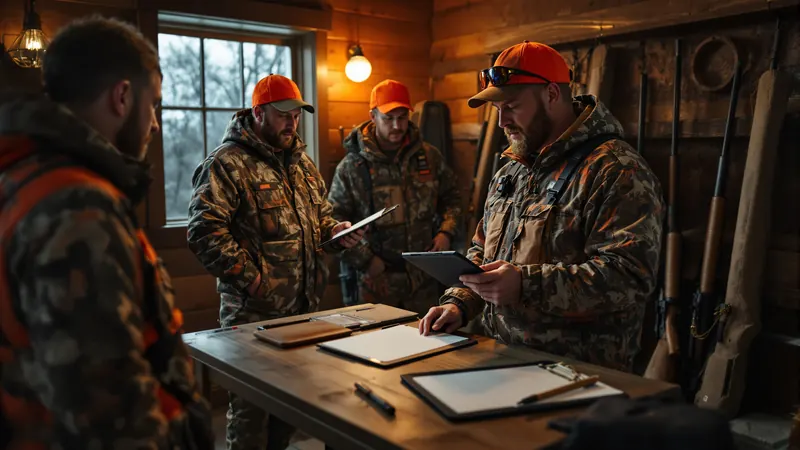
Hunting Liability Waiver: What Yours Should Cover, Clause by Clause
The hunting specific risks, clauses and signing habits that belong in an outfitter's waiver, from tree stands and firearms to minors, guardians, medical consent and how state law can change the picture.
12 min read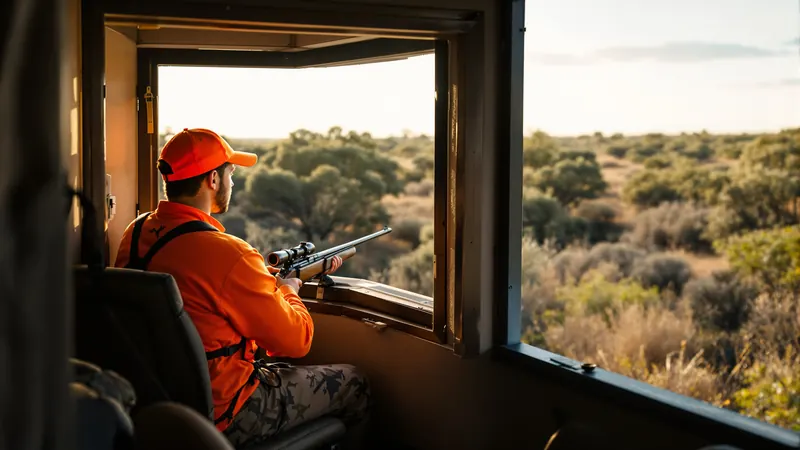
How to Run a Youth Hunt That Brings Families Back
Youth-only seasons, apprentice licenses, hunter education, supervision ratios, guardian waivers and a day plan built around a young hunter's attention span and comfort.
12 min readSpend the season in the field.
Let HuntReserve run the office.
Tell us about your outfit. We'll call you, walk you through it with your own hunts and get you set up.