Home / Blog / Waivers & compliance
For residents and nonresident hunters
Montana Hunting License Guide: What to Buy, When to Apply and What to Carry
Montana stacks its hunting licenses in layers: a conservation license, a base fee, then species licenses or a nonresident combination. Here is the order, the draws and what to check before hiring an outfitter.
A Montana hunting license is not a single card. It is a stack: a conservation license that every hunter needs, an annual base hunting license fee, and then the license or tag for the species you are after, plus a bow and arrow license if you hunt archery seasons. Nonresidents chasing deer or elk usually start with a combination license that is awarded by drawing, which means planning starts months before you ever see the mountains.
This guide walks through that stack in order, using what Montana Fish, Wildlife and Parks (FWP) lists on its own pages for the 2026 license year. Fees and dates change, so confirm everything on FWP's hunting requirements page before you buy or apply.
Short answer
To hunt in Montana you need a Conservation License, the annual base hunting license fee, and a license or tag for each species. Archery hunters also need a bow and arrow license and bowhunter education. Anyone born after January 1, 1985, needs hunter education. Nonresident deer and elk combination licenses are awarded through a spring drawing.
How a Montana hunting license is built
FWP lists the requirements to hunt in Montana as a numbered set. In plain terms, here is what goes into your pocket:
- Conservation License. FWP calls it a prerequisite for all resident and nonresident licenses. It is sold over the counter.
- Base hunting license fee. An annual fee charged when you buy or apply for your first hunting license of the year, including upland and migratory bird licenses.
- Carcass tag or license for the species. Deer, elk, antelope, black bear, upland birds, turkey and so on, each with its own license.
- Bow and arrow license plus bowhunter education, if you hunt an archery-only season or an archery-only area.
- Hunter education, required for anyone born after January 1, 1985, or the apprentice hunter option for those 10 and older.
For the 2026 license year, FWP's base requirements page lists these prices:
| Item | Resident | Nonresident |
|---|---|---|
| Conservation License | $8 (youth 12 to 17 and seniors 62+: $4) | $10 |
| Base hunting license fee | $10 | $50 |
| Bow and arrow license | $10 | $10 |
Those three items are the foundation of every Montana hunting license purchase. The species license on top is where the real cost and planning sit.
Hunter education, bowhunter education and apprentice hunters
Montana's education rules are straightforward but strict, and they apply to residents and nonresidents alike.
Hunter education
FWP says anyone born after January 1, 1985, must show proof of completing a hunter education course from Montana, another state or a Canadian province to buy or apply for a Montana hunting license. Students must be at least 10 to register for Montana's course. Ten and eleven year olds can take it and hunt as apprentices, but are not fully certified until the year they turn 12.
Apprentice hunters
The Apprentice Hunter program lets anyone 10 or older hunt for up to two years without completing hunter education. Restrictions apply, and an apprentice must be accompanied by a certified mentor. It is a good fit for an adult who wants to try hunting with a friend or family member before committing to a course.
Bowhunter education
Bowhunter education is required for archery hunters of any age. To buy a Montana bow and arrow license you must either complete a bowhunter education course from Montana or any other state, or show a prior year's bowhunting license from any state or province. Classroom students must be at least 11.
Lost your card? FWP says duplicate Montana hunter and bowhunter education certificates can be requested online through MyFWP. Do that well before the season, not the night before you drive out.
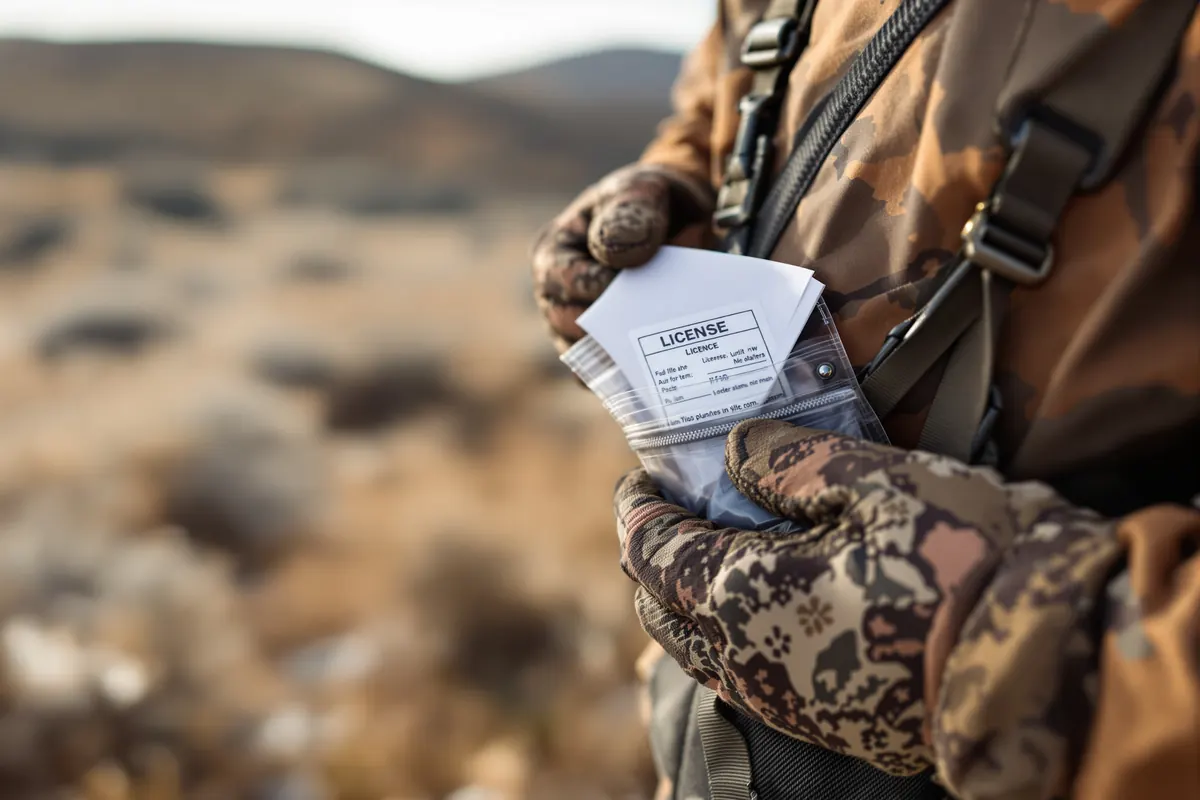
Nonresident Montana hunting license options and combos
Most nonresidents who come for deer or elk apply for one of Montana's general combination licenses. FWP's nonresident fees page says the state offers three general hunting packages to nonresidents through a random computer drawing, and that every combination license includes a season fishing license and an upland bird license. The Conservation License, the $50 base hunting fee and the Aquatic Invasive Species Prevention Pass must be bought separately.
| 2026 combination license | Listed price |
|---|---|
| General Deer Combination | $760 |
| General Elk Combination | $1112 |
| General Big Game (Deer and Elk) Combination | $1312 |
An applicant may apply for only one combination license. FWP says nonresidents can improve their odds of drawing by buying and accumulating preference points, listed at $100.
Adding it up: a worked example
Here is how the pieces stack for a nonresident applying for the General Big Game Combination in 2026, using only FWP's listed prices:
- General Big Game Combination: $1312
- Conservation License: $10
- Base hunting license fee: $50
- Nonrefundable application fee: $5
That comes to $1377 before the Aquatic Invasive Species Prevention Pass, any preference point you choose to buy, a bow and arrow license if you hunt archery, and any extra species licenses. If you do not draw, ask FWP how its refund rules apply to your application before assuming the full amount comes back.
The same math helps when you compare a guided hunt quote. Ask whether a quote includes the Montana hunting license itself; if it does not, budget for it separately and confirm which licenses the hunt assumes you hold.
Other nonresident paths
FWP also lists individualized options: a Landowner Sponsored Deer License, Come Home to Hunt combinations for people who grew up in Montana, Nonresident Native combinations, and college student licenses. Each has its own eligibility rules on FWP's pages.
Over-the-counter licenses
Not everything is drawn. On the same page, FWP lists several nonresident licenses as over the counter, including black bear, turkey, wolf, mountain lion (some types), migratory bird and upland game bird. First-time black bear license buyers must pass the Black Bear Identification Test before buying.
Application windows and draws for the 2026 license year
The drawing calendar is what catches out-of-state hunters. For the 2026 license year, FWP listed combination applications opening online on March 1, 2026, with a deadline of April 1, 2026, at 11:45 p.m. MST. That means a nonresident hoping to hunt elk in October has to decide by early spring.
FWP's fee table also notes a nonrefundable $5 application fee on applications, except moose, sheep, goat and bison, which carry a $50 application fee for nonresidents.
Special permits and B licenses
Beyond the general combos, Montana runs drawings for limited permits in specific hunting districts and for extra antlerless licenses (Deer B and Elk B). Moose, bighorn sheep, mountain goat and bison have their own drawings and windows. Each species has its own application dates, which FWP posts each year on its applications and drawings page under the hunting licenses section.
A simple planning calendar
- Winter: Pick species and districts, read the regulations, confirm hunter ed is on file, and talk to outfitters about availability.
- March: Applications open. Buy your Conservation License and submit the combo or permit application.
- Spring: Watch for draw results, then lock in travel and the hunt dates with your outfitter.
- Summer: Buy over-the-counter licenses you need, finish bowhunter ed if hunting archery, and sight in.
Dates for the 2027 license year had not been posted when this was written. Check FWP in late winter.
Resident licenses and the Sportsman package
Residents follow the same structure: Conservation License, base hunting fee, then species licenses. FWP's resident fees page highlights the Sportsman license, which bundles a general elk license, general deer license, season fishing license and upland game bird license. As with nonresident combos, the Conservation License, base fee and Aquatic Invasive Species Prevention Pass are purchased separately.
Residents also apply in the drawings for limited permits, B licenses, antelope, moose, sheep, goat and bison. Residency itself has its own requirements, which FWP lists on its residency information page. If you recently moved to Montana, confirm you qualify before buying a resident Montana hunting license, and ask FWP if anything about your situation is unclear.
Youth, seniors and disabled hunters
FWP lists reduced resident prices for youth and seniors on several licenses, and a Resident with a Disability Conservation License for qualifying residents. Youth hunters still need hunter education or apprentice status.
Buying online, carrying your license and state land access
FWP sells most licenses through its Online Licensing Service, at FWP offices and through license providers around the state. When you buy a Conservation License, FWP asks for the last four digits of your Social Security number and a valid driver's license or photo ID.
Before you leave home:
- Print or save your licenses, and download the MyFWP app if you plan to use it in the field.
- Carry your hunter education or bowhunter education proof if you might need it to buy a license on the road.
- Read the current hunting regulations for your district, including season dates, weapon restrictions and any closures.
- Know where you will be hunting and who owns it. Montana has a mix of public, state and private land, and permission rules differ.
The Conservation License does more than you might think
FWP says everyone 12 and older needs a Conservation License to access most state lands, including fishing access sites and wildlife management areas. It is required for all hunting licenses anyway, but family members who come along without hunting may need one too if you plan to use those lands.
Montana hunting license mistakes that cost hunters a season
Most problems with a Montana hunting license are not about the rules being hard. They come from timing and assumptions. These are the ones worth guarding against.
Treating the draw like a purchase
A nonresident combination is an application, not a sale. If you plan a fall elk trip with friends and only start shopping for licenses in July, the general combos for that year are already decided. Put the application window on your calendar the winter before.
Forgetting the layers
Hunters sometimes assume the combo covers everything. FWP is explicit that the Conservation License, base hunting fee and Aquatic Invasive Species Prevention Pass are separate purchases. Check that each one is in your account before you leave home.
Archery without the bow license
A rifle hunter who decides to try the archery season needs the bow and arrow license and bowhunter education or a prior year's bowhunting license. Sort that out months ahead, since classroom courses fill up and you cannot buy the license without the proof.
Hunter ed records that cannot be found
If your certificate is from decades ago in another state, track down the record now. FWP accepts courses from any state or Canadian province, but you still have to show proof when you buy or apply.
Migratory birds
Waterfowl and other migratory birds bring federal requirements on top of the state Montana hunting license. Our guides to HIP certification and the federal duck stamp explain those pieces, and Montana's own migratory bird rules are in FWP's regulations.
Assuming every guide is licensed
A friend of a friend who will "show you around for gas money" may be operating as an unlicensed outfitter. Use the Board of Outfitters lookup before you pay anyone to guide you.
Hunting with a licensed Montana outfitter
Many nonresidents book a guided hunt, especially for a first elk trip. Montana licenses outfitters and guides through the Board of Outfitters within the Department of Labor and Industry, not through FWP. The board offers a licensee lookup so you can confirm an outfitter or guide is currently licensed before you send a deposit.
What to ask an outfitter before booking:
- Is your license current, and which areas and species does it cover?
- Do you hold the permits needed for the ground we will hunt, including federal land or FWP land permits?
- Which Montana hunting license or draw does this hunt require, and will you help with the application before the deadline?
- What happens to the deposit if the draw does not come through?
- What paperwork is needed before arrival: waiver, hunter ed card, license copies?
Good outfitters make this easy. Many send a registration link after booking so each hunter in the party signs the waiver and uploads a photo of their license from a phone. If you hunt with a group, our guides on tipping a hunting guide and how guide licensing works across states are worth a read.
For outfitters: keeping client licenses straight
If you run hunts in Montana, a missing Conservation License or an unsigned waiver is the kind of problem you want to find in June, not at the trailhead. FWP's commercial use guidance notes that clients 12 and older using state lands as part of an outfitter's business must have bought a Conservation License, and suggests encouraging clients to buy it before the trip.
HuntReserve gives every hunter in a party their own registration: they fill in details, sign your waiver and upload their license photo from a phone. The Check-In Board shows who has registered, signed, uploaded a license and paid, and one-click reminders chase whoever is missing. The tag register tracks your tags and your clients' tags through the season.
Elk and deer outfitters can see how it fits on our big game outfitter software page, whitetail operations in the eastern part of the state can look at whitetail outfitter software, or browse the full feature list. When you are ready to set it up for next season, get started.
Official links
Official Montana hunting links
Every link below goes straight to the Montana Fish, Wildlife and Parks or its official license system, checked October 2026. Bookmark the ones you need before the season.
Buy or renew
- Buy a Montana hunting license online (FWP Online Licensing)FWP's online store for licenses, permits and drawing applications.
- MyFWP mobile app for digital licenses and E-Tags
- Find a license ambassador (license provider)
Licenses and fees
- Montana hunting licenses and permits overview
- Conservation and base hunting license requirementsPrerequisites every hunter buys, plus hunter and bowhunter education rules.
- Montana nonresident license fees
- 2026 Montana license fee sheet (PDF)
Hunter education
- Montana hunter education coursesOnline-only course for 18+, online plus field day for ages 12 to 17.
- Apprentice hunter program
- Bowhunter education
Regulations and seasons
Tags, permits and harvest reporting
Youth, lifetime and special licenses
Hunting somewhere else? Compare prices and hunter education rules in every state in our hunting license by state guide.
Frequently asked questions
How much is a Montana hunting license for nonresidents?
It depends on the species. For the 2026 license year, FWP listed the General Big Game (Deer and Elk) Combination at $1312 and the General Elk Combination at $1112. The General Deer Combination was $760. Add the $10 Conservation License and the $50 base hunting fee, which are bought separately. Check FWP's nonresident fees page for current prices.
When is the deadline for Montana nonresident combo licenses?
For the 2026 license year, FWP opened combination applications online on March 1, 2026, and set the deadline at April 1, 2026, at 11:45 p.m. MST. Special permits, B licenses, moose, sheep, goat and bison have their own windows. Watch FWP's applications page for the 2027 dates.
Is hunter education required to hunt in Montana?
Yes, if you were born after January 1, 1985. FWP accepts a hunter education course from Montana, any other state or a Canadian province. Anyone 10 or older can instead hunt as an apprentice for up to two years with a certified mentor. Archery hunters of any age also need bowhunter education.
Can nonresidents buy a Montana elk license over the counter?
General nonresident elk hunting usually runs through the General Elk or Big Game Combination, which FWP awards by drawing. FWP lists some Elk B licenses as available through drawing and over the counter. Check FWP's current fee table and regulations for what is available in the district you want to hunt.
How can you check if a Montana outfitter is licensed?
Montana's Board of Outfitters, part of the Department of Labor and Industry, licenses outfitters and guides. Use the board's licensee lookup to confirm the outfitter's license is current before you pay a deposit, and ask which areas, species and land permits their business covers.
Sources
- Montana FWP: Hunting Requirements (base requirements)
- Montana FWP: Nonresident License Fees
- Montana FWP: Resident License Fees
- Montana FWP: Outfitter & Commercial Use Permits
- Montana Board of Outfitters (Department of Labor and Industry)
Rules, fees and policies change. This guide was checked against the official sources above in October 2026. It is general information, not legal, tax or insurance advice: confirm the current details with the agency or a licensed professional before you rely on them.
Keep reading
More from the HuntReserve blog
Hunting Guide License Requirements: Six States Checked at the Source
Guide licensing is set by each state, and the rules differ more than most people expect. Here is what six agencies require, plus the federal permit many guides forget.
12 min read
How Much to Tip a Hunting Guide (and the Rest of the Camp)
There is no official tipping rate for guided hunts. What matters is the length of the hunt, the work your guide put in, who else kept camp running and what your outfitter says.
12 min read
How to Become a Hunting Guide: Skills, Licensing and Your First Season
The real path into guiding: field skills, hunter education and first aid, state licensing in places like Montana and Wyoming, earning an outfitter's endorsement and surviving a first season.
12 min readSpend the season in the field.
Let HuntReserve run the office.
Tell us about your outfit. We'll call you, walk you through it with your own hunts and get you set up.