Home / Blog / Waivers & compliance
Licensing, verified state by state
Hunting Guide License Requirements: Six States Checked at the Source
Guide licensing is set by each state, and the rules differ more than most people expect. Here is what six agencies require, plus the federal permit many guides forget.
A hunting guide license is a state credential, which means there is no single answer to what you need. Some states license individual guides and the outfitters who employ them. Some register outfitters and handle guides through the outfitter. Some build their system around a famous credential with oral exams and background checks. Other states may not license hunting guides at all, which is exactly why guessing is risky.
Instead of guessing at 50 states, we read the current licensing pages for six of them and report only what those pages say, with a link to each. If your state is not here, the last sections show what to ask the agency so you get the same answers for your own ground.
Short answer
The need for a hunting guide license depends on the state where you guide. Montana, Wyoming, Idaho, Maine and New Mexico license or register guides through a state board or agency, and Colorado registers outfitters. Common requirements are a minimum age, first aid certification, an exam and work under a licensed outfitter.
Three ways states regulate guiding
Before comparing states, it helps to know which model you are dealing with. The pages we checked fall into three rough patterns.
- Guide and outfitter licenses from a board. A professional licensing board issues separate credentials to outfitters (the business) and guides (the people in the field). Guides usually have to be tied to a licensed outfitter. Montana, Wyoming and Idaho work this way.
- Outfitter registration. The state registers the business that takes clients hunting for pay and regulates how it operates. Colorado's Office of Outfitters Registration is the example here.
- A guide credential from the wildlife agency. The state wildlife department examines and licenses guides directly. Maine's Registered Maine Guide program and New Mexico's guide registration fit this pattern.
The model matters for practical reasons, because it decides who actually holds the hunting guide license and who answers for it. Under a board system, a guide's license may only be valid while working for a specific outfitter. Under a registration system, the outfitter carries most of the compliance load. Under an agency credential, the individual guide owns the license and can carry it from one employer to the next.
Hunting guide license rules in six states we checked
Everything below comes from the agency page linked in each heading's paragraph, read on October 22, 2026. Fees change and are left out on purpose; get them from the agency when you apply.
Montana
The Board of Outfitters' licensed guide checklist (updated September 2024) lists three minimum requirements: the applicant must be 18, must be endorsed and recommended by a licensed outfitter unless otherwise qualified under board standards, and must hold a valid wildlife conservation license. Applicants also submit proof of current board-approved basic first aid certification and license verification from any state where they have held a professional license.
Wyoming
The State Board of Outfitters and Professional Guides FAQ says professional guides must be employed by, or work under an independent contract with, a licensed outfitter. Guide applications need a valid first aid certification card, and guides born after January 1, 1966 also submit a hunter education card. New outfitters submit an application and an operation plan with a non-refundable fee and take an exam proctored at the board's Cheyenne office.
Idaho
The Outfitters and Guides Licensing Board, now under the Division of Occupational and Professional Licenses, states plainly on its board page that unlicensed outfitting and guiding are a crime under Idaho Code 36-2104. It issues outfitter, guide and designated agent licenses, and its guides submit roster requests to be placed on an outfitter's roster. For age, first aid and experience rules, the page sends you to the board's statutes and rules.
Colorado, Maine and New Mexico
Colorado
Colorado regulates at the outfitter level. The Office of Outfitters Registration within the Division of Professions and Occupations registers outfitters, and in October 2026 it held a rulemaking hearing on rules covering, among other things, people acting as guides under a registrant whose own hunting or fishing license has been suspended or revoked. If you guide in Colorado, ask the office what your outfitter must document about you.
Maine
Maine runs the most demanding process of the six. The Registered Maine Guide page from the Department of Inland Fisheries and Wildlife lists these steps before and after applying:
- Current first aid certification from the American Red Cross or a department-approved equivalent.
- A background check with fingerprinting, required under Title 12, Section 12853, completed before you apply.
- A written exam and an oral exam for each classification. The written exam allows 90 minutes and the passing score is 70%.
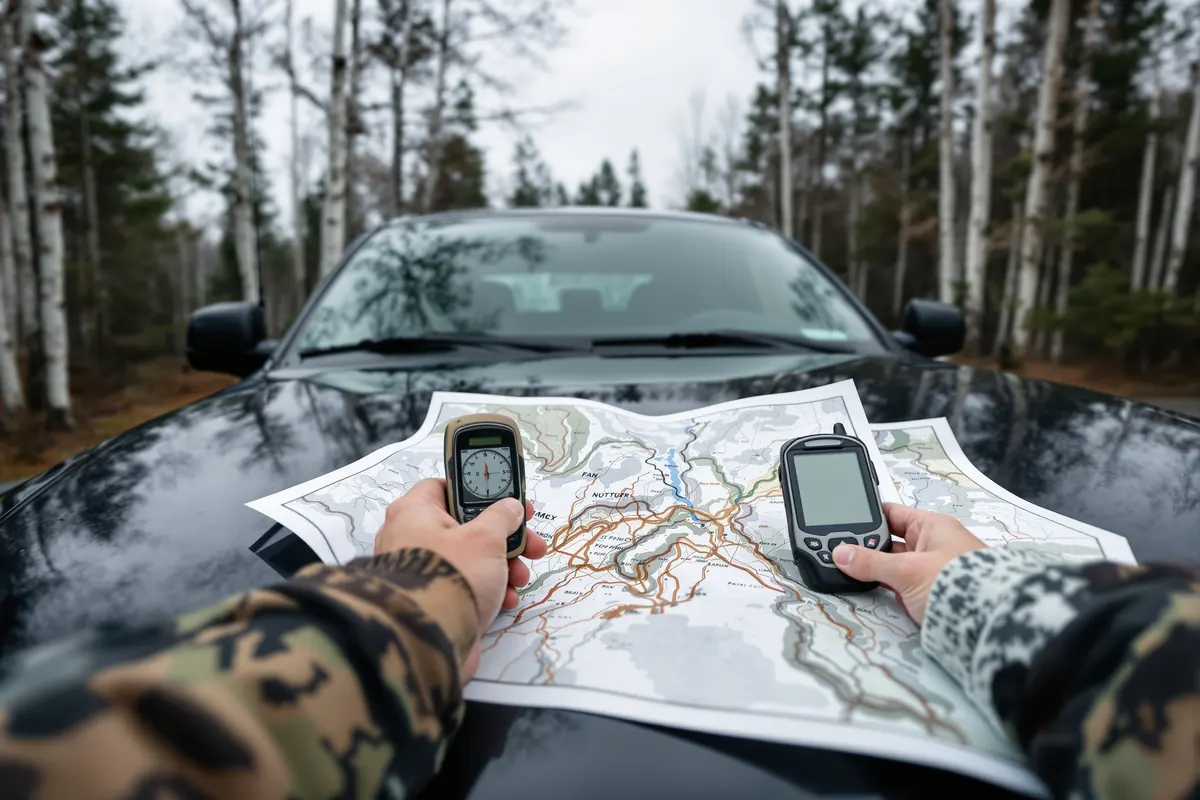
- An oral exam of about 90 minutes per classification covering map, compass and GPS navigation, a client safety scenario and knowledge questions.
The department warns that becoming a Maine Guide can take six months or more, so start well before the season you want to work.
New Mexico
The New Mexico Department of Wildlife's guide and outfitter page says new guide applicants must take the Guide and Outfitter Exam in person at a department office, then apply online. New outfitter applicants start with three years of proof of guiding employment with a New Mexico registered outfitter, which the department reviews before the online application.
The six states side by side
| State | Who issues it | Tied to an outfitter? | Exam | First aid |
|---|---|---|---|---|
| Montana | Board of Outfitters | Endorsement by a licensed outfitter, unless otherwise qualified | Not listed on the guide checklist | Board-approved basic first aid |
| Wyoming | Board of Outfitters and Professional Guides | Yes, employed or contracted by a licensed outfitter | Outfitter exam in Cheyenne | Valid first aid card |
| Idaho | Outfitters and Guides Licensing Board | Guides are placed on outfitter rosters | See board rules | See board rules |
| Colorado | Office of Outfitters Registration | Outfitters register; guides work under a registrant | Ask the office | Ask the office |
| Maine | Inland Fisheries and Wildlife | No, the guide holds the credential | Written and oral, per classification | Red Cross or approved equivalent |
| New Mexico | Department of Wildlife | Outfitters need three years guiding for a registered outfitter | In-person exam for new guides | Not listed on the page |
"Not listed" means the page we read did not mention it, not that the state has no such rule. Read the statute or rules, or call the agency, before you assume a requirement does not apply.
A hunting guide license does not cover federal land
A state credential lets you guide under state law. It does not give you the right to take paying clients onto a national forest. That takes a separate federal authorization, and it trips up new outfitters every year.
The Forest Service's outfitting and guiding page for the Stanislaus National Forest is a clear example of how it works. Outfitting and guiding there must be authorized under a special use permit, and charging a fee is what makes the activity commercial. The page describes two kinds:
- Temporary permits: short-term and non-renewable, with only one issued per 180-day period and a maximum allocation of 200 service days.
- Priority use permits: a longer commitment that may be authorized for up to 10 years, based on the holder's past use and performance.
Permit holders must also carry appropriate liability insurance, and a performance bond may be required. Each national forest manages its own permits, so contact the forest where you plan to hunt early. Our post on outfitter insurance covers the insurance side of that requirement.
Wyoming adds a state twist on public land: its FAQ says nonresidents hunting in a designated wilderness area need a licensed guide or resident guide with them, with at least one guide for each two nonresident hunters. That rule creates guiding demand, and it also means you cannot stretch one guide across a bigger party.
What the requirements have in common
Read enough licensing pages and a pattern shows up. Even where the details differ, states tend to ask for the same handful of things.
- Age. Montana's checklist sets 18 for guides. Expect an age floor in any state with a hunting guide license.
- First aid. Montana, Wyoming and Maine all require a current certification. Keep the card current; an expired one can hold up an application or renewal.
- A link to an outfitter. Montana's endorsement, Wyoming's employment or contract rule and Idaho's rosters all connect the guide to a licensed business.
- Testing. Maine and New Mexico test guides; Wyoming tests new outfitters.
- Background and history. Maine requires fingerprinting, and Montana asks for license verification and disclosure of past discipline.
- Your own hunting credentials. Montana wants a valid wildlife conservation license; Wyoming wants a hunter education card from guides born after January 1, 1966.
Two things the pages rarely spell out, but that follow from the structure: plan for lead time, and plan for paperwork you do not control. Fingerprint results, outfitter endorsements and exam slots all depend on someone else's calendar. A guide who decides in August to work an October rifle season may simply run out of time, even with every qualification in hand. The safe habit is to treat licensing like a draw application: know the deadlines months ahead and file early.
If you are early in your career, our post on how to become a hunting guide covers skills and getting hired. Fishing has its own rules, covered in our fishing guide license post.
What outfitters should verify before a guide's first hunt
If you hire guides, their credentials become your problem the moment they take one of your clients into the field. A few minutes of checking in August saves a hard conversation in November.
Look the license up yourself
Do not rely on a photo of a card. Most licensing boards publish a license lookup; Idaho's board page links one directly. Confirm the name, the license type, the status and the expiration date, and save a screenshot with the date you checked.
Match the license to the work
A hunting guide license may be limited by classification, area or employer. Maine examines guides separately for each classification. Idaho places guides on specific outfitter rosters. A guide who is legal for one outfitter or one type of trip is not automatically legal for yours.
Ask about history
Montana asks applicants about past discipline, and Colorado's 2026 rulemaking specifically addresses people guiding under a registrant while their own hunting or fishing license is suspended or revoked. Ask new guides directly about any game law violations or license suspensions, in any state, and write down the answer.
Keep the paper where you can reach it
Copies of each guide's hunting guide license, first aid card and hunter education record belong in one folder that travels with the camp. A warden check is a bad time to discover the only copy is on a guide's phone with no signal.
Checking hunting guide license rules in any other state
Some states may not license hunting guides at all, and others may license only certain kinds of guiding. Do not assume either way. Go to the state wildlife agency first, then the state's professional licensing department, and ask these questions in writing so you have the answer on record:
- Does this state require a hunting guide license, an outfitter license, or both?
- Is the guide license tied to a specific outfitter, or does it travel with the guide?
- What does the application need: age, first aid, hunter education, exam, background check, experience?
- Are nonresident guides treated differently?
- Do guides on private land need the same credential as guides on public land?
- When does the license expire, and what does renewal require?
Save the reply with the date. Rules change, and an email from the agency is better evidence than a memory of a phone call. If you are setting up a new operation, our guide to starting a hunting outfitter business walks through licensing alongside land access and insurance.
Keeping credentials straight through a season
An outfit with six guides has six sets of expiration dates: guide licenses, first aid cards, hunter education records and any federal permit assignments. Missing one can put a guide out of the field in the middle of a booked week.
- Keep a simple register with each guide's license number, issuing state, expiration date and first aid expiration. Check it before you finalize the guide schedule.
- Put renewal dates on your calendar 90 days out, since some processes (Maine's, for example) take months.
- File a copy of each credential where your office manager can reach it when a warden or permit administrator asks.
Hunters have their own paperwork, and that part HuntReserve handles directly. Every hunter in the party registers, signs your waiver and uploads a photo of their hunting license from their phone, and the Check-In Board shows who is still missing something. The tag register tracks your tags and your clients' tags, and when a harvest is logged the state report is pre-filled with a deadline countdown. Guides get their own access level, so they see the hunts they are assigned without seeing your money.
Look through the full feature list, or see how it fits elk, mule deer and sheep camps on the big game outfitter software page. If you are licensing a new outfit and want the booking side ready for the first season, get started with us.
Frequently asked questions
Do all states require a hunting guide license?
No. Licensing is set state by state, and some states may not license hunting guides at all, while others license guides, outfitters or both. Montana, Wyoming, Idaho, Maine and New Mexico license or register guides through a board or agency, and Colorado registers outfitters. Check with the wildlife agency and licensing department in each state where you plan to guide.
Can a hunting guide license be used in another state?
Generally a state license is valid only in the state that issued it. If you guide in two states, expect to meet each state's requirements separately. Montana's guide checklist even asks applicants for license verification from every state where they have held a professional license, so keep records of every credential you have held.
Is first aid certification required to guide?
In several states, yes. Montana requires current board-approved basic first aid certification with a guide application, Wyoming requires a valid first aid card, and Maine requires Red Cross or an approved equivalent before you apply. Keep your card current, since lapses can delay an application. Check your own state for the accepted courses.
What is the difference between an outfitter and a guide?
The outfitter is the business that sells the hunt and is responsible for the operation, often holding permits and insurance. The guide is the person in the field with the client. In board states such as Montana and Wyoming, guides are tied to a licensed outfitter. In Maine the individual guide holds the credential directly.
Do guides need a permit for national forest hunts?
Yes, in addition to any state license. Commercial outfitting and guiding on National Forest System land requires a Forest Service special use permit. The Stanislaus National Forest, for example, describes temporary permits and priority permits of up to 10 years, and requires liability insurance. Contact the specific forest where you plan to hunt.
Sources
- Montana Board of Outfitters: Licensed Guide checklist (updated 9/2024)
- Wyoming State Board of Outfitters and Professional Guides FAQ
- Idaho Outfitters and Guides Licensing Board (DOPL)
- Colorado Office of Outfitters Registration (DORA DPO)
- Maine IFW: Become a Registered Maine Guide
- New Mexico Department of Wildlife: Guide and Outfitter Information
- USDA Forest Service, Stanislaus NF: Outfitting and Guiding
Rules, fees and policies change. This guide was checked against the official sources above in October 2026. It is general information, not legal, tax or insurance advice: confirm the current details with the agency or a licensed professional before you rely on them.
Keep reading
More from the HuntReserve blog
How to Become a Hunting Guide: Skills, Licensing and Your First Season
The real path into guiding: field skills, hunter education and first aid, state licensing in places like Montana and Wyoming, earning an outfitter's endorsement and surviving a first season.
12 min read
How to Start a Hunting Outfitter Business, From Land Access to Your First Booked Season
The order that matters when you open an outfit: secure ground, get licensed, set up the entity and insurance, design hunts you can deliver, then book and measure your first season.
12 min read
Fishing Guide License Rules by State: Texas, Florida, Wisconsin and Beyond
Some states sell a dedicated guide license, some license the charter boat instead, and almost all care about your Coast Guard credential. Three verified state examples and how to research yours.
12 min readSpend the season in the field.
Let HuntReserve run the office.
Tell us about your outfit. We'll call you, walk you through it with your own hunts and get you set up.