Home / Blog / Fishing charters
From dock dream to paying anglers
How to Start a Fishing Charter Business, From Credential to First Booking
The order of operations for a new charter: pick the model, get the right Coast Guard credential, match the boat to it, add state and federal permits, insure, set up bookings and fill the calendar.
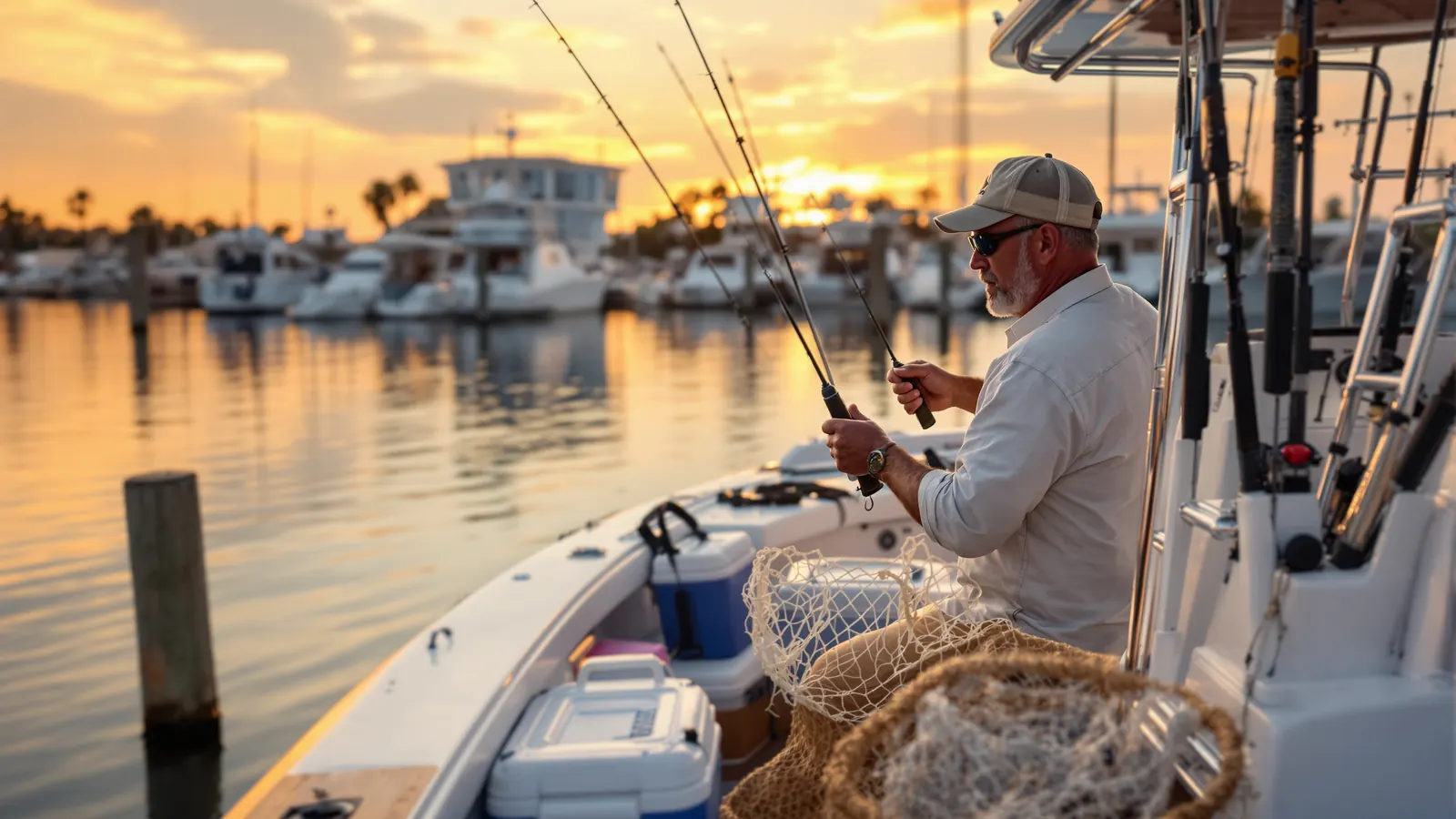
Figuring out how to start a fishing charter business usually begins with a captain who already knows the water and wants to get paid for it. The fishing is the easy part. The work is in the order of operations: which credential you need, which boat that credential lets you run, which permits your target species require, and how you take money without spending every evening on the phone.
This guide walks through those steps in the sequence that saves the most backtracking. It stays at the business level; our posts on the captain license and the 6-pack captain license cover the credential process in depth.
Short answer
Decide your trip type and passenger count, earn the matching Coast Guard credential, run a boat that fits it (uninspected for six or fewer passengers, inspected for more), add state charter licenses and any federal for-hire permits, form a business entity, insure it, set up deposits and online booking, then market to anglers.
How to start a fishing charter business: decide what you will run
Every later decision flows from a few early choices. Make them on paper before you buy anything.
- Water. Inshore flats, nearshore reefs, offshore bluewater, big lakes or rivers. Each one changes the boat, the gear, the permits and the season.
- Party size. Six passengers or fewer is a very different business, legally and financially, from a larger boat carrying more.
- Owner-operator or fleet. Running your own boat keeps it simple. Adding a second boat means hiring captains, which changes insurance, payroll and scheduling.
- Trip lengths. Half days, three-quarter days, full days, overnight runs. Shorter trips mean more turnover and more bookings to manage.
- Target species. Some species bring federal permit requirements in federal waters, covered in the permits section below.
- Season. Year-round in some ports, a few busy months in others. That shapes how you plan cash flow.
Write a one-page description: where you fish, for what, how many people, what a typical day looks like and what is included. You will reuse it for licensing, insurance quotes and your website.
The Coast Guard credential comes first
Carrying paying passengers is a regulated activity under federal law. The U.S. Code defines a passenger for hire as a passenger for whom consideration is contributed as a condition of carriage, whether it flows directly or indirectly to the owner, charterer, operator or anyone with an interest in the vessel. If anyone pays, in cash or in kind, assume you are carrying passengers for hire.
The credential and the boat go together:
- Operator of uninspected passenger vessels (OUPV), widely called the six-pack license, is the usual starting point for charters on uninspected boats carrying six or fewer passengers for hire.
- Master credentials sit above it for captains who want to run larger or inspected vessels; the captain license post linked above covers the levels.
The process generally involves documented sea time, a medical review, drug testing, and exams or approved courses, with the application handled through the Coast Guard's National Maritime Center. Requirements are detailed and do change, so check the current rules with the USCG National Maritime Center before you plan your timeline. Budget months, not weeks.
Matching the boat to the credential
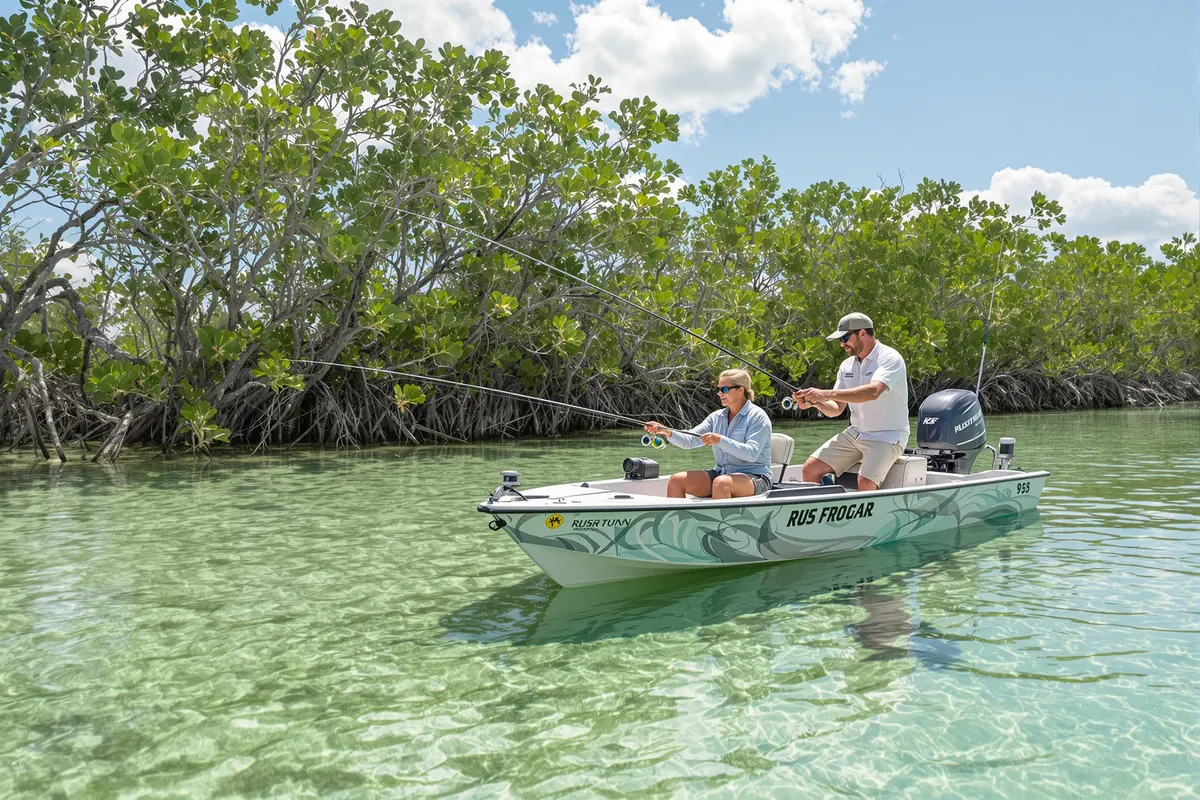
Federal law draws a bright line at six passengers for smaller boats. Under the same section of the U.S. Code, an uninspected passenger vessel of less than 100 gross tons is one carrying not more than 6 passengers, including at least one passenger for hire. Carry more than 6 passengers with at least one for hire on a boat under 100 gross tons and it becomes a small passenger vessel, and small passenger vessels are subject to Coast Guard inspection.
| Question | Uninspected (six-pack) boat | Inspected boat |
|---|---|---|
| Passenger limit | Six or fewer for hire on boats under 100 gross tons | Set by the Coast Guard for that vessel |
| Startup complexity | Lower; many captains start here | Higher; inspection process and ongoing requirements |
| Typical use | Inshore, nearshore and offshore private charters | Larger parties, headboats, group trips |
| Credential path | OUPV or higher | Master credential suited to the vessel |
Whatever the size, the boat needs the federal safety equipment for its class and any state registration or documentation. If you plan to use a boat that is already in service, have a marine surveyor look at it before buying; your insurer will likely ask for a survey anyway.
State charter licenses and federal for-hire permits
The Coast Guard credential lets you carry passengers. Fishing permits let those passengers fish legally, and they come from different agencies.
State charter licenses
Most coastal states license charter operations in some way. Florida is a clear example. The FWC says a charter captain or charter boat license is required to carry paying customers, that you must hold a Coast Guard captain's license to buy the charter captain license, and that vessels used for business must be commercially registered or carry a Coast Guard Certificate of Documentation with a commercial designation. Customers fishing under the vessel's license do not need their own recreational saltwater license.
FWC lists the charter captain license at $201.50 for 4 or fewer customers, $401.50 for 10 or fewer and $801.50 for 11 or more.
Other states set this up differently, and freshwater guides often fall under separate guide licenses. Check with your state wildlife or marine fisheries agency.
Federal for-hire permits
For certain species in federal waters, NOAA Fisheries issues charter and headboat permits. In the Southeast, NOAA's permits information page lists separate for-hire permits for South Atlantic snapper-grouper, coastal migratory pelagics and Atlantic dolphin and wahoo, each required to take passengers for that fishery. The Gulf reef fish and Gulf coastal migratory pelagic for-hire permits are limited access: they cannot be issued as new and must be obtained by transfer. Fish caught under these permits may not be sold.
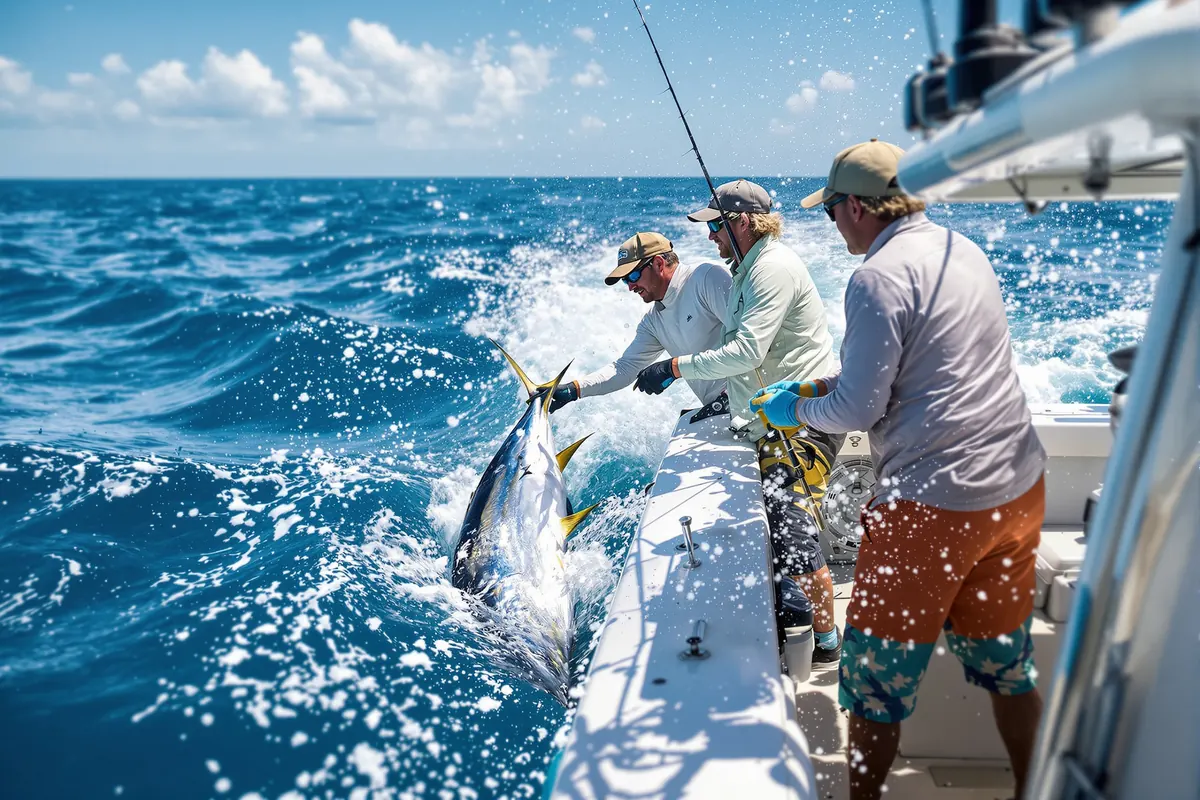
For tunas, billfish, swordfish and sharks, NOAA's Atlantic HMS charter/headboat permit authorizes charter and headboat vessels to take for-hire passengers to fish for and retain those species; it must be renewed annually, and shark fishing requires an added endorsement. Other regions have their own rules, so check with the NOAA Fisheries regional office for your waters.
The business behind the boat
With the water side sorted, the shore side needs the same care. None of it is glamorous, and all of it matters the first time something goes wrong.
- Entity. Many captains form an LLC or corporation to separate business and personal assets. Ask an attorney and CPA which structure fits, and register with your state.
- Federal tax ID and bank account. Keep charter money in its own account from day one.
- Local permits. Cities and counties may require a business tax receipt or license, and marinas often have their own rules for commercial operators.
- Slip and parking. Confirm your marina allows charters, where clients park and where they check in.
- Bookkeeping. Track fuel, bait, ice, maintenance, insurance and crew pay per trip, so you know what a half day actually costs.
- Crew. If you hire a mate, sort out pay, classification and any credential or drug testing requirements before the first trip.
This is general information; confirm entity, tax and employment decisions with an attorney or CPA.
Insuring the boat, the passengers and the business
Insurance for a for-hire boat is not the same as a recreational boat policy. Expect underwriters to ask about your credential, experience, the vessel, where you fish and how many passengers you carry. Coverages charter operators commonly discuss with their agent include hull and machinery, protection and indemnity, passenger liability and crew coverage if you employ a mate.
Ask specifically about navigation limits (how far offshore you are covered), named operator requirements, and whether coverage changes if you carry more passengers or add a captain. Our post on charter boat insurance breaks the coverages down. Talk with a licensed marine insurance agent before you take the first paid trip.
A signed liability waiver for every passenger is a common companion to insurance. Have an attorney in your state review it; waivers are not a substitute for coverage.
Pricing trips from your real costs
Many new captains copy the prices on the next slip over. That is a reasonable sanity check, but it is a poor foundation, because the captain next door may own the boat outright, fish closer to the inlet or burn half the fuel you do. Anyone serious about how to start a fishing charter business should build prices from their own numbers.
- Cost per trip. Fuel for a typical run, bait, ice, tackle loss, cleaning supplies and the mate's pay.
- Fixed costs spread across the season. Insurance, slip, loan or lease payments, permits and licenses, maintenance and haul-outs, divided by the number of trips you realistically expect to run.
- Your own pay. The captain's time is a cost, not whatever is left over.
- Weather days. Assume some booked trips will cancel. Price so the season still works.
- Extras. Decide what is included and what is an add-on: fish cleaning, extended hours, lunch, photos.
Then compare the result with your market. If your number is far above what anglers pay in your port, look at trip length, party size or costs before you look at cutting your own pay. Revisit the math every season, since fuel and insurance rarely stand still.
Bookings, deposits and waivers from day one
A new charter lives or dies on its calendar. The phone rings while you are running a trip, the weather turns, a party of four becomes three, a deposit needs refunding. Decide your systems before the first booking.
- Trip menu. Publish each trip with its length, what is included (bait, tackle, licenses under the boat's license, fish cleaning) and price.
- Deposits. Take a deposit at booking to hold the date, and collect the balance before or on trip day.
- Weather policy. Say in writing who makes the call and what anglers receive when you cancel.
- Waivers. Have every passenger sign before boarding, with a parent or guardian for minors.
- Reminders. Send what to bring, where to park and when to arrive the day before.
HuntReserve handles these pieces for charters. Anglers book from a trip page or a Book button on your website, see the total update as they choose date, party size and add-ons, and pay a deposit into your own Stripe account.
The balance is invoiced automatically with a pay link, every passenger signs the waiver on their phone, and the Hunt Calendar enforces daily limits so you never double-book the boat. Field conditions show hourly and 16-day forecasts, wind, pressure trend and moon phase in one place. See the fishing charter software page and the full features list.
Filling the first season
New charters often have more open dates than they would like. A few channels tend to matter most for a captain starting out.
- Google Business Profile. Anglers search for charters near the port they are visiting. A complete profile with photos and reviews puts you in front of them.
- A simple website. One page per trip, with real photos and a way to book.
- Reviews. Ask every happy party for an honest review the day after the trip.
- Local partners. Hotels, rental houses, tackle shops and marinas can send referrals.
- Catch reports. Short, regular posts with photos show the boat is fishing.
- Repeat anglers. Keep in touch with every party; families who fish with you on vacation often come back the next year.
Expect the first season to be uneven. Holiday weeks and peak runs may fill on their own while midweek days sit empty. Use slow days to film short clips, test new spots and build relationships with the front desks and rental managers who send visitors your way. Every party that leaves happy is a future review, a referral and often a repeat booking. If you are still deciding between running your own boat and working for an established operation first, our post on how to become a fishing guide covers that path.
Our fishing charter marketing guide goes deeper. If you would rather hand the marketing to a team, the Full Draw package at $329/mo adds our marketing team for SEO, Google Business Profile, and ads, with ad spend separate.
How to start a fishing charter business: the pre-launch checklist
Use this as a final pass. Every line should have a yes before you take money.
| Item | Done when |
|---|---|
| Coast Guard credential | Issued and matching your boat and passenger count |
| Drug testing | Enrolled in the program your credential and operation require |
| Vessel | Registered or documented, safety gear aboard, surveyed if required |
| State charter license | Issued for your passenger count, if your state requires one |
| Federal for-hire permits | Held for every federally permitted species you target in federal waters |
| Entity and bank account | Formed, registered, separate account open |
| Insurance | Bound, with navigation limits and passenger count confirmed |
| Waiver | Reviewed by an attorney, ready for every passenger to sign |
| Booking and payments | Trip pages live, deposits and cancellation terms set |
| Marketing basics | Google Business Profile, website and review request ready |
If you are working out how to start a fishing charter business and want booking, waivers and payments ready before opening day, get started with HuntReserve.
Frequently asked questions
Do you need a captain's license to take people fishing for money?
In most cases, yes. Federal law treats anyone who contributes consideration for the trip as a passenger for hire, and carrying passengers for hire calls for a Coast Guard credential matched to the vessel. Check the current rules for your boat and waters with the Coast Guard's National Maritime Center before taking any paid trip.
How many passengers can a six-pack charter carry?
Under the U.S. Code, an uninspected passenger vessel under 100 gross tons carries not more than six passengers, including at least one passenger for hire. Carrying more than six passengers with at least one for hire on a boat that size makes it a small passenger vessel, which is subject to Coast Guard inspection.
Do charter customers need their own fishing license?
It depends on the state. In Florida, FWC says customers fishing under a charter captain or charter boat license do not need their own recreational saltwater license. Other states handle it differently, and federal permits and stamps can add requirements, so check with your state agency and tell clients clearly what is covered.
Do you need a federal permit to run fishing charters?
Only for certain species and waters. NOAA Fisheries requires for-hire permits for specific fisheries in federal waters, such as South Atlantic snapper-grouper and Atlantic highly migratory species like tunas and billfish. Some Gulf permits are limited access and only available by transfer. Check with your NOAA regional office for your area.
How long does it take to launch a charter business?
Timelines vary with your sea time, the credential process, boat purchase or refit, permits and insurance. Captains who already have the required sea service mainly wait on Coast Guard processing and paperwork, while those still building sea time face a longer road. Start the credential first, since everything else depends on it.
Sources
- 46 U.S.C. 2101 Definitions (U.S. Government Publishing Office)
- 46 U.S.C. 3301 Vessels subject to inspection (U.S. Government Publishing Office)
- U.S. Coast Guard National Maritime Center
- FWC: Charter Captain and Charter Boat Licenses
- NOAA Fisheries: Southeast Permits Information
- NOAA Fisheries: Atlantic HMS Charter/Headboat Permit
Rules, fees and policies change. This guide was checked against the official sources above in October 2026. It is general information, not legal, tax or insurance advice: confirm the current details with the agency or a licensed professional before you rely on them.
Keep reading
More from the HuntReserve blog
Captain License Overview: OUPV, Master, Sea Time and Renewal
How Coast Guard officer endorsements work for charter captains: the credential ladder from OUPV to Master, routes and tonnage, sea service, the application package and keeping it current.
12 min read
The 6 Pack Captain License (OUPV): What It Allows and How Charters Run on It
The six-pack credential is the entry ticket for small fishing charters. What counts as a passenger for hire, what the Coast Guard requires and where the license stops.
12 min read
Charter Boat Insurance: Hull, P&I, Crew and the Fine Print Captains Miss
How a commercial charter policy is built: hull and machinery, protection and indemnity, crew injuries under the Jones Act, fuel spills, navigation limits, captain warranties and what underwriters review.
12 min readSpend the season in the field.
Let HuntReserve run the office.
Tell us about your outfit. We'll call you, walk you through it with your own hunts and get you set up.