Home / Blog / Fishing charters
For captains carrying six or fewer
The 6 Pack Captain License (OUPV): What It Allows and How Charters Run on It
The six-pack credential is the entry ticket for small fishing charters. What counts as a passenger for hire, what the Coast Guard requires and where the license stops.
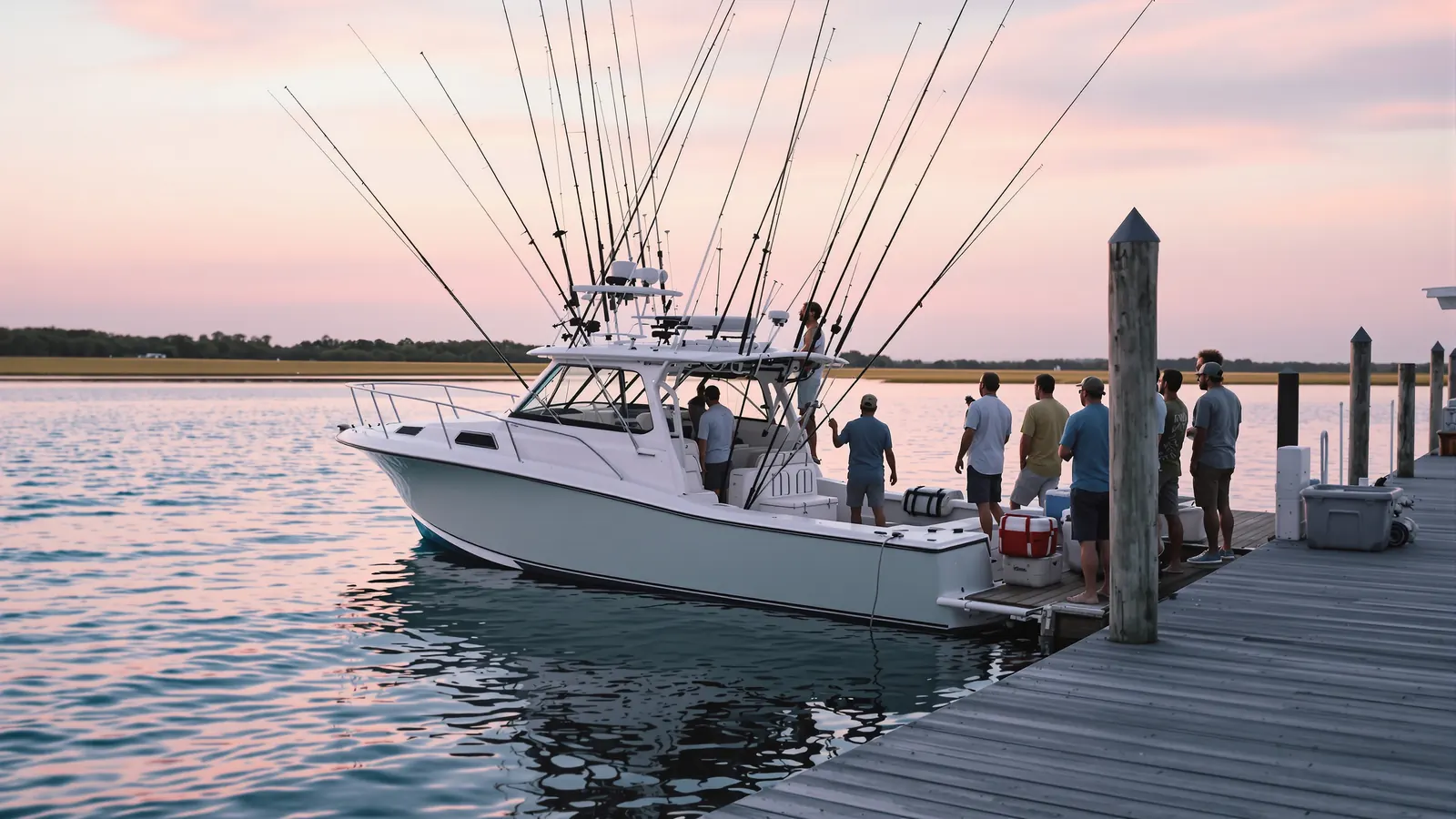
The 6 pack captain license is the nickname for the Coast Guard's Operator of Uninspected Passenger Vessels endorsement, usually shortened to OUPV. It is the credential most small fishing charters start on: a center console running half-day inshore trips, a bay boat chasing redfish, a lake guide carrying a family of four. The name comes from the limit that defines it. You may carry no more than six passengers, and at least one of them is paying.
This guide covers what the law means by a passenger for hire, how the six count works on a real trip, what the regulations require to earn the endorsement, the drug testing that follows you once you run charters, and where the credential stops. It is written for captains running a business, so it ends with the practical side of booking a boat that can never take a seventh person. For a broader comparison of OUPV with Master licenses, see our captain license overview.
Short answer
A 6 pack captain license is the Coast Guard OUPV endorsement. It lets the holder operate an uninspected vessel under 100 gross tons carrying six or fewer passengers, at least one of them paying, on the waters the endorsement covers. Applicants need sea service, a medical certificate, first aid and CPR, a drug test and an exam.
What "six passengers for hire" means in the law
The six-pack concept comes straight from the definitions in 46 U.S.C. 2101. Three of them matter most for a charter captain.
- Passenger for hire: a passenger for whom consideration is contributed as a condition of carriage on the vessel, whether directly or indirectly, to the owner, charterer, operator, agent or anyone else with an interest in the vessel.
- Consideration: an economic benefit, inducement, right or profit, including payment, but not including a voluntary sharing of the actual expenses of the voyage through money or donated fuel, food, drink or supplies.
- Uninspected passenger vessel: among other things, a vessel of less than 100 gross tons carrying not more than 6 passengers, including at least one passenger for hire.
Put together: the moment anyone pays you, directly or indirectly, for a ride, you are carrying passengers for hire, and a credentialed operator is needed. Friends splitting gas money on a voluntary basis is the narrow exception the definition carves out. Taking money for a "fishing trip" is not expense sharing, no matter how the payment is labeled.
The same section defines a small passenger vessel to include a vessel under 100 gross tons carrying more than 6 passengers, including at least one for hire. That is the line between the six-pack world and the inspected-vessel world.
Counting to six on a real charter
The statute's general definition of passenger counts every individual carried on the vessel except the owner or the owner's representative, the master, and crew engaged in the business of the vessel who have not contributed consideration and are paid for onboard services. Applied to everyday trips:
| On board | Counts toward six? |
|---|---|
| You, as captain (master) | No |
| A paid mate working the trip, who did not pay to ride | No, under the crew exception |
| Each paying angler | Yes |
| A child traveling free with paying parents | Yes, every individual carried counts unless an exception applies |
| The client's friend who "just came along" | Yes |
| Your buddy riding along to help but not employed | Likely yes; treat anyone who is not the master or paid crew as a passenger |
The child row is where captains get caught. A family of five plus two grandparents is seven people, even if only two of them paid. Count heads, not invoices.
The same thinking applies to group bookings. When a client books "a trip for six" and shows up with a seventh, you have a decision to make at the dock, and the only legal answer under this endorsement is that someone stays ashore.
6 pack captain license requirements
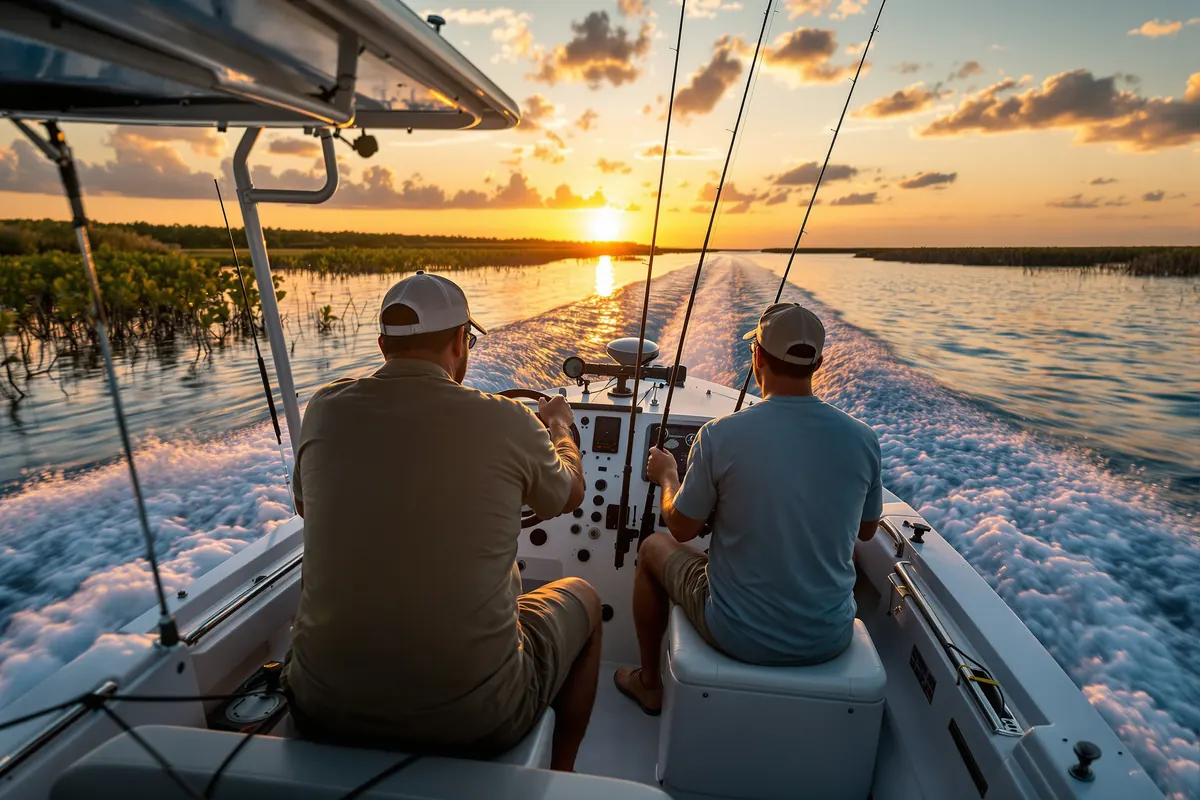
Section 11.467 of the Coast Guard's credential rules defines the endorsement, and section 11.201 holds the general rules for every officer endorsement. Taken together, a first-time applicant must show:
- Age: 11.201 allows an OUPV endorsement at 18, younger than the general minimum for officer endorsements.
- Sea service for the route: experience operating vessels, with route-specific requirements (see the next section).
- Recent service: three months or more of qualifying service in the three years leading up to the application. Time on the water before turning 16 usually does not count, though the Coast Guard can look at unusual cases one by one.
- Medical fitness: a physical examination; any condition that would make an applicant unable to perform an officer's ordinary duties can be grounds for denial.
- First aid and CPR: a first aid course (Red Cross or Coast Guard-approved) finished within a year of applying, plus a CPR card that is still current.
- Drug test: a passing chemical test for dangerous drugs, covered below.
- Character check and exam: a review of the applicant's record and a professional examination once experience and training are approved.
One detail is specific to six-pack captains: 11.201 allows OUPV endorsements for non-citizens, limited to vessels that are not U.S.-documented. Most other officer endorsements require U.S. citizenship.
Requirements, forms and checklists change, so confirm the current application package with the Coast Guard's National Maritime Center before you file.
Routes: inland, Great Lakes and near-coastal
Where you can run depends on the route on your endorsement. 11.467 sets these out:
| Route | Where it allows you to operate | Experience required |
|---|---|---|
| Inland | Inland waters, Great Lakes excluded | 12 months or more operating vessels |
| Great Lakes and inland | The Great Lakes and inland waters | 12 months, with 3 or more of them spent operating on the Great Lakes |
| Near-coastal | Domestic near-coastal water out to 100 miles, plus the Great Lakes and inland water | 12 months or more, with 3 or more of them on ocean or near-coastal water |
There are two narrower versions as well. A limited OUPV can be issued for people employed by camps, yacht clubs, educational institutions and marinas, restricted to that activity and locality, with 3 months of service, an approved boating course and a limited exam. A restricted OUPV can be issued for specific inland bodies of water approved by the local Officer in Charge, Marine Inspection.
For an offshore charter, the 100-mile limit matters. A canyon run that crosses that line is outside a near-coastal six-pack endorsement.
What a 6 pack captain license does not cover
The credential is narrow on purpose. These are the lines a 6 pack captain license does not let you cross.
- A seventh passenger. More than six passengers with at least one for hire makes a small passenger vessel under the statute, which takes you into inspected vessels and a different license.
- Vessels of 100 gross tons or more. The OUPV endorsement in 11.467 is for vessels under 100 gross register tons.
- Waters beyond your route. An inland endorsement does not cover near-coastal water, and near-coastal stops at 100 miles offshore.
- State fishing rules. The Coast Guard credential lets you carry passengers. It does not replace a state fishing guide or charter license, or any federal fishery permits for the species you target. Our fishing guide license post covers the state side.
- Insurance. Holding the credential says nothing about coverage. See our post on charter boat insurance.
Captains who outgrow six passengers usually move to a Master endorsement and an inspected boat, which is a bigger step in vessel requirements than in license paperwork. Plan for that change long before the first seven-person inquiry arrives.
Drug testing after you are licensed
Testing does not stop once the credential is issued. Under 46 CFR Part 16:
- Before issuance or renewal. Section 16.220 requires a passing drug test for an original credential, a first officer endorsement and renewals, and the result can be no older than 185 days when the application goes in. There are exceptions for mariners recently tested or already in a random program.
- Random testing. Section 16.230 requires marine employers to run random drug testing for crewmembers on uninspected vessels who must hold a Coast Guard credential to do their jobs or who perform duties directly related to the vessel's safe operation.
- Who the employer is. Part 16 defines a marine employer as the owner, managing operator, charterer, agent, master or person in charge of a vessel other than a recreational vessel. A captain who owns and runs a one-boat charter is the marine employer for that boat.
- Consortiums. Part 16 recognizes a consortium or third-party administrator as a service agent that coordinates testing for employers, and allows random selection to be calculated across everyone covered by the consortium.
For a one-boat owner-operator, a consortium is a practical way to meet the random requirement: it supplies a pool to draw selections from and handles much of the administration. Part 16 says testing programs follow the federal transportation testing procedures in 49 CFR Part 40 and use labs certified by the Department of Health and Human Services. Ask the consortium what records they keep and what you must keep yourself.
Is a 6 pack captain license enough for your charter?
For many fishing businesses the honest answer is yes, and for some it is only a starting point. A few questions sort it out.
What boat are you running?
Most inshore skiffs, bay boats and center consoles are built for small parties anyway. If the boat is comfortable fishing four to six people, the six-passenger limit matches what the deck can handle, and a 6 pack captain license fits the operation.
Who books your trips?
Look at your inquiries. If they are mostly couples, small families and groups of buddies, six covers them. If you keep turning away corporate outings, larger family reunions or bachelor parties, the ceiling is costing you bookings, and that is worth tracking before you invest in an inspected boat.
Where do the fish live?
If your best trips are within your route (inland bays, lakes, or near-coastal water inside 100 miles), the endorsement covers them. If your best bite is beyond the line, the credential and the boat both have to change.
How many boats do you want?
Some operators grow by adding a second six-pack boat with another credentialed captain rather than moving to a larger inspected vessel. Two small boats can split a big group across two trips on the same morning, though each captain needs a credential and is part of the drug testing program.
Decide on paper first. Count last season's turned-away inquiries by group size before you assume a 6 pack captain license is holding the business back.
Keeping the credential current and moving up
Like every Coast Guard credential, a 6 pack captain license expires, and a renewal takes paperwork. The renewal section, 46 CFR 10.227, lets you renew any time during the credential's validity and up to a year after it expires. For the professional side, the applicant must do one of several things, for example proving a year or more of sea time in the last five years, completing an open-book exercise, or taking an approved refresher course.
A renewal application also includes a drug test result or proof of an exemption, a medical certificate or application, and references to the Transportation Worker Identification Credential that the credential rules tie into. The TWIC rules for credentialed mariners have changed more than once; ask the NMC what your particular renewal must include.
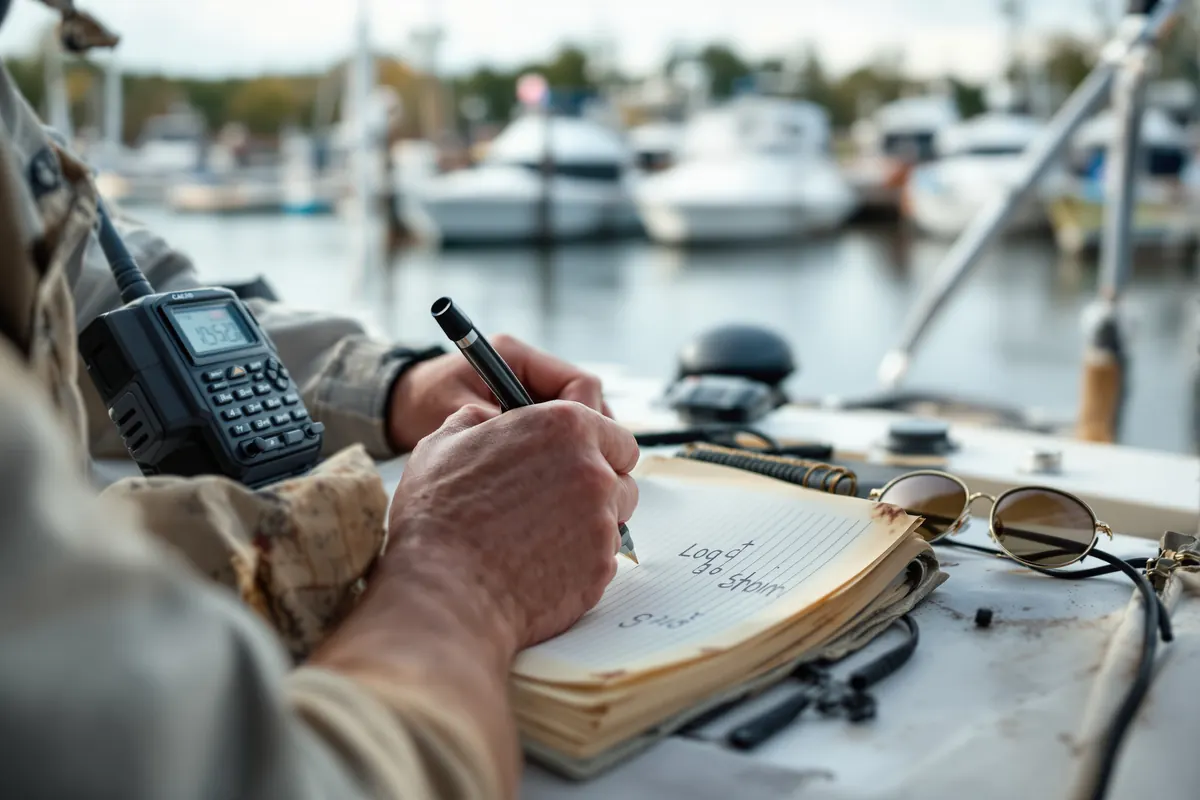
- Keep a sea service log every season: dates, vessel, tonnage, waters and hours. You will need it for renewals and for any upgrade.
- Put the expiration date, CPR card date and medical certificate date on your calendar.
- If you plan to carry more than six someday, start logging toward a Master endorsement now.
Running a business on a six-person boat
A charter run on a 6 pack captain license has a hard ceiling on revenue per trip, so every open seat and every cancellation matters more than it does on a head boat. A few habits help.
- Make six impossible to exceed. In HuntReserve, the calendar sets a daily limit per trip type, so online bookings stop at your capacity. Anglers pick the date and party size and see the total update.
- Know who is coming. The lead angler gets a link to add the party, and each person fills in their details and signs your waiver on their phone, with a parent or guardian co-signing for anyone under 18. The Check-In Board shows who is missing.
- Take deposits. Deposits at booking and an automatically invoiced balance with a pay link before the trip protect a boat that only has six seats to sell. Payments go to your own Stripe account.
- Fill cancellations. When someone cancels, the waitlist sends that seat to the next angler in line, who gets 24 hours to claim it, and Open Spots pushes last-minute openings to approved anglers.
- Make the weather call with data. Field conditions show the hourly and 16-day forecast, wind and pressure trend.
See how it is set up for boats on the fishing charter and guide software page and in the full feature list. If you are starting from scratch, our guide to starting a fishing charter business covers the steps around the license, and you can get started with us when the boat is ready to book.
Frequently asked questions
Is a 6 pack captain license the same as OUPV?
Yes. Six-pack is the common nickname for the Coast Guard's Operator of Uninspected Passenger Vessels endorsement. The regulation describes it as an endorsement for uninspected passenger vessels of less than 100 gross tons carrying six or fewer passengers, and each endorsement carries a route: inland only, Great Lakes plus inland, or near-coastal.
Does the mate count as one of the six passengers?
Generally no. The federal definition of passenger excludes the master and crew members engaged in the business of the vessel who have not paid for carriage and are paid for onboard services. A mate who is working the trip for pay is crew. Someone who simply rides along, or who paid, counts as a passenger.
How much sea time is needed for an OUPV?
The regulation requires at least 12 months of experience operating vessels for an inland endorsement. For near-coastal, a quarter of that year (3 months) has to be on ocean or near-coastal water; for the Great Lakes route, 3 months must be on the Great Lakes. Recent service counts too: three months or more in the three years before applying.
Can a six-pack captain run 100 miles offshore?
A near-coastal OUPV endorsement reaches out to 100 miles from shore on domestic waters, and also covers the Great Lakes and inland water. Trips beyond that line are outside the endorsement. Inland endorsements do not cover near-coastal waters at all, so check the route printed on your credential before planning offshore trips.
Do six-pack captains need random drug testing?
Yes, when running for hire. Coast Guard rules require marine employers to have random drug testing for crewmembers on uninspected vessels who must hold a credential, and an owner-operator counts as the marine employer. Small operators can meet this by joining a consortium that manages random selection and records.
Sources
- 46 U.S.C. 2101 definitions (GovInfo)
- 46 CFR 11.467 OUPV endorsement (eCFR)
- 46 CFR 11.201 general officer endorsement requirements (eCFR)
- 46 CFR Part 16 chemical testing (eCFR)
- 46 CFR 10.227 renewal (eCFR)
Rules, fees and policies change. This guide was checked against the official sources above in October 2026. It is general information, not legal, tax or insurance advice: confirm the current details with the agency or a licensed professional before you rely on them.
Keep reading
More from the HuntReserve blog
Captain License Overview: OUPV, Master, Sea Time and Renewal
How Coast Guard officer endorsements work for charter captains: the credential ladder from OUPV to Master, routes and tonnage, sea service, the application package and keeping it current.
12 min read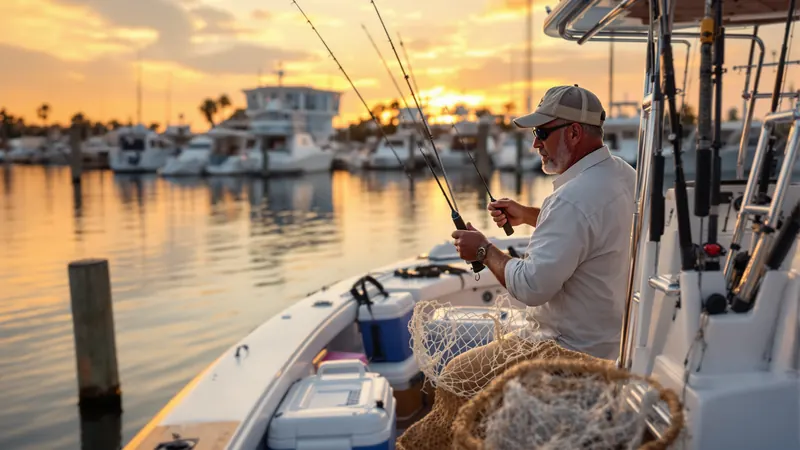
How to Start a Fishing Charter Business, From Credential to First Booking
The order of operations for a new charter: pick the model, get the right Coast Guard credential, match the boat to it, add state and federal permits, insure, set up bookings and fill the calendar.
12 min read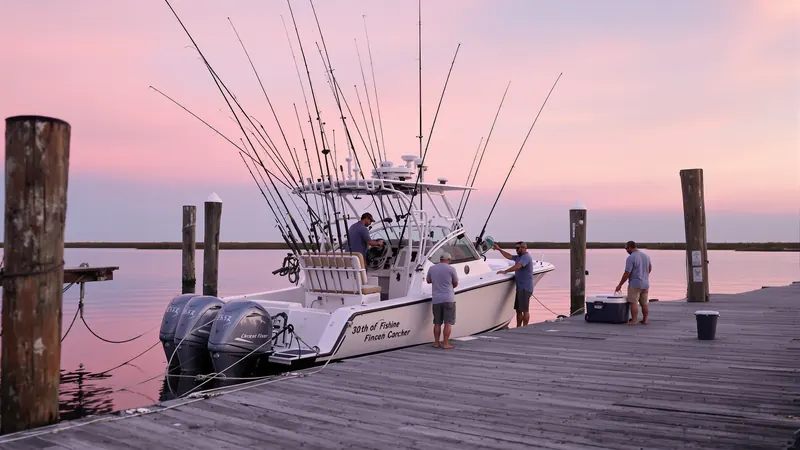
Charter Boat Insurance: Hull, P&I, Crew and the Fine Print Captains Miss
How a commercial charter policy is built: hull and machinery, protection and indemnity, crew injuries under the Jones Act, fuel spills, navigation limits, captain warranties and what underwriters review.
12 min readSpend the season in the field.
Let HuntReserve run the office.
Tell us about your outfit. We'll call you, walk you through it with your own hunts and get you set up.