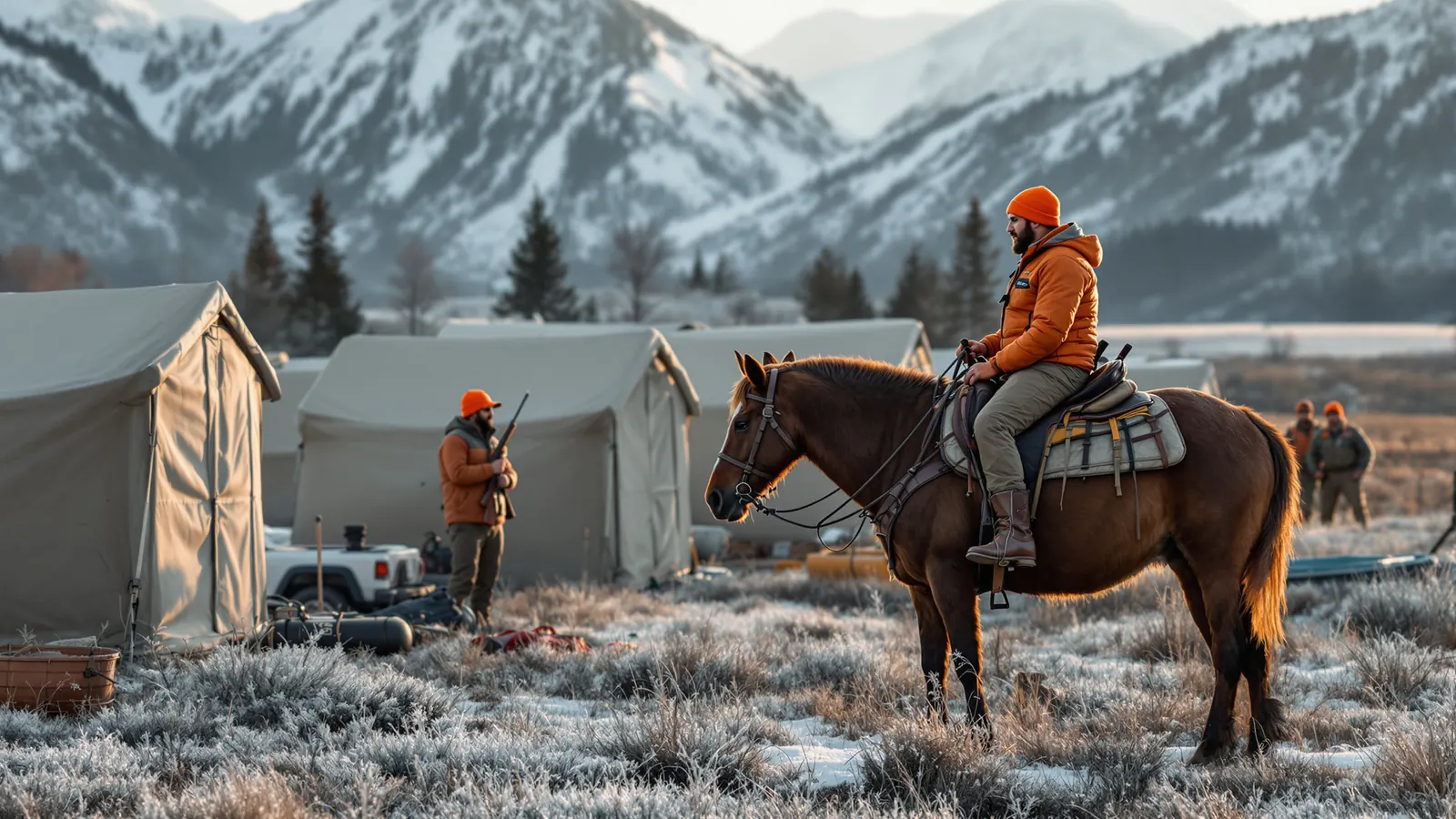
Home / Blog / Running your outfit
Guide pay, explained from both sides
How Much Do Hunting Guides Make? Pay Models, Tips and What Moves the Number
Day rates, per-hunt pay, seasonal wages, tips, and room and board: how hunting guide income is really built, what pushes it up, and how outfitters can set pay that holds up.
How much do hunting guides make is a question with a frustrating honest answer: it depends almost entirely on how the outfit pays, how many days you actually guide, and what the hunters leave in your hand at the truck. Two guides at the same lodge can finish a season with very different totals.
This guide breaks guide income into its real parts (base pay, tips, room and board, bonuses and the off season), shows which ones you can negotiate, and gives outfitters a way to set pay that is fair, written down and easy to track.
Short answer
There is no official wage figure for hunting guides alone. Guide income is usually a day rate or per-hunt fee, sometimes a seasonal wage, plus tips and often lodging and meals during the season. Total pay depends on guided days booked, species, state licensing, experience and how many hunters come back asking for you.
What federal wage data can and cannot tell you
Start with the honest limitation. The federal government does not publish a pay figure for hunting guides as their own job. A search for the title on O*NET, the Labor Department's occupation database, returns related groups such as fishing and hunting workers, tour guides and travel guides, but no occupation called hunting guide or fishing guide.
The closest broad benchmark is the Bureau of Labor Statistics profile for recreation workers. It reports that the median annual wage for recreation workers was $36,560 in May 2025. That group mostly covers people who lead activities at camps, parks and recreation centers, so treat it as a loose reference point for outdoor service work, not as a guide salary.
Why the gap? Most guiding is seasonal, much of it is paid as contract work, and a large share of the money arrives as tips. Wage surveys built around year-round payroll jobs struggle to capture that. Any website quoting a precise national average for hunting guides is usually estimating, so ask where the number came from before you plan a year around it.
How much do hunting guides make? Start with the pay model
The single biggest driver of guide income is the structure of the deal. Here are the models you will run into, and what each one means for your season.
| Pay model | How it works | Good for | Watch for |
|---|---|---|---|
| Day rate | A set amount for each day you guide clients | Waterfowl, upland and whitetail camps with steady daily bookings | Whether scouting, blind brushing and travel days are paid |
| Per hunt | A flat amount per hunt or per client, regardless of days | Multi-day elk, mule deer and bear hunts | Hunts that run long or get extended for weather |
| Per client | Pay scales with the number of hunters in your group | Dove fields, duck blinds and driven hunts | Small groups that still take a full day of work |
| Seasonal wage or salary | Regular pay for the season, often with set duties | Lodges, plantations and preserves with daily operations | Long hours in peak weeks with no extra pay |
| Hourly | Pay for hours worked, including camp chores | Preserves and lodges with shift-style work | Overtime rules that may apply to employees |
| Success bonus | An extra amount when a client fills a tag or takes a trophy | Big game hunts where the guide's skill shows | Pressure to cut corners on fair chase or legal shooting hours |
| Room and board as pay | Lodging, meals and sometimes a vehicle in place of some cash | Remote camps and first-year guides | Comparing offers on cash alone and missing the value |
Many outfits blend two or three of these. A common shape is a day rate plus lodging and meals, with tips on top. Ask any outfitter to write the structure down before the season starts, including what happens on days when hunters cancel or the weather shuts the hunt down.
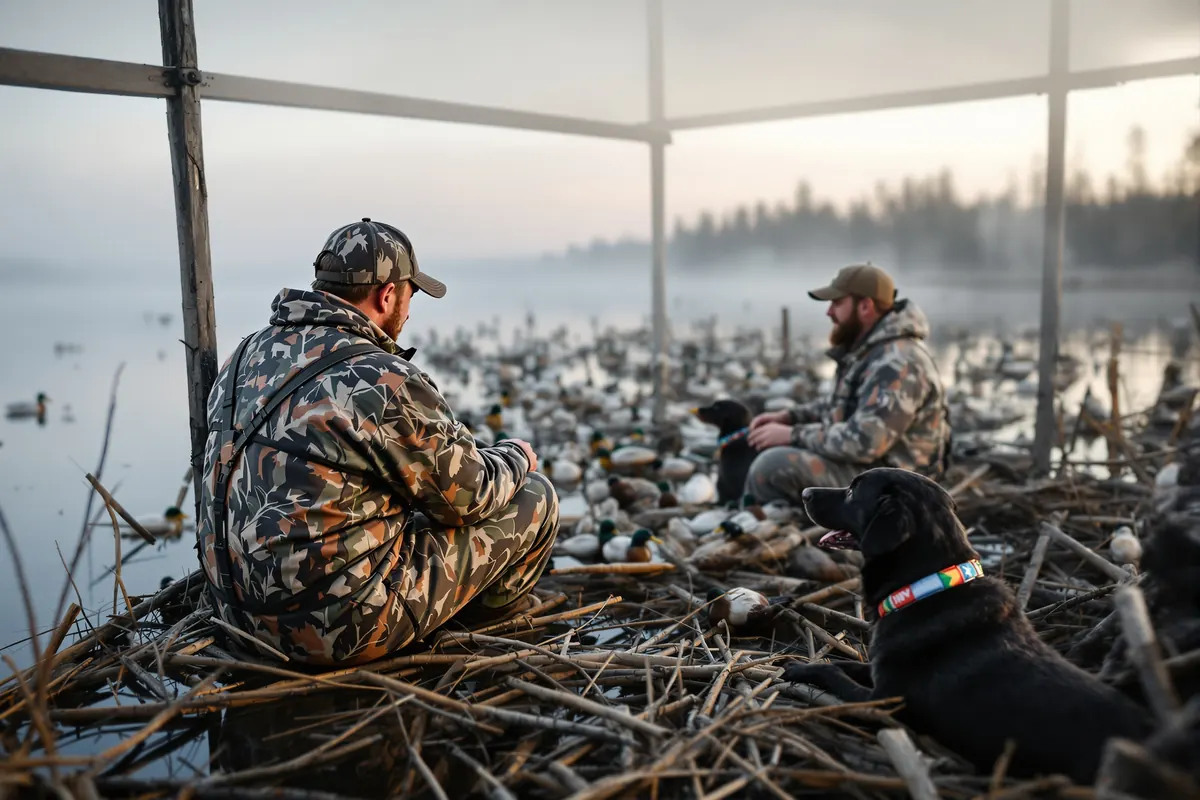
Tips: the part of guide income nobody puts in the offer
For a lot of guides, tips are not extra money; they are the difference between a thin season and a good one. They also vary wildly, from camp to camp and from hunter to hunter. Hunters asking what is customary can read our separate post on how much to tip a hunting guide. This section is about what tips mean for the guide's paycheck.
Things that change what lands in your hand
- Pooling. Some camps pool tips across guides, cooks and skinners; others let each guide keep their own. Find out before opening day.
- Card versus cash. When tips are added to a card payment, the outfitter receives the money first and pays it out. Ask how and when that happens.
- Hunt type. A week of one-on-one elk hunting creates a different relationship, and a different tip, than a single morning in a crowded dove field.
- Repeat clients. Hunters who ask for you by name year after year tend to be the steadiest part of tip income.
Tips are income
Tips are taxable. If you are an employee, the IRS says that employees who receive cash tips of $20 or more in a calendar month must give their employer a written report by the tenth day of the following month, and smaller amounts still belong on the guide's own tax return. Contract guides handle it differently. This is general information; confirm your own situation with a CPA.
Room, board and gear: the pay that does not show up on a check
When a lodge offers a bunk, three meals a day and laundry for the season, that has real value, especially for a guide who would otherwise rent a place near camp for four months. When comparing two offers, put a rough local value on each of these and add it to the cash side.
- Lodging. A private room is worth more than a bunkhouse cot, and a camper hookup is worth more than nothing.
- Meals. Cooked meals during a long season save real money and real time.
- Vehicle and fuel. Driving your own truck down two-track roads every day costs tires, fuel and repairs. Ask whether the outfit supplies a rig or reimburses mileage.
- Horses and tack. In packing country, whose stock you ride and whose saddle you use matters.
- Licenses and training. Some outfitters cover state guide license fees, first aid courses or boat operator training; others expect the guide to pay.
- Gear. Decoys, calls, waders, optics and dog food add up. Clarify what the outfit provides.
None of this is a reason to accept a weak cash offer. It is a reason to compare offers on the whole package rather than the headline rate.
What pushes guide pay up or down
Within any pay model, a handful of factors decide if a guide sits at the low or high end of what an outfit pays.
- The price of the hunt. Guides on high-dollar western big game or trophy whitetail hunts generally have more room for higher pay than guides on short, lower-priced hunts, because the outfit has more margin per client.
- State licensing. In states that license guides, holding the license, first aid and other required credentials is the price of entry, and an experienced licensed guide is harder to replace. Our post on how to become a hunting guide covers the path.
- Specialized skills. Packing stock, caping and field care of trophies, running and training dogs, calling elk or turkeys, and operating boats in big water all add value.
- Reliability. A guide who shows up early, keeps hunters safe and keeps the truck running gets more days on the calendar.
- Repeat demand. When clients rebook and ask for you, you become part of the outfit's revenue, which strengthens your hand at pay time.
- Season length. A camp that runs September through January simply offers more paid days than a two-week rut camp.
- Who holds the client. Independent guides who book their own hunters keep more per hunt but carry the marketing, insurance and paperwork too.
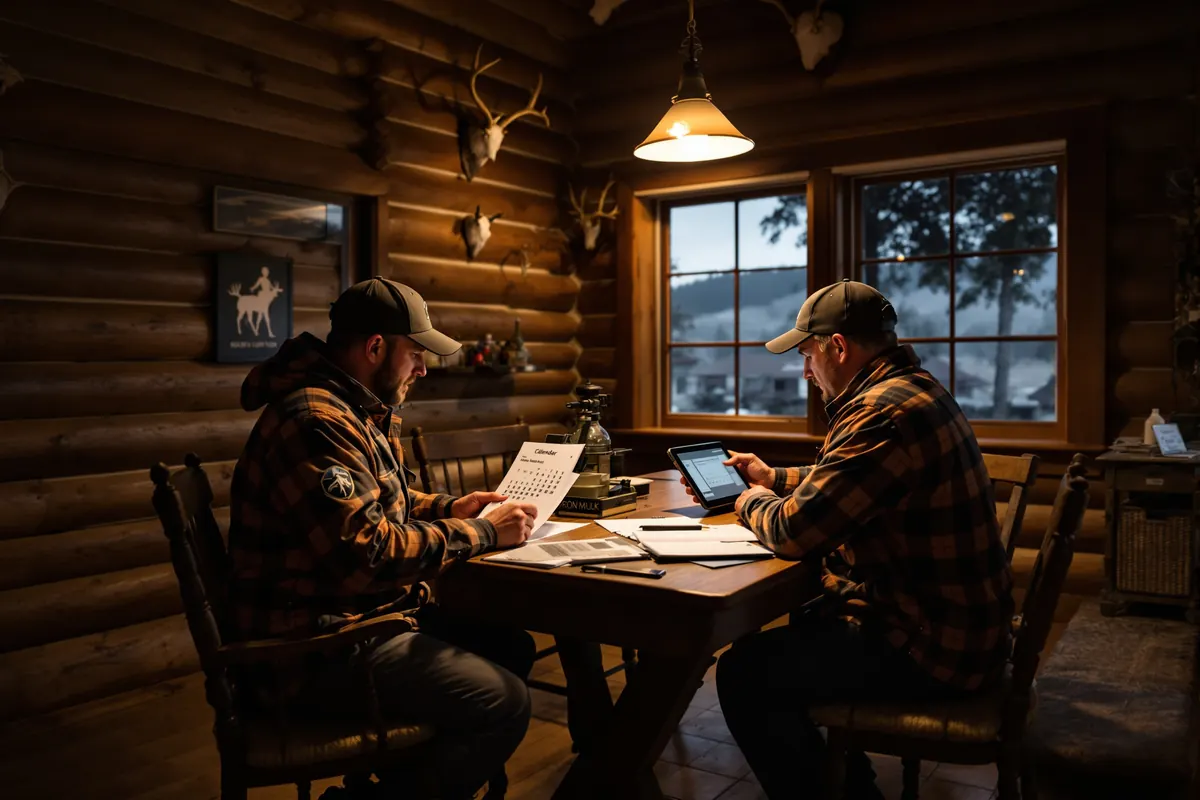
How much do hunting guides make over a full season?
When a guide asks how much do hunting guides make in a full year, the answer comes from multiplying a few simple numbers together. Use this worksheet with your own figures, or with the figures an outfitter gives you in writing.
- Paid guiding days. Count the hunts realistically booked for you, not the days the camp is open.
- Base pay. Multiply paid days by the day rate, or add up per-hunt fees.
- Paid non-guiding days. Add any paid scouting, setup, stand hanging or teardown days.
- Tips. Use last season's actual total if you have it; if not, leave tips out of the plan and treat them as upside.
- Bonuses. Add only bonuses that are written down.
- Value of room and board. Add a fair local value for lodging and meals provided.
- Costs. Subtract fuel, gear, license fees, travel to camp and any rent you keep paying at home.
Then look at the months outside the season. Many guides stack seasons (spring bear or turkey, fall big game, winter waterfowl) or fill the gaps with fishing guiding, ranch work, trapping, taxidermy or mechanic work. The guides with the steadiest year usually plan the off season as carefully as opening day.
If you are still looking for that first camp, our post on hunting guide jobs covers where openings come from and what outfitters look for.
First season versus veteran: how much do hunting guides make as they gain experience?
New guides often ask how much do hunting guides make in year one compared with year ten. The honest pattern is less about a pay scale and more about trust. A first-season guide is usually given the simpler work: running a dove field, hauling decoys, packing out meat, sitting with a hunter in a box stand the outfitter already set. Pay tends to reflect that.
What changes over time is the kind of hunt you are handed. Veterans get the clients who paid the most, the hardest country and the hunters who need the most patience. They are trusted alone with a group, they make the weather call, and they handle the hard conversation when a hunter misses the only bull of the week. That responsibility is what an outfitter pays more for.
Ways newer guides move up faster
- Learn every job in camp, including skinning, caping, truck repair and cooking when the cook is sick.
- Keep simple notes on each hunt: where the birds worked, where the bucks crossed, what the wind did. Outfitters notice guides who bring information back.
- Get the credentials your state or the outfit values, such as first aid or a boat operator license.
- Collect contact details from hunters you guided and stay in touch with the outfitter's permission. Repeat clients who ask for you change your bargaining position.
- Ask for a written review of your season and what it would take to earn a higher rate next year.
None of this shows up in a wage table, which is one more reason national averages say so little about any one guide's season.
For outfitters: setting guide pay you can defend
Outfitters field this question from the other side: how much do hunting guides make at your camp, and is it enough to keep the good ones? A few habits make pay easier to set and easier to explain.
Decide the classification first
Whether a guide is an employee or an independent contractor changes payroll taxes, overtime rules, workers' compensation and paperwork. The test turns on control and the working relationship, not on what the agreement calls it. Our post on independent contractor vs employee walks through the IRS and Labor Department tests. Confirm your setup with a CPA or employment attorney.
Write the pay terms down
- The rate and what counts as a paid day (half days, travel days, scouting days).
- What happens when hunters cancel, no-show or get weathered out.
- How tips paid by card are passed through, and how fast.
- Any bonus, the exact trigger, and that it never overrides legal and safe hunting.
- What the outfit supplies: lodging, meals, vehicle, fuel, gear, license costs.
Price the hunt with guide pay inside it
Guide pay is usually one of the largest costs on a hunt, and hunters sometimes wonder what the guide earns when they see the price of a package. If a package price was set years ago and never revisited, the squeeze often lands on the guides. Rework the math per hunt type, then adjust either the price or the guide-to-hunter ratio.
Tracking guide days, results and pay in one place
Pay disputes in camp usually come from fuzzy records: who guided which group, which days counted, whose hunter tipped by card. The fix is a single schedule everyone works from.
In HuntReserve, every booking sits on the Hunt Calendar with daily limits per hunt type, so you can see each guide's days at a glance. Guide access levels let guides see their own hunts and party details while owners and managers see the money. The Harvest Log records the guide on every harvest, so season totals and success rates by guide are a report away, which is useful for bonuses and for deciding who gets the next premium hunt.
On the money side, expenses and profit and loss can be viewed by month and by hunt, so guide pay shows up next to the revenue it produced, and the QuickBooks Online sync keeps your bookkeeper in the loop. See the full list of tools on our features page, or how it fits a western operation on the big game outfitter software page and the broader hunting outfitter software overview.
If you want the calendar, payments and guide records handled together this season, get started with HuntReserve.
Frequently asked questions
Do hunting guides get paid when a hunt is cancelled for weather?
It depends on the agreement. Some outfitters pay guides for scheduled days even when weather cancels the hunt, some pay a reduced amount, and some pay nothing because no client revenue came in. Guides should get the policy in writing before the season, and outfitters should spell it out so nobody argues about it in December.
Are hunting guides employees or independent contractors?
Either is possible, and the label in a contract does not decide it. Federal and state tests look at how much control the outfitter has over the work, who supplies the equipment and how permanent the relationship is. Misclassifying guides can create back taxes and penalties, so outfitters should review their setup with a CPA or employment attorney.
Do guides keep all of their tips?
Not always. Some camps let each guide keep tips from their own hunters, while others pool tips and split them among guides, cooks, packers and skinners. Tips added to a card payment go to the outfitter first and are then paid out. Guides should ask how tips are handled before accepting a job.
Can a hunting guide earn a living year round?
Some do, usually by stacking seasons across species and states or by pairing hunting with fishing guiding, ranch work, trapping or taxidermy. Others guide for a few months and work a separate job the rest of the year. Planning the off season matters as much as landing a good fall camp.
Does holding a state guide license increase pay?
In states that require a license, it is a condition of working rather than a raise. It does make a guide more valuable, because the outfitter cannot legally put an unlicensed guide in the field there. Extra credentials such as first aid, boat operator licensing or packing experience can also put a guide on more paid days.
Sources
- U.S. Bureau of Labor Statistics, Occupational Outlook Handbook: Recreation Workers
- O*NET OnLine occupation search (U.S. Department of Labor)
- IRS Topic No. 761, Tips: Withholding and Reporting
Rules, fees and policies change. This guide was checked against the official sources above in October 2026. It is general information, not legal, tax or insurance advice: confirm the current details with the agency or a licensed professional before you rely on them.
Keep reading
More from the HuntReserve blog
How to Become a Hunting Guide: Skills, Licensing and Your First Season
The real path into guiding: field skills, hunter education and first aid, state licensing in places like Montana and Wyoming, earning an outfitter's endorsement and surviving a first season.
12 min read
Hunting Guide Jobs: Finding Work, and Hiring the Right Guides
Where guiding work actually comes from, the hiring calendar, what outfitters look for and how to apply, plus how outfitters can post, hire, onboard and schedule seasonal guides.
12 min read
Independent Contractor vs Employee: How Outfitters Should Classify Hunting and Fishing Guides
Paying guides on a 1099 is common in camps and on docks, but the label does not decide anything. Here is how the IRS and DOL actually look at a guide's work.
12 min readSpend the season in the field.
Let HuntReserve run the office.
Tell us about your outfit. We'll call you, walk you through it with your own hunts and get you set up.