Home / Blog / Running your outfit
Guides, taxes and the paperwork behind them
Independent Contractor vs Employee: How Outfitters Should Classify Hunting and Fishing Guides
Paying guides on a 1099 is common in camps and on docks, but the label does not decide anything. Here is how the IRS and DOL actually look at a guide's work.
The independent contractor vs employee decision shows up every fall in hunting camps and every spring on charter docks: a guide works the season, you pay a day rate, and someone has to decide whether that guide gets a W-2 or a 1099. Defaulting to the 1099 is tempting because it is simpler. The federal agencies do not care what is simpler. They look at how the work actually happens.
This guide walks through the tests the IRS and the Department of Labor use, applies each factor to real guiding situations (a duck blind before daylight, a seasonal elk camp, a captain who owns his own boat), and lists the forms that go with each answer. It is general information, not legal or tax advice. Before you change how you pay anyone, sit down with a CPA or an employment attorney who knows your state.
Short answer
A guide is an employee when you control what work they do and how they do it, provide the tools, and keep them on as a regular part of your business. A guide is more likely an independent contractor when they run their own guiding business, set their methods, carry their own gear and costs, and work for several outfits.
Why the independent contractor vs employee call is harder for guides
Most classification advice is written for offices and job sites. Guiding does not fit that mold. A guide may work 40 days for you, 20 days for another outfit and a few weeks of turkey season on their own lease. They may bring their own dogs, decoys and truck, or show up with nothing but boots. They may live in your bunkhouse for two months and eat at your table.
That mix is exactly what the independent contractor vs employee tests are built to sort out. The IRS guidance on independent contractors and employees says the answer turns on the degree of control and independence in the relationship, and that no single factor settles it. The paperwork you sign matters, but it is only one piece of evidence. Calling someone a contractor in an agreement does not make them one if the rest of the relationship looks like a job.
State guide licensing does not answer the question either. Wyoming's outfitter board, for example, says in its licensing FAQ that a professional guide must be employed by or work under an independent contract with a licensed outfitter. The license tells you who may guide; the tax and wage rules decide which of those two arrangements you actually have.
The IRS common-law test, applied to a hunting camp
The IRS groups the evidence into three categories: behavioral control, financial control and the type of relationship. The page asks whether the business controls, or has the right to control, what the worker does and how the worker does the job. The right to control counts even if you never exercise it.
| IRS category | Points toward employee | Points toward contractor |
|---|---|---|
| Behavioral control | You assign blinds and stands, set wake-up and departure times, script the safety talk, require your calling style or your fishing spots | The guide decides how to hunt or fish the client, picks the water or the setup, and is judged on the result |
| Behavioral control: training | You train the guide in your methods before the season | The guide arrives already trained and runs their own way |
| Financial control | You supply the boat, decoys, dogs, trucks and fuel; you reimburse expenses; pay is a set day rate regardless of results | The guide owns the boat or dogs, pays their own costs, can make or lose money on a trip |
| Financial control: market | The guide only works for you during the season | The guide advertises, has other outfitter clients and books their own customers |
| Type of relationship | Benefits, lodging as part of the deal, an open-ended return every season, guiding is the core of what you sell | A written contract for a defined job, no benefits, a project-style engagement |
Notice the last row. For an outfitter, guiding is not a side service; it is the product. The IRS lists whether the work is a key aspect of the business as part of the relationship category, which tends to pull guides toward employee status even when other facts are mixed.
The IRS also says to weigh all factors, look at the whole relationship and document each factor you used. Write down why you decided what you did. That note is worth having if the question comes back years later.

The Department of Labor test and where it stands in 2026
Wage and hour law frames independent contractor vs employee a little differently. Under the Fair Labor Standards Act, the question is whether the worker is economically dependent on your business or is in business for themselves. Minimum wage and overtime ride on the answer, and long guiding days in peak season make overtime a real exposure.
The DOL Fact Sheet 13 on the FLSA employment relationship lists six economic reality factors from 29 CFR 795.110:
- Opportunity for profit or loss from managerial skill. Can the guide grow their income by marketing, hiring helpers or choosing jobs?
- Investments. Does the guide invest in equipment and a business the way an outfitter does, not just in personal gear?
- Permanence. Is the work continuous and open-ended, or sporadic and project-based?
- Control. Who sets the schedule, the price and the supervision, and can the guide work for others?
- Integral to the business. Is the work central to what you sell?
- Skill and initiative. Does the guide use specialized skill in a business-like way?
The fact sheet says no single factor determines status and that what the worker is called is not relevant. It also flags that the 2024 rule is in litigation and points readers to a May 2025 Field Assistance Bulletin for the current enforcement position. The DOL rulemaking page shows a new proposed rule announced in February 2026, with comments that closed April 28, 2026. Expect this area to keep moving, and ask your advisor which version applies when you make your decision.
State rules, unemployment and workers' comp
Federal tests are only part of the independent contractor vs employee picture. States run their own unemployment insurance and workers' compensation systems, and several use stricter tests than the federal ones. A guide could pass the IRS test as a contractor and still be treated as an employee for state unemployment purposes.
For outfitters this matters more than for most small businesses because guiding is physical work. A guide hurt dragging an elk out of a drainage, or cut cleaning fish at the cleaning table, will look for coverage somewhere. If the state decides that guide was your employee and you had no workers' comp, the cost can land on you.
- Check how your state labor department and unemployment agency define an employee.
- Ask your insurance agent how your policy treats contract guides, and if you need certificates of insurance from them.
- If you guide across state lines, check each state you work in, not only your home state.
Our post on outfitter insurance covers the coverages that usually sit around this decision.
Three guide arrangements, read through both tests
These are illustrations of how the factors line up, not rulings. Your facts will differ, and a small change (who owns the boat, who books the client) can flip an independent contractor vs employee answer.
The bunkhouse elk guide
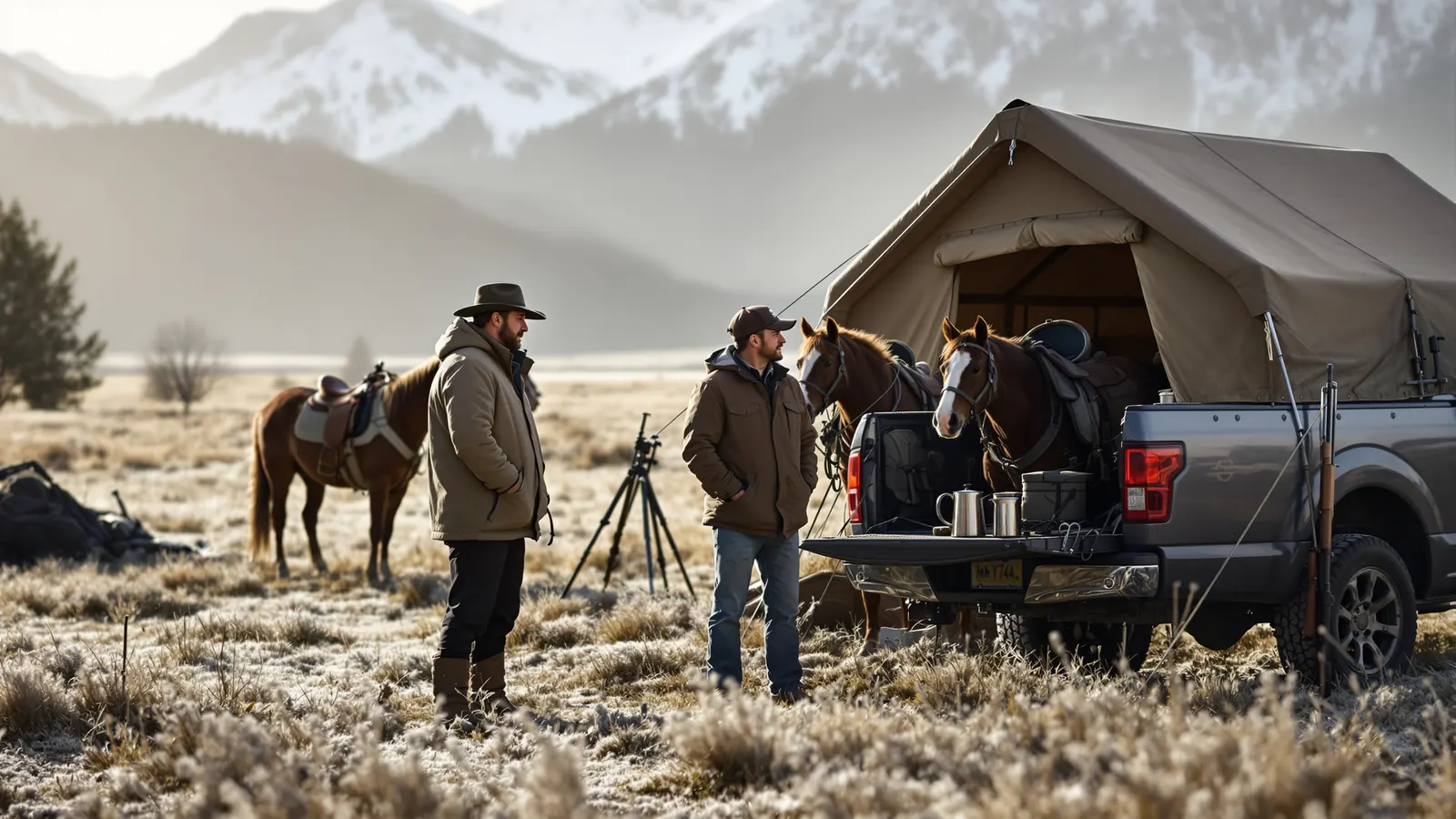
A guide lives in your camp from September through November, rides your horses, follows your hunt plan, takes the clients you assign and is paid a daily rate. You expect him back next year. Almost every factor here points the same way: control, your equipment, an ongoing relationship and work that is the core of your business. This arrangement looks like employment under both tests.
The duck guide with his own spread
A waterfowl guide owns a boat, a trailer of decoys and two retrievers. He guides for you on weekends, runs his own clients midweek and guides for another outfit in a different flyway in January. You tell him which pond and how many hunters; he decides how to set the spread and when to call it. This one is mixed. The investment and multiple clients point toward contractor; your control of the client list and the fact that his work is what you sell point the other way.
The charter captain running his own boat
You book overflow trips to a captain who owns and insures his boat, holds his own Coast Guard credential, sets his own trip style and has his own customers. You send him a client, he sends you an invoice. This looks like one business buying a service from another, which is the classic contractor picture.
The pattern is simple: the more a guide looks like a separate business with their own customers, equipment and risk, the stronger the contractor case. The more they look like your crew, the more likely they are employees.

Independent contractor vs employee paperwork, side by side
Once you decide, the forms follow the answer. Set them up before the first hunt, not in January when you are trying to remember who worked which weekend.
| Step | Employee guide | Contractor guide |
|---|---|---|
| At hire | Payroll setup and new-hire forms (your payroll provider or CPA will list them) | Form W-9 with their taxpayer ID |
| Each payday | Withhold income tax and the employee share of Social Security and Medicare; pay the employer share and unemployment tax | Generally no withholding |
| Year end | Form W-2 | Form 1099-NEC when payments reach the reporting threshold |
| Recordkeeping | Payroll records, hours for overtime purposes | W-9 on file, invoices, the contract |
The IRS page on forms for independent contractors says to keep the W-9 in your files for four years. If a contractor does not give you a correct taxpayer ID, the same page says you must withhold 24% as backup withholding.
Watch the threshold change. The 2026 instructions for Forms 1099-MISC and 1099-NEC state that for tax years beginning after 2025 the minimum reporting threshold increased to $2,000, with inflation adjustments possible starting in 2027. A guide you paid a few hundred dollars for one hunt may no longer need a 1099-NEC, but a guide who worked the season almost certainly does. Confirm the current number with your CPA each January.
If you guessed wrong on independent contractor vs employee
Misclassification is fixable, and it is cheaper to fix early. The IRS describes several paths on its classification page.
- Form SS-8. Either you or the guide can ask the IRS to determine status. The IRS warns this can take at least six months, so it is a tool for an ongoing question, not a quick fix before the season.
- Voluntary Classification Settlement Program. Eligible businesses that agree to treat workers as employees going forward can get partial relief from federal employment taxes. You apply with Form 8952.
- Relief provisions. If you had a reasonable basis for contractor treatment and filed the required information returns consistently, you may be relieved of employment taxes. Without a reasonable basis, the IRS says the relief does not apply.
- The guide's side. A guide who believes they were wrongly treated as a contractor can file Form 8919 to report their share of uncollected Social Security and Medicare taxes. That filing can put your classification in front of the IRS.
Wage claims under the FLSA run separately from tax issues. Back overtime for long peak-season days is a real number for an outfit that runs dawn to dark. Talk to an employment attorney before you reclassify anyone, since how you make the change also matters.
One more practical point: revisit the independent contractor vs employee question when a guide's role changes. The weekend duck guide who becomes your full-time camp manager two seasons later is not in the same position he started in, and the classification you chose for the first arrangement may not fit the second.
Running guides cleanly once you decide
Whatever your independent contractor vs employee answer turns out to be, the records that support it come from how you run the season. Clear schedules, clear pay records and clear expense tracking make either classification easier to defend and easier to hand to your accountant.
- Who did which hunt. In HuntReserve, guides get their own access level and see the hunts they are assigned, while owners and managers see the money. That gives you a dated record of which guide worked which day.
- What the guide brought. If a contract guide supplies a boat or dogs, note it on the hunt. It supports the investment factor you relied on.
- Costs and payouts. Record guide payments and camp expenses against each hunt and view profit and loss by month and by hunt. QuickBooks Online sync moves those numbers to your books without retyping.
- Harvest and trip logs. The Harvest Log ties species and location to a guide, which helps when you review the season.
See the full list on our features page, or how the platform fits a lodge or camp on the hunting outfitter software page. Charter operators can look at the fishing charter and guide software page instead.
Pay structures are their own topic. Our post on how much hunting guides make covers day rates, per-hunt pay and tips, and hunting guide jobs covers hiring and onboarding seasonal staff. If you want help setting up guide access and payouts for next season, talk to us about your outfit.
Frequently asked questions
Can a hunting guide be a 1099 contractor?
Yes, if the facts support it. A guide who runs a real guiding business, owns their equipment, sets their own methods, carries their own costs and works for several outfitters can be a contractor. A guide who follows your schedule, uses your gear and works only for you during the season looks much more like an employee, whatever the agreement says.
Does signing an independent contractor agreement settle the question?
No. The IRS treats a written contract as one piece of evidence about the type of relationship, and the Department of Labor says what the worker is called is not relevant. If the day-to-day work shows that you control how the guide works, the agreement will not carry the decision on its own.
When does a contract guide need a 1099-NEC?
When your payments to a contractor guide during the year reach the reporting threshold. The IRS instructions say that for tax years beginning after 2025 the threshold increased to $2,000, and it may be adjusted for inflation starting in 2027. Collect a W-9 before the first payment so you have the guide's taxpayer ID ready in January.
Are tips a classification issue for guides?
Tips do not decide whether a guide is a contractor or an employee, but they are handled differently depending on the answer. Employees generally report cash tips to their employer, who includes them in payroll reporting. Contractors report tips as part of their own business income. Ask your CPA how your outfit should document tips.
What should an outfitter do if guides were misclassified in past seasons?
Talk to a CPA or employment attorney before changing anything. Options include the IRS Voluntary Classification Settlement Program for future periods and correcting payroll going forward. Unpaid overtime under wage law is a separate issue that may need its own review. Fixing the problem early usually costs less than waiting for a claim.
Sources
- IRS: Independent contractor (self-employed) or employee?
- IRS: Forms and associated taxes for independent contractors
- IRS: Instructions for Forms 1099-MISC and 1099-NEC (12/2026)
- DOL WHD Fact Sheet 13: Employment relationship under the FLSA
- DOL WHD: Independent contractor rulemaking
- IRS: Tip recordkeeping and reporting
- Wyoming State Board of Outfitters and Professional Guides FAQ
Rules, fees and policies change. This guide was checked against the official sources above in October 2026. It is general information, not legal, tax or insurance advice: confirm the current details with the agency or a licensed professional before you rely on them.
Keep reading
More from the HuntReserve blog

How Much Do Hunting Guides Make? Pay Models, Tips and What Moves the Number
Day rates, per-hunt pay, seasonal wages, tips, and room and board: how hunting guide income is really built, what pushes it up, and how outfitters can set pay that holds up.
12 min read
Hunting Guide Jobs: Finding Work, and Hiring the Right Guides
Where guiding work actually comes from, the hiring calendar, what outfitters look for and how to apply, plus how outfitters can post, hire, onboard and schedule seasonal guides.
12 min read
Outfitter Insurance: The Coverages a Guide Service Actually Needs
A plain breakdown of the policies a hunting outfit carries, from general liability to horses, trucks, lodges and guides, plus what federal land permits require and what underwriters will ask you.
13 min readSpend the season in the field.
Let HuntReserve run the office.
Tell us about your outfit. We'll call you, walk you through it with your own hunts and get you set up.