Home / Blog / By hunt type
Trapping, hunting and the paperwork between
Feral Hog Control for Ranches and Hog Outfitters: What Actually Works
Paid hog hunts are a good business and a weak population tool on their own. How ranches and outfitters combine whole sounder trapping, shooting, disease precautions and good records to keep pigs in check.
Feral hog control is one of the few land management problems where a rancher and a hog outfitter want almost the same thing: fewer pigs tearing up the place. The rancher wants rooted pastures, broken feeders and damaged crops to stop. The outfitter wants a sustainable hunt business on land that the owner is glad to have them on. Getting both requires being honest about what each tool can and cannot do.
This guide covers the methods that agencies recommend, where paid hunts fit, the disease and transport rules that apply when pigs are handled, and the records that tie it all together. Rules differ by state, and Texas examples are used throughout because Texas publishes detailed guidance. Check your own state wildlife and animal health agencies before you trap, move or sell a pig.
Short answer
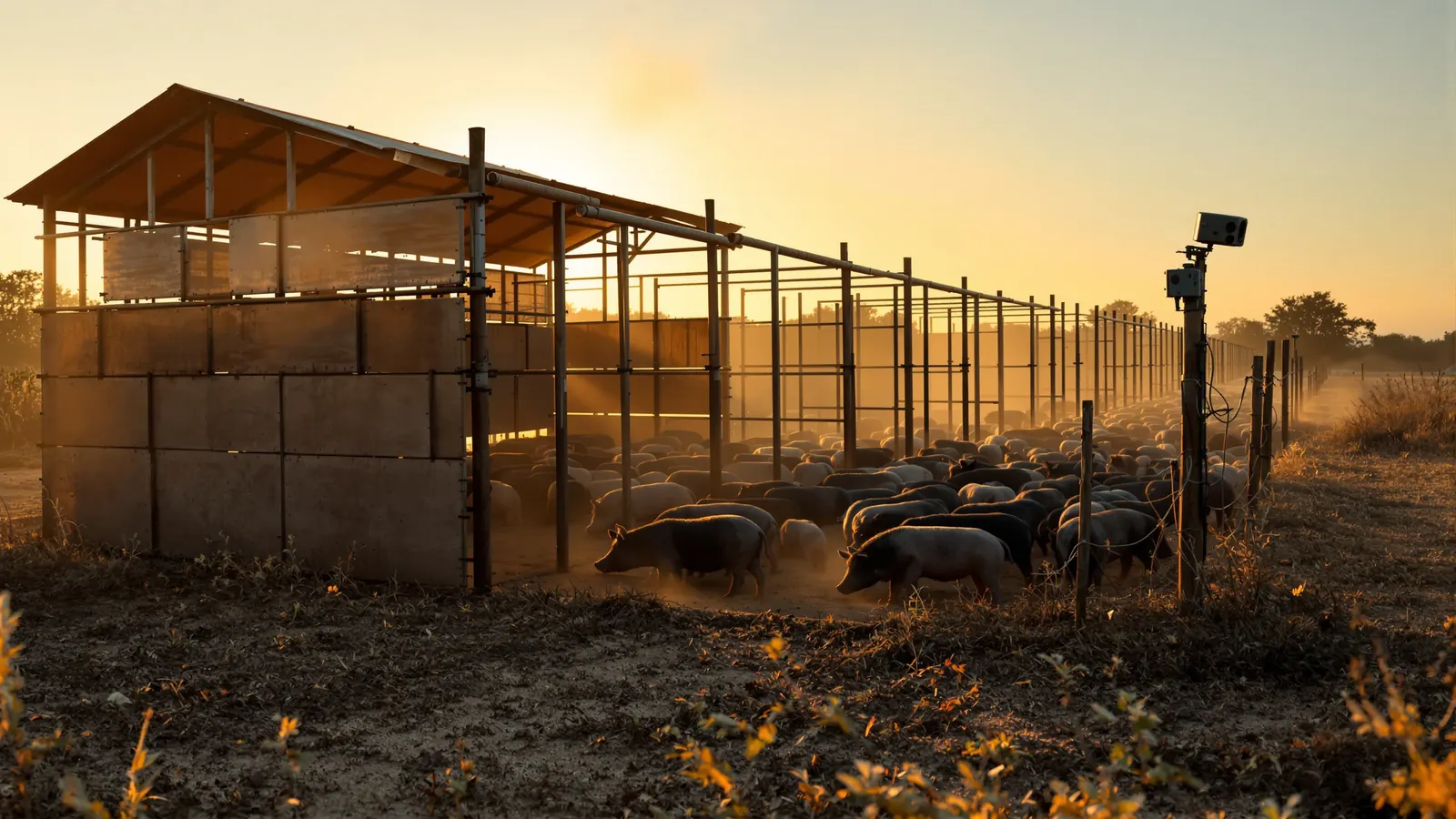
Effective feral hog control combines several tactics: whole sounder trapping with corral traps, targeted ground shooting, aerial removal where permitted, and fencing to protect high-value areas. Removing entire groups, including sows and young pigs, matters more than shooting big boars. Recreational hunting helps locally but does not control a population alone.
Why feral hog control matters to landowners and outfitters
USDA's Animal and Plant Health Inspection Service calls feral swine a dangerous and destructive invasive species. Its feral swine program page puts the minimum annual cost of feral swine damage in the U.S. at $3.4 billion and lists the kinds of damage they cause: crops and livestock, property, wetlands and waterways, native wildlife habitat, historic sites, and human health and safety, including vehicle collisions.
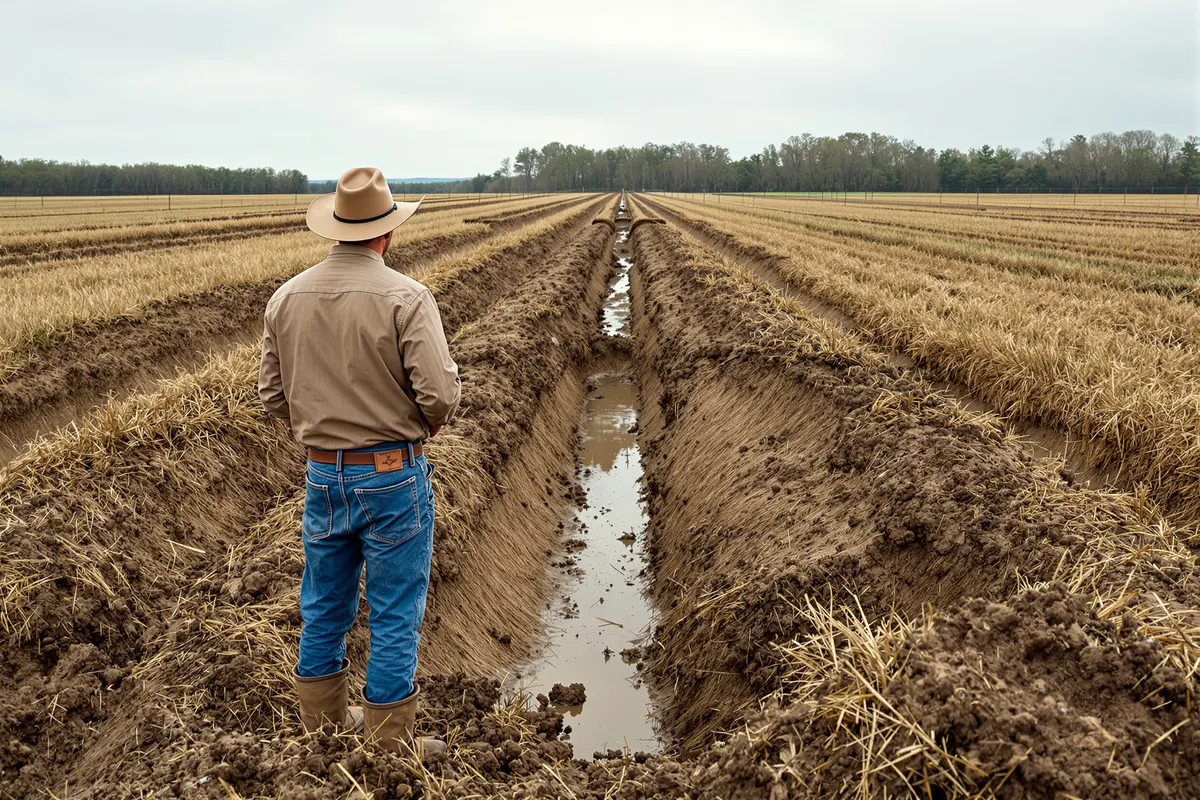
On a working ranch that shows up as rooted hay meadows, wallows in stock tanks, torn-up food plots, corn feeders emptied overnight and fences pushed through. For a deer or turkey outfitter the hogs compete with the game you are selling. For a hog outfitter, they are the product, which creates a tension worth facing directly.
Signs you have more pigs than you think
- Fresh rooting or digging, especially along creeks and field edges.
- Muddy wallows and mud rubbed high on trees, posts and power poles.
- Tunnels through thick brush and hoof tracks near water.
- Game cameras showing sows with piglets at different ages, which means multiple litters.
APHIS lists rooting, wallows, tree rubbing, tunnels through vegetation and tracks near water among the signs to watch for.
Integrated feral hog control: no single tool works
APHIS says the most successful programs combine several tactics in an integrated approach. Its listed methods include whole sounder trapping, fencing, livestock vaccination, ground removal and aerial removal. It also notes that nonlethal methods can limit disease spread and damage, while lethal methods are generally more effective at limiting population growth.
The key idea is the sounder: a family group of sows and their young. Remove a whole sounder and that breeding unit is gone. Shoot one or two pigs out of a group of fifteen and the survivors scatter, get warier, and keep breeding.
| Tool | Best use | Limits |
|---|---|---|
| Corral trapping | Removing whole sounders at a baited site | Labor to build, bait, monitor and dispatch |
| Box traps | Single problem pigs or small groups | Catch only a few at a time; escapees get trap-shy |
| Night shooting | Crop fields with heavy damage | Less effective in thick cover; check legal hours and equipment rules |
| Dogs | Pigs that avoid traps, dense cover | Slow; not a population tool |
| Aerial removal | Large open country with high pig density | Permits, cost, neighbor cooperation |
| Fencing | Protecting high-value areas like feed sites and gardens | Expensive over large areas |
| Paid hunts | Revenue, local pressure, filling openings | Selective harvest, can disperse pigs |
Whole sounder trapping: the backbone of a control program
Texas Parks and Wildlife Department's wild pig ecology and management page describes trapping and dispatching as the most popular lethal control method. It splits traps into two groups. Box traps are portable and suit single animals or small groups, but if used on large sounders the pigs that escape can learn to avoid traps. Corral traps are larger, often semi-permanent, and catch many pigs at once; TPWD cites research finding corral traps captured more than four times as many pigs as individual box traps.
How a corral trapping sequence usually runs
- Scout. Find fresh sign near water and travel corridors. Put a game camera on the spot.
- Pre-bait. Bait the site without a trap until the whole sounder visits regularly. Check your state's rules on bait.
- Build the corral. Panels and posts go up around the bait with the gate tied open so pigs keep coming in.
- Watch. A cellular camera shows when every pig in the group, including the cautious old sow, is inside.
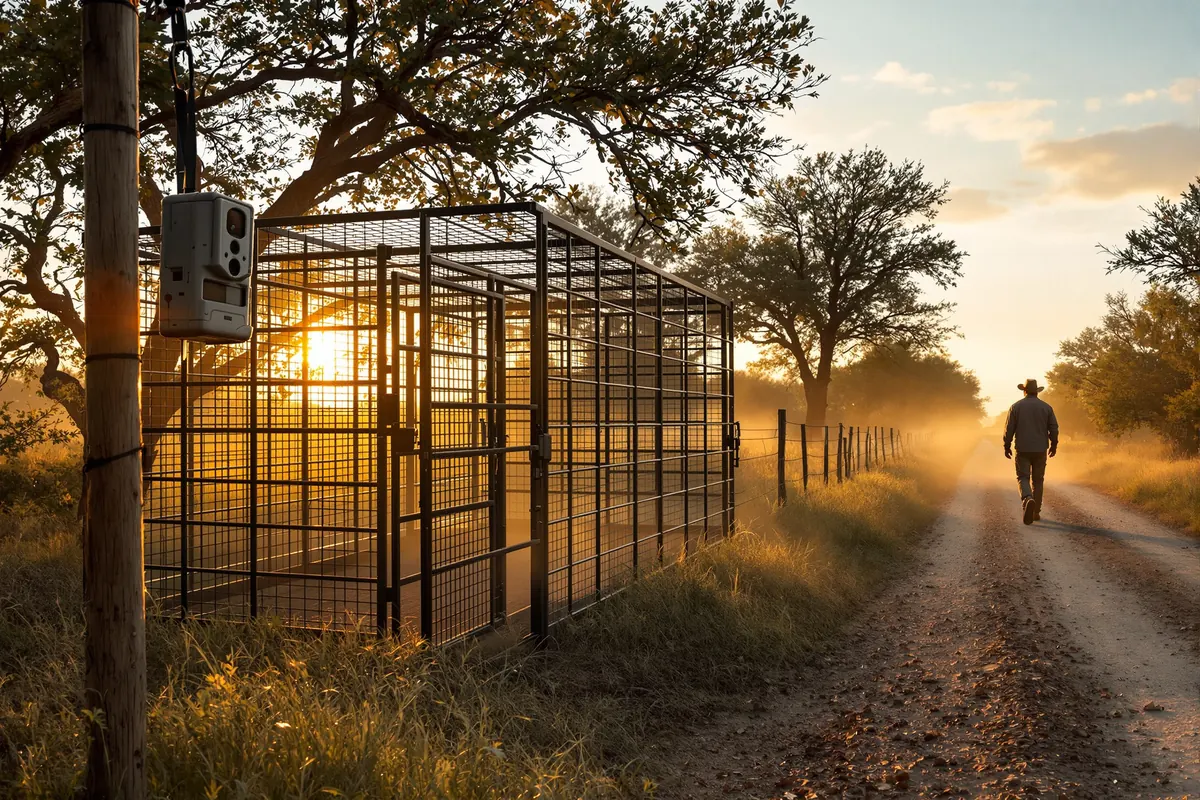
- Trigger. TPWD notes that remote-triggered gates let trappers close the trap from a phone once the whole sounder is in.
- Dispatch or transport according to your state's rules.
TPWD also points out the main drawback: setting up and monitoring corral traps takes real time, and traps are hard to deploy in remote areas a truck or boat cannot reach.
Ground shooting, dogs and aerial work
Night shooting
Pigs often shift to night feeding where they are pressured. TPWD notes that night vision optics and sound suppressed rifles have made night shooting more effective, especially in agricultural fields, and that efficacy drops as cover thickens. Confirm your state's rules on night hunting, lights and equipment before anyone goes out.
Safety when shooting at night
Night work concentrates risk. Livestock, other shooters, ranch hands checking water and neighbors' houses can all be in the same dark pasture as the pigs. A few habits keep a night program safe:
- Identify every target fully before shooting. A heat signature is not an identification.
- Know the backstop for every shooting lane, and mark lanes on the property map in daylight.
- Tell the landowner and any ranch staff when and where shooters will be out.
- Keep radios or another reliable way to communicate, since many ranches have patchy signal.
- Limit the number of shooters per field and assign positions in advance.
Write those rules into your client briefing so feral hog control never trades one problem for a worse one.
Dogs
Skilled bay and catch dogs can pull out individual pigs that avoid traps and shooters. TPWD describes dogs as useful for those holdouts but not as a way to reduce populations at scale. If you run dog hunts as a product, the welfare of the dogs and the safety of clients both need a plan, and a kennel log helps.
Aerial removal
Shooting from helicopters can knock down numbers quickly in open country with sparse tree cover. TPWD notes it works best where canopy is thin and pig density is high, and that getting enough contiguous acreage and paying for aircraft are the usual obstacles. In Texas, aerial take requires an Aerial Wildlife Management Permit from TPWD; the wild pigs page links to the permit information. Other states handle aerial work differently, so check with your state wildlife agency before booking a flight.
Where paid hog hunts fit, honestly
Hog hunting is a real business and a fun one, and it can be part of feral hog control. Night hunts over feeders, spot and stalk in the brush, dog hunts and thermal hunts all fill calendars. But paid hunting on its own is not a reliable feral hog control program, and pretending otherwise damages trust with landowners.
TPWD's page explains why: recreational hunting can disperse pigs, and harvesting mostly big "trophy" boars does little to slow reproduction. Removing females and juveniles has the greatest impact. TPWD also warns that the economic value of pig hunting has driven illegal transport and release of pigs into new areas, which it notes is illegal in Texas.
How to make hunts and control work together
- Agree with the landowner that hunts are one tool, and trapping continues alongside them.
- Encourage clients to take any legal pig, including sows and young pigs, rather than only big boars.
- Use hunts on properties or parts of properties where trapping is impractical.
- Be careful with feeders. TPWD notes that supplemental feed tied to bounty and trophy hunting can work against population reduction. Bait to remove pigs, not to grow a herd for clients.
- Share harvest numbers with the landowner every month.
Outfitters who run hog hunts as a core product can see how bookings, waivers and harvest records fit on our hog hunting outfitter software page.
A first-year plan for a ranch and its outfitter
If a ranch and an outfitter are starting feral hog control together, a simple first-year structure keeps both sides aligned. Adjust the timing to your region, crops and seasons.
Step 1: Put it in writing
Agree on who traps, who hunts, who pays for bait and equipment, where clients may go, and how results are reported. If the outfitter leases hunting rights, the control duties belong in the lease itself. Our guide to the hunting lease agreement covers how to write those terms, and the same document should say whether live pigs may be sold and who keeps the money.
Step 2: Map the problem
Walk the property and mark rooting, wallows, crossings and water on a map. Put cameras on the hottest spots for two to three weeks. The goal is to count sounders, not individual pigs, and to learn where each group feeds and beds.
Step 3: Trap the biggest sounders first
Start corral trapping where damage is worst and the cameras show the largest groups. Each sounder removed is a breeding unit gone. Keep traps running through the times of year when natural food is scarce and pigs come to bait readily.
Step 4: Use hunts where traps struggle
Schedule paid hunts on areas that are hard to trap: thick creek bottoms, fields far from roads, places where pigs have learned to avoid traps. Brief clients that sows and young pigs are fair game and welcome.
Step 5: Protect what matters most
Fence feeders, gardens and high-value food plots so the pigs that remain cannot undo your work. APHIS lists fencing among its tools for that reason.
Step 6: Review every quarter
Compare removals, camera counts and damage maps. If camera counts keep climbing despite steady removals, pigs are likely moving in from neighbors, and the conversation shifts to cooperating across fence lines. Feral hog control works best at the scale of a whole drainage or neighborhood, not one ranch at a time.
Disease and safe handling
Pigs carry diseases that affect people, livestock and pets. TPWD lists brucellosis, leptospirosis, toxoplasmosis and trichinosis among those that can infect humans, and warns that the largest threat is spread to domestic livestock.
The CDC's guidance on brucellosis risks for hunters lays out simple precautions for anyone handling feral swine:
- Wear eye protection and latex or rubber gloves when handling carcasses.
- Wash hands with soap and warm water for 20 seconds as soon as possible after butchering.
- Bag and discard disposable gloves and carcass parts you will not eat.
- Cook meat thoroughly. Freezing, smoking, drying and pickling do not kill the bacteria.
- Keep dogs from eating raw meat or carcass parts, and avoid touching hunting dogs that have had contact with carcasses.
Put these steps in your guide training and your client briefing, keep gloves and eye protection at the cleaning station, and add a line to your emergency plan. Our guide to an emergency action plan covers the rest of camp safety, and the hunting liability waiver post covers the paperwork side of animal handling risks.
Rules for moving live pigs
Live pigs are regulated for disease reasons, and transport rules catch people who are only trying to sell trapped animals or stock a pen. In Texas, the Texas Animal Health Commission regulates the movement of live feral swine. TAHC says approved feral swine holding facilities serve as temporary places to hold pigs pending movement to a recognized slaughter facility, an authorized hunting preserve, or another approved holding facility, and that approved holding facilities may buy trapped feral swine. TAHC also cites historical test data indicating that about 10 percent of feral swine are infected with swine brucellosis.
What that means in practice:
- Do not move live pigs anywhere except where your state allows.
- If you sell trapped pigs, use an approved buyer or facility.
- If you operate a pen or preserve hunt, check whether it must be authorized and what identification rules apply.
- Outside Texas, ask your state animal health agency and wildlife agency before transporting any live pig.
APHIS also asks the public to report feral swine sightings, which helps in states working toward eradication. APHIS notes that 12 states have eradicated feral swine since 2014, which is a reminder that in some places the goal is zero pigs, not a huntable population.
Records that keep a feral hog control program honest
A feral hog control program without records is a guess. A landowner paying for trapping, or allowing paid hunts as part of control, deserves to see numbers. Keep track of:
- Every pig removed: date, method (trap, shooting, dogs, aerial), location, sex and approximate size.
- Trap sites, bait dates and camera checks.
- Paid hunts: hunter, guide, pigs taken.
- Damage observations by field or pasture over time.
- Any pigs sold or transported, with the buyer or facility.
HuntReserve's Harvest Log records species, location and guide for every harvest and rolls them into season totals and success rates. Property maps hold your fields, blinds, stands and trap sites, and gear and feed tracking warns when bait or corn runs low. For ranches that run hunts alongside livestock, see our ranch, preserve and club software, or look at every feature. When you are ready to run hog hunts and control on one system, get started.
Frequently asked questions
What is the most effective method of feral hog control?
No single method works alone. USDA APHIS says the most successful programs combine several tactics. For most private land, whole sounder trapping with large corral traps is the backbone, supported by targeted shooting, fencing for high-value areas and aerial removal where permitted. Removing entire family groups matters more than the number of individual pigs shot.
Does hog hunting reduce feral hog populations?
Recreational hunting can reduce pigs locally but rarely controls a population by itself. Texas Parks and Wildlife notes that hunting pressure can disperse pigs and that selectively taking large boars does little to slow breeding. Hunts work best as one part of a program that also includes trapping.
Is it legal to transport live feral hogs?
It depends on the state, and the rules are strict. In Texas, the Texas Animal Health Commission regulates live feral swine movement, and approved holding facilities move pigs only to slaughter, an authorized hunting preserve or another approved facility. In other states, ask the state animal health and wildlife agencies before moving any live pig.
Can you get sick from cleaning a wild hog?
Yes. Feral swine can carry brucellosis and other diseases that infect people. The CDC recommends eye protection and latex or rubber gloves when handling carcasses, washing hands for 20 seconds afterward, cooking meat thoroughly, and keeping dogs away from raw meat and carcass parts.
Do you need a permit to shoot hogs from a helicopter?
In Texas, yes. Texas Parks and Wildlife issues Aerial Wildlife Management Permits for taking wildlife or exotic animals from aircraft. Rules differ widely from state to state, so check with your own state wildlife agency before any aerial work, and confirm the operator holds the right permit.
Sources
- USDA APHIS: Feral Swine
- Texas Parks and Wildlife: Wild Pigs ecology and management
- Texas Animal Health Commission: Swine Health, Feral Swine
- CDC: Brucellosis, hunters' risks
Rules, fees and policies change. This guide was checked against the official sources above in October 2026. It is general information, not legal, tax or insurance advice: confirm the current details with the agency or a licensed professional before you rely on them.
Keep reading
More from the HuntReserve blog
Emergency Action Plan for Hunting Camps, Lodges and Fishing Charters
Roles, communication with no cell signal, evacuation routes, trauma center planning, scenario cards for tree stand falls, lightning and man overboard, plus drills that fit a real hunting schedule.
12 min read
Hunting Liability Waiver: What Yours Should Cover, Clause by Clause
The hunting specific risks, clauses and signing habits that belong in an outfitter's waiver, from tree stands and firearms to minors, guardians, medical consent and how state law can change the picture.
12 min read
The Harvest Report: Deadlines, Who Files It, and a Camp Routine That Never Misses One
Mandatory harvest reporting has short clocks and the hunter usually owns the duty. Here is how real state rules work and how an outfit makes sure every animal gets reported.
12 min readSpend the season in the field.
Let HuntReserve run the office.
Tell us about your outfit. We'll call you, walk you through it with your own hunts and get you set up.