Home / Blog / Running your outfit
For landowners, clubs and outfitters
Hunting Lease Agreement: The Clauses That Protect Both Sides
Clause by clause: what a written lease for hunting rights should say about boundaries, money, guests, stands, liability and ending the deal, from the landowner side and the outfitter side.
A hunting lease agreement is the document that turns a handshake over a deer camp into something both sides can rely on when a gate gets left open, a check bounces or a neighbor shows up in a stand that is not his. Landowners write them to protect the farm. Outfitters and clubs sign them to protect a season of bookings that depend on that ground.
This guide walks through the clauses that do the real work, explains why each one matters, and shows where a landowner and an outfitter usually want different wording. It is general information, not legal advice. Have your own attorney review any lease before anyone signs, a point the University of Georgia Extension's hunting lease circular makes as well.
Short answer
A hunting lease agreement is a written contract giving a person, club or outfitter the right to hunt a defined property for a set term and price. A sound one names the parties, maps the boundaries, lists permitted game and methods, sets payment dates, controls guests and structures, allocates liability and insurance, and explains how either side can end it.
Why a hunting lease agreement has to be in writing
Verbal hunting deals work until the first disagreement, and a hunting lease agreement exists to head that off. Then each side remembers a different conversation: whether the son-in-law was allowed to hunt, whether the food plot on the north field was included, whether the second payment was due in July or August. A written lease settles those questions before they turn into a lost relationship or a lawsuit.
For an outfitter the stakes are higher than for a weekend club. You are selling hunts to paying clients on land you do not own. If the landowner can end the arrangement on a whim, or if the paperwork does not clearly allow commercial guiding, every deposit you take is exposed. Your clients are trusting that you actually hold the rights you are selling.
For a landowner, the lease is the main control you keep over people you will not be watching every day. It defines what they may do, what they must repair, and what happens if they break the rules.
Three things every lease must answer
- Who may enter the property, by name, and under what conditions.
- What they may do there: species, methods, seasons, camping, vehicles, structures.
- What happens when something goes wrong: injury, damage, nonpayment, game violations, sale of the land.
Parties, property and boundaries
Start the hunting lease agreement with the basics, and make them precise. List the landowner (the lessor) and every lessee by legal name. If the lessee is a club or an outfitting company, name the entity and identify who signs for it. UGA's circular recommends limiting the rights in the lease to the people and land described in it and attaching a map or legal description of the property.
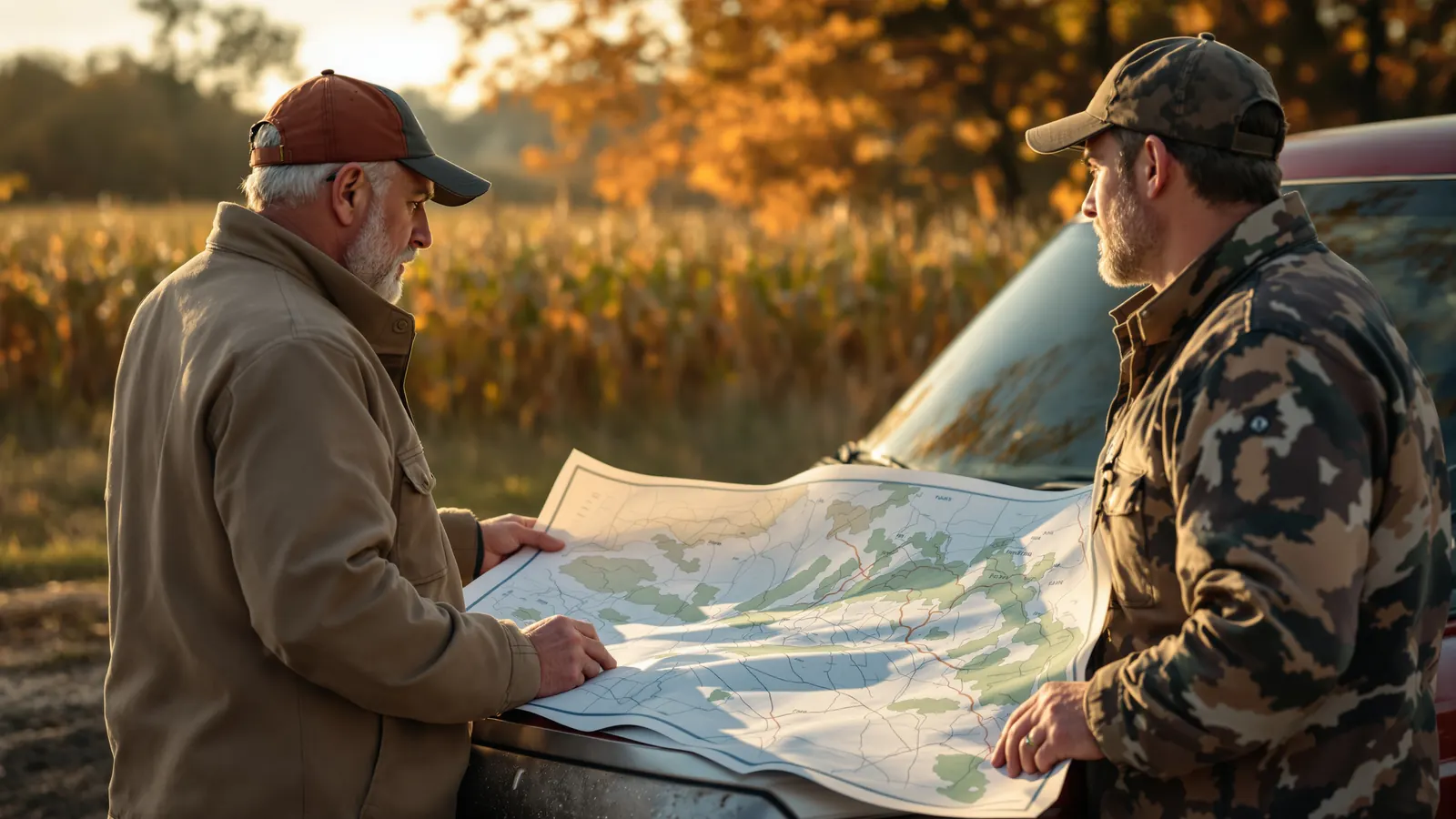
Boundaries cause more friction than almost anything else. A parcel description from the deed is a start, but hunters need something they can use in the woods. Attach an aerial map with the leased area outlined, and mark:
- Excluded areas: the house, barns, livestock pastures, a pond the family uses, a timber stand being cut that year.
- Access routes: which gates and roads the lessee may use, and which are off limits.
- Parking and camping spots, if any are allowed.
- Shared boundaries where neighbors hunt, so nobody wanders across a fence line after a wounded deer without permission.
Also spell out who else keeps rights on the property. The landowner may want to keep hunting, fishing or cutting timber. Utility companies and neighbors may hold rights of way. A lease that ignores those rights sets up a surprise in November.
Term, rent and the payment schedule
The term clause of a hunting lease agreement should state the start and end dates exactly. Some leases run a calendar year, some run from a date before the earliest season to the end of the last one, and some cover a single season. A defined term matters because it controls when the lessee may hang stands, plant plots and run cameras, not just when they may shoot.
Then cover the money in detail:
- The total rent, and whether it is a flat amount, per acre or per member.
- Due dates for each installment and where payment goes.
- What happens with a late or returned payment, including any grace period.
- Whether rent is refundable if the lease ends early, and how the refund is calculated.
- Any security deposit for damage, and when it comes back.
Avoid quoting a "going rate" from a neighbor or a forum. Rent depends on acreage, habitat, game quality, improvements, location and how much access the landowner is giving up. Agree on a number that works for both sides and write it down, along with the schedule.
Renewal and right of first refusal
Outfitters often want a right of first refusal: if the landowner plans to lease to someone else next season, you get the chance to match the offer first. Landowners may prefer a simple annual term with an option to renew by mutual agreement. Either way, set a date by which both sides confirm renewal so the outfitter is not selling hunts on ground that may not be available.
Permitted game, methods and conduct
List the species the lessee may hunt, and be explicit about anything excluded. A landowner may lease deer and turkey rights while keeping waterfowl on the pond for family use. Address weapons and methods where the landowner has preferences, such as archery only near the house or no rifles in a certain section.
Most extension templates require the lessee to follow every state, federal and local wildlife law. UGA's suggested language goes further: a conviction of a wildlife violation by any single member of the hunting group ends lease privileges. That clause gives a landowner a clean exit and gives everyone in the group a reason to police each other.
Consider adding conduct rules that matter on your ground:
- Harvest limits or quality standards beyond state law (for example, antler restrictions a landowner wants for herd management).
- Use of baiting or feeders, only where your state allows it.
- Trail cameras: where they may go and who owns the photos.
- Litter, fire rules and the duty to report trespassers or wildfires.
- Alcohol and firearm rules in camp.
Guests, members and subleasing
Guest rules are where many a hunting lease agreement quietly fails. A ten-member club becomes thirty people with guests, and the landowner never agreed to that. The lease should say whether guests are allowed, how many at once, on which days, and whether a member must accompany them.
Require every person who hunts the property to sign the lease or a written addendum. UGA's sample includes a line stating that people who have not signed are not authorized to hunt or enter the property. It is simple and it works.
Subleasing and commercial use
Many standard leases prohibit subleasing and commercial hunting or guiding. That is the right default for a recreational club, and the wrong one for an outfitter. If you plan to sell guided hunts, the lease must say so in plain words, along with any limits: number of paying clients per season, species, whether clients may stay on the property, and whether the landowner wants to approve each client.
Landowners in that situation often want a roster of who is coming and when. Outfitters who use booking and check-in software can share that list without extra work, because every client is already registered with their name, dates and signed paperwork.

Stands, food plots and improvements
Improvements are another common dispute. A lessee spends money on box blinds, plots and roads, then the lease ends. Who owns what?
| Item | What the lease should say |
|---|---|
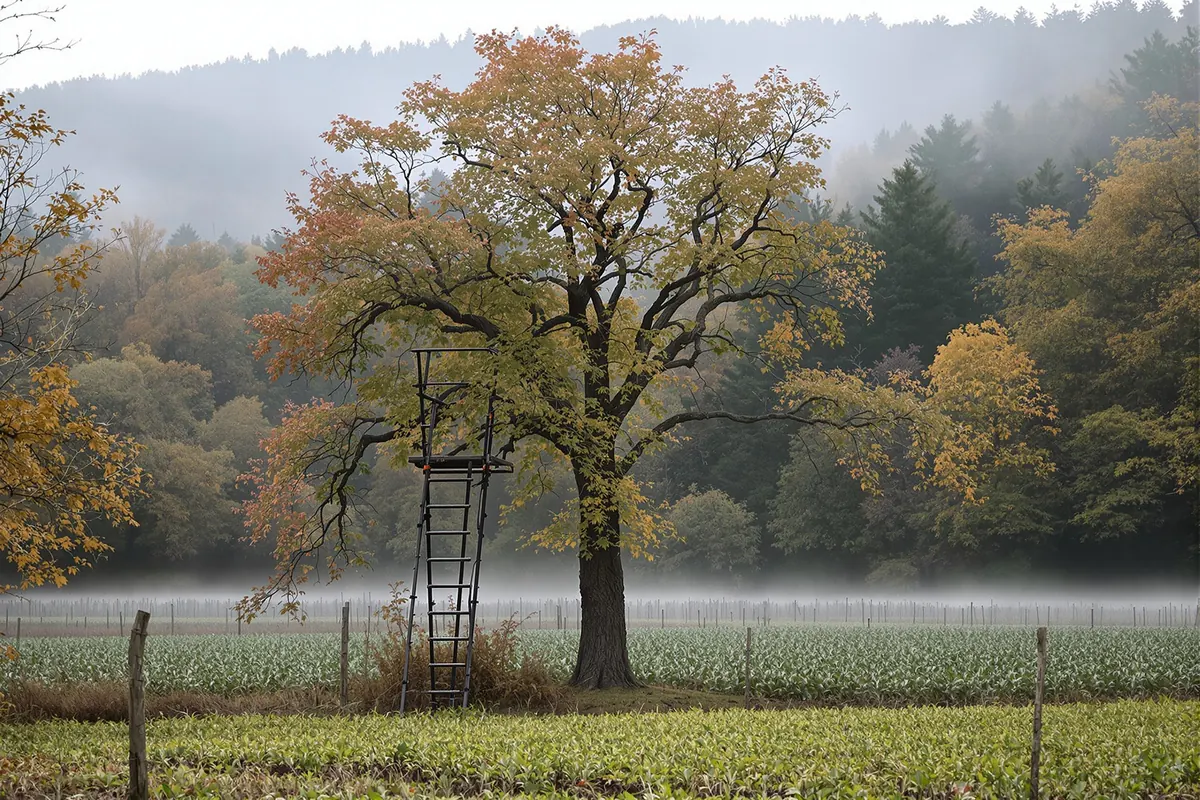
| Tree stands and ladder stands | Where allowed, whether screw-in steps or nails are permitted, and when stands must come down. UGA's suggested language bans driving nails or metal into trees. |
| Box blinds and permanent structures | Approval required before building, ownership at the end of the term, removal deadline. |
| Food plots | Locations, who pays for seed, lime and fertilizer, and whether the landowner's farm operation takes priority. |
| Feeders | Whether allowed at all, and compliance with state baiting rules. |
| Roads, gates and locks | Who maintains roads, and a requirement to give the landowner a key or combination for any lock the lessee installs. |
| Signs and posting | Who posts the boundary, at whose cost, and wording the landowner approves. |
Include a damage clause: the lessee repairs any damage to fences, crops, roads, timber or buildings at their own expense. If you plan to run plots or manage habitat, our guide to food plots for outfitters and lease managers covers planning and records.
Liability, insurance and indemnity in a hunting lease agreement
This is the section that deserves the most attention from an attorney. A typical hunting lease agreement has the lessee accept the property "as is," acknowledge the hazards of hunting, and agree to hold the landowner harmless and indemnify them against claims. UGA notes that such a clause does not make a landowner immune from lawsuits, and that landowners still have a duty to warn of known hazards.
Recreational use statutes and fees
Many states have a recreational use statute that limits a landowner's liability to people who use the land for recreation. The catch for leases is the fee. University of Maryland's Agricultural Law Education Initiative explains that under Maryland's statute, a landowner who charges a fee such as a hunting lease does not get the law's protection, though a later Maryland law reduced some exposure for hunters.
Ohio State's Agricultural and Resource Law Program notes that Ohio's statute allows a lease payment fee without losing protection. The rules differ by state, which is exactly why your attorney should review this clause for your state.
Insurance requirements
- Require the lessee (club or outfitter) to carry hunting lease liability insurance.
- Require the landowner to be named as an additional insured, and ask for a certificate before the term starts.
- For outfitters, confirm your commercial policy covers guided hunts on leased ground.
Our post on hunting lease insurance explains what those policies typically cover and what underwriters ask. UGA also suggests the landowner have each lessee sign a list of the hazards that were described to them, such as old wells, fence wire or a washed-out creek crossing.
Termination, sale of the land and disputes
Every hunting lease agreement needs a clear exit. Cover these situations:
- Breach by the lessee. UGA's sample lets the landowner cancel immediately without refund for violations.
- Termination for convenience. The same sample allows cancellation for any reason with 30 days' written notice and a pro rata refund of unused rent. An outfitter will want a longer notice period, or no convenience termination during the season.
- Sale of the property. Does the lease survive a sale? Does the buyer have to honor it? Does the lessee get a refund?
- Timber harvest or farming changes. If the landowner cuts timber or changes crops, can the lessee reduce rent or leave?
- Death of the landowner. Who has authority over the lease?
State where notices go and how they must be sent. Name the governing state law and, if both sides want it, a mediation step before anyone files suit. Finally, everyone signs and dates, each lessee gets a copy, and UGA suggests notarizing if lessees do not sign in the landowner's presence.
Landowner vs outfitter: where the hunting lease agreement differs
The same clause can protect one side and squeeze the other. Here is where the negotiating usually happens.
| Clause | Landowner usually wants | Outfitter usually wants |
|---|---|---|
| Term | One year, renew by agreement | Multi-season term or first refusal |
| Commercial use | Prohibited or capped | Expressly allowed with a client count |
| Termination | Short notice, any reason | No convenience termination in season |
| Improvements | Stay with the land | Removable, or rent credit for value |
| Client approval | Approve each hunter | Roster shared in advance, no veto |
| Landowner hunting | Keep family rights | Defined days or areas only |
A fair hunting lease agreement usually lands somewhere in the middle: the outfitter gets enough certainty to sell a season, and the landowner keeps enough control to protect the farm.
Running the lease once it is signed
The paperwork is only half the job. Outfitters on leased land should track dues, member lists and guest days against the lease terms. HuntReserve memberships handle clubs, leases and season passes with dues and a ledger, and the Check-In Board shows who has signed and paid. If you run a club or preserve, see our software for ranches, preserves and clubs. Whitetail operations on leased farms can start with whitetail outfitter software, and our guide on starting a hunting club covers bylaws and dues.
A one-page checklist before anyone signs
- Every party named, with the signing authority for any company or club.
- Aerial map attached, with exclusions, access routes and parking marked.
- Exact start and end dates, and a renewal decision date.
- Rent, installments, due dates, late rules and refund rules.
- Species, methods and any harvest standards beyond state law.
- Guest rules, member list and the "unsigned means no access" line.
- Commercial guiding allowed or prohibited, in plain words.
- Stand, blind, plot, feeder, road and lock rules.
- As-is acceptance, hazard list, hold harmless and indemnity language reviewed by an attorney.
- Insurance type, landowner as additional insured, certificate on file.
- Termination for breach, for convenience, on sale and on death.
- Notice addresses, governing law and signatures from every lessee.
If you are building an outfit around leased ground and want booking, waivers and payments handled in one place, get started with HuntReserve.
Frequently asked questions
Who should write a hunting lease agreement, the landowner or the lessee?
Either side can draft the first version, but whoever drafts it tends to set the terms. Landowners often start from an extension service template, while outfitters often bring their own form that allows commercial guiding. Whoever writes it, both sides should have their own attorney review it before signing, because the liability and termination language affects each of them differently.
Does a hunting lease need to be notarized?
It depends on your state and the length of the term, so ask an attorney. As a practical step, the University of Georgia Extension suggests notarizing when the lessees do not sign in the landowner's presence. Notarizing confirms who signed and when, which helps if anyone later claims they never agreed to the terms.
Can an outfitter sublease hunting land to clients?
Only if the lease allows it. Many standard leases prohibit subleasing and commercial guiding entirely. An outfitter should make sure the lease expressly permits guided hunts for paying clients, with any limits on client numbers, species and lodging written in. Selling hunts on ground where the lease forbids it puts every deposit at risk.
What happens to a hunting lease if the land is sold?
The lease should answer that directly. Some leases end on sale with a prorated refund, some require the buyer to honor the remaining term, and some give the lessee notice and a chance to remove stands. Without a clause, the answer depends on state law, so write it in and have an attorney confirm it works where the land sits.
Do hunting lease clubs need insurance if the landowner has a farm policy?
Usually yes. A farm policy may not cover injuries to people who pay to hunt. Most landowners require the club or outfitter to carry hunting lease liability insurance and name the landowner as an additional insured. Ask a licensed insurance agent what your farm policy excludes before relying on it.
Sources
- University of Georgia Extension, Circular 971: Tips for Creating a Hunting Lease Agreement
- Ohio State University Agricultural & Resource Law Program: recreational user statute
- University of Maryland Agricultural Law Education Initiative: hunting leases and liability
Rules, fees and policies change. This guide was checked against the official sources above in October 2026. It is general information, not legal, tax or insurance advice: confirm the current details with the agency or a licensed professional before you rely on them.
Keep reading
More from the HuntReserve blog
Hunting Lease Insurance: What Clubs and Landowners Should Know Before Opening Day
Who should buy liability coverage on a hunting lease, how additional insured status works, which exclusions bite (tree stands, guests, ATVs) and what to ask a licensed agent.
13 min read
How to Start a Hunting Club That Members Still Like in Five Years
A club lives or dies on its paperwork: who belongs, what dues cover, who signs the lease, how stands are assigned and where the money goes. Here is how to set that up.
12 min read
Food Plots for Outfitters and Lease Managers: Planning, Planting and Hunting Them
A plot that feeds deer is not always a plot you can hunt well. How to plan plantings around soil, season, stand access and the law, and keep records that pay off.
12 min readSpend the season in the field.
Let HuntReserve run the office.
Tell us about your outfit. We'll call you, walk you through it with your own hunts and get you set up.