Home / Blog / By hunt type
Planting with paying hunters in mind
Food Plots for Outfitters and Lease Managers: Planning, Planting and Hunting Them
A plot that feeds deer is not always a plot you can hunt well. How to plan plantings around soil, season, stand access and the law, and keep records that pay off.
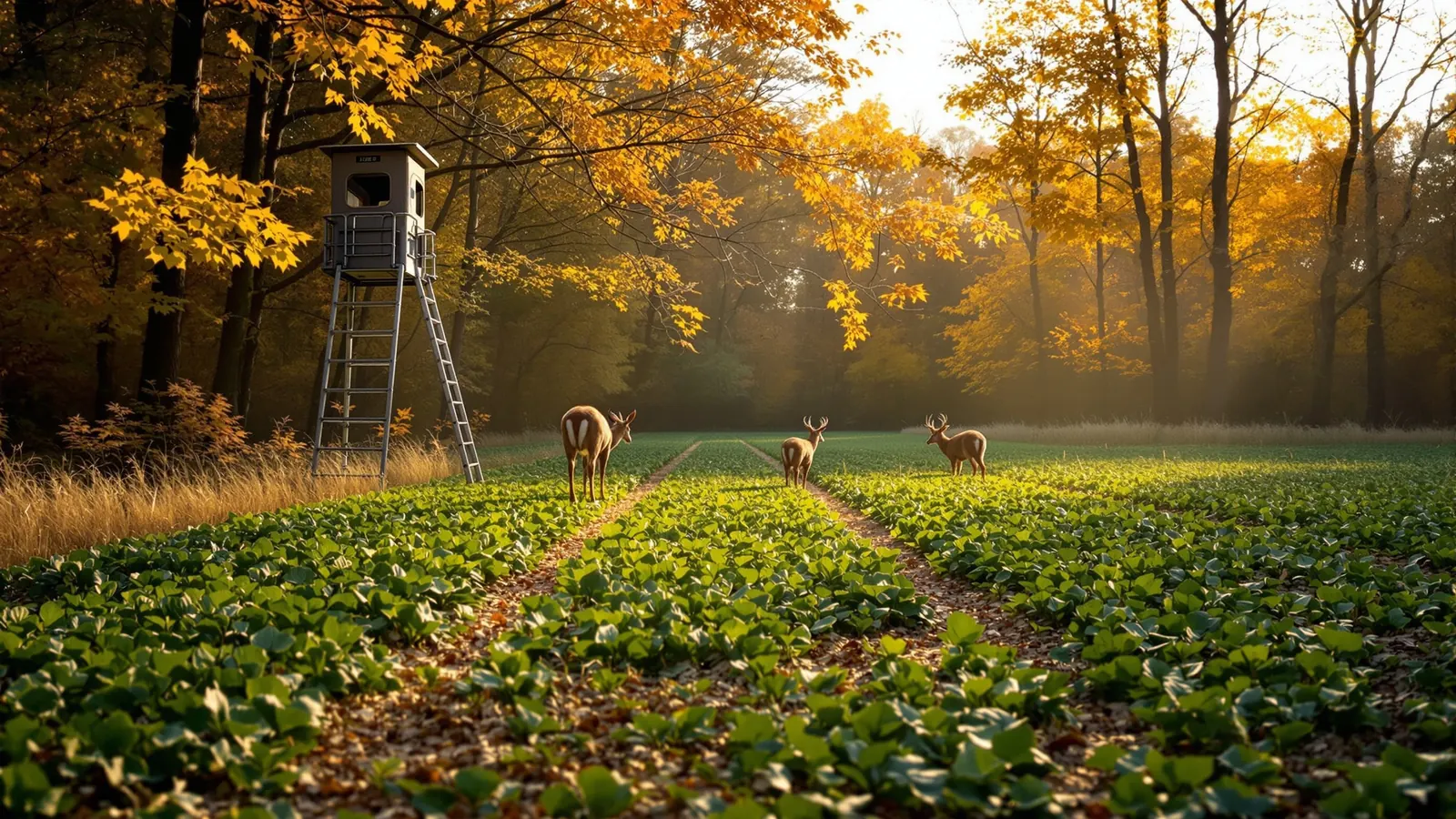
Food plots are one of the few things an outfitter or lease manager can change on a property between seasons. You cannot control the rut, the weather or the neighbor's pressure, but you can decide what grows in a clearing and where the stand goes on its edge. Done well, that clearing becomes a place your hunters see deer, turkeys or birds during legal light. Done poorly, it becomes an expensive patch of weeds.
This guide is written for people who plant with paying hunters in mind. It covers the two different jobs a plot can do, why the soil test comes first, how cool-season and warm-season plantings fit together, where to put plots so stands can be hunted on the right wind, and the legal line between a planted field and bait. Planting dates and species vary by region, so lean on your state's Cooperative Extension Service for local recommendations.
Short answer
Food plots are planted openings that provide forage for deer, turkeys and other wildlife. Outfitters use larger plots to improve nutrition and smaller, carefully placed plots to create huntable stand sites. Start with a soil test, follow your extension service's planting dates, and check federal and state baiting rules before hunting near any planting.
Two jobs: feeding the herd and setting up a hunt
Most mistakes with food plots start with not deciding which job each one is supposed to do. The two jobs pull in different directions.
| Nutrition plot | Hunting plot | |
|---|---|---|
| Purpose | Supply forage through stress periods | Draw animals into range of a stand during daylight |
| Size | Larger, enough to survive browsing pressure | Smaller, so every part of it is within shooting range |
| Location | Interior, low disturbance, often away from roads | Near cover, with a stand downwind and a quiet access route |
| Hunting pressure | Light or none | Hunted only on the right wind |
| Plantings | High-tonnage forage over a long season | Highly attractive forage during hunting season |
Many properties need both. A lease with a large interior field and three small hidden plots on travel corridors gives the herd a reason to stay and gives your guides several places to set hunters depending on the wind.
Keep expectations realistic. Treat plots as a supplement to good habitat, not a replacement for it. MSU Extension's 2026 deer article, for example, puts its habitat work (prescribed burning, disking, herbicides, tree felling) first and describes plots as supplemental forage on top of it. Native browse, cover and water still carry most of the load.
Start every season with a soil test
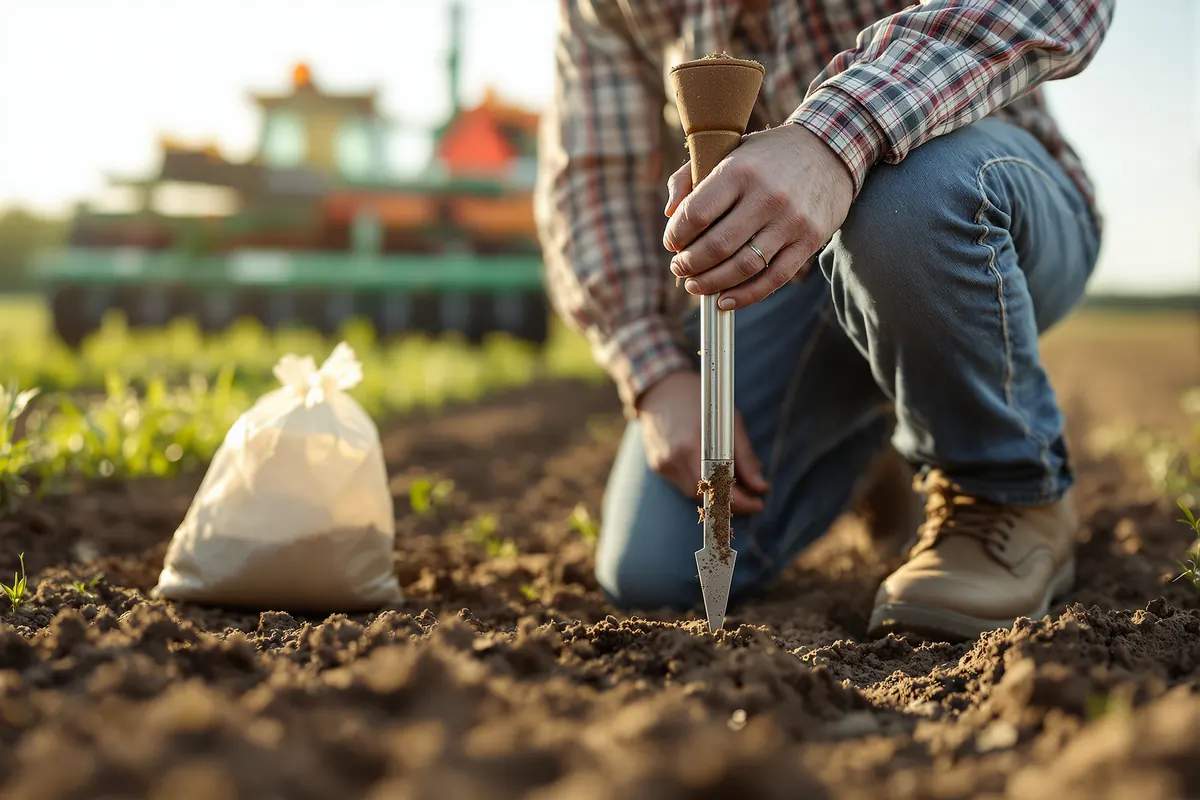
Skipping the soil test is the most common way to waste seed on food plots. Mississippi State University Extension's cost and production comparison of common deer plantings explains why: a soil analysis report gives you soil pH and nutrient availability, and forages planted in soils with a pH below 6.0 underperform in growth and production. Plants in acidic soil cannot take up fertilizer properly, so they end up less palatable and less nutritious.
The same publication puts it bluntly: planting food plots without proper liming and fertilization wastes time and money.
- Sample each plot separately. A bottomland plot and a ridge-top plot on the same lease can test very differently.
- Tell the lab what you plan to grow. Recommendations differ for clover, brassicas and grains.
- Lime early. Lime takes time to change pH, so apply it well before planting when you can.
- Fertilize to the report. Apply what the report calls for instead of a generic bag blend.
- Keep the results. A history of soil tests shows if your liming is working year over year.
Your county extension office can tell you how to collect and submit samples in your state.
Cool-season and warm-season plantings
Plantings divide by when they grow. Mississippi State's Deer Food Plot Planting Guide for the Southeast (publication M1591) lays out the main options and planting windows for the Southeast. Dates further north are different, so use your own state's guide for timing.
| Cool-season | Warm-season | |
|---|---|---|
| Southeast planting window | Mid-August to early November; small grains roughly August 15 to October 15 | Generally April to June; corn earliest, from April 1 |
| Examples | Oats, rye, wheat, triticale, Austrian winter peas, brassicas, chicory, alfalfa, several clovers | Corn, grain sorghum, cowpeas, soybeans, lablab, alyceclover, American jointvetch, buckwheat, sunflower |
| Role on a hunting property | Green forage during fall and winter hunting seasons | Nutrition through summer, when deer are building condition |
For most outfitters, cool-season plots are the hunting plots, since they are green and attractive when your clients are in camp. Warm-season plots do their work before the season. MSU Extension's outreach notes that warm-season plots help deer through late-summer stress so they can build fat reserves for winter.
A practical pattern on many properties is a warm-season planting in spring on the larger nutrition fields, followed by cool-season plantings in late summer and fall on hunting plots, with clover or other perennials in places that are hard to work every year.
Planting details that make or break a plot
Good seed in a poor seedbed still fails. The MSU cost and production publication lists several points that separate thick stands from thin ones:
- Firm seedbed. A firm seedbed produces the best results for most forage crops, especially small-seeded crops such as clover.
- Shallow small seeds. Plant clovers no more than a quarter inch deep.
- Seed quality. Quality seed should have a germination rate of at least 80 percent, and seeding rate should be based on pure live seed rather than the bag weight.
- Match the species to the site. Oats suit well-drained, light soils, while wheat tolerates poor drainage better than other small grains.
- Inoculate legumes. The planting guide says to buy pre-inoculated legume seed or inoculate with the correct inoculant before planting, and notes that most clover seed is sold already inoculated.
Weed control is the other big factor, especially for perennial clover plots that must last several years. MSU also publishes a land manager's guide to food plot herbicides; read the label and the extension guidance for anything you spray, and keep a record of what went on which field and when.
Placing food plots for stands, wind and access
A perfect plot in the wrong place is still a bad hunt. For hunting plots, placement matters more than what you plant, and it is the part of food plots that outfitters can plan on paper long before the tractor arrives.
Think about the wind first
Before you clear anything, decide where the stand or blind will go and which winds it can be hunted on. If the prevailing wind for your season blows from the stand toward the bedding cover, deer will wind your hunters on most sits.
Plan the walk in and the walk out
The best stands can be reached without crossing the plot or walking past bedding. Use ditches, creek bottoms, logging roads or a mowed lane screened by tall cover. Plan the exit after an evening hunt too, when deer are already in the field.
Keep hunting plots small and shaped
Narrow or irregular shapes with corners tucked into cover make deer feel safer in daylight and keep every part of the plot within range. Long, narrow plots also add edge, though they need enough width to get sunlight past the tree line.
Spread the options
Several small plots in different spots let guides rotate hunters by wind and keep pressure off any single field. A plot hunted every evening of the season tends to go nocturnal by the second week.
Think about the hunter in the stand, too. A shooting lane that looks obvious from a tractor seat can be blocked by a single cedar from 15 feet up. Climb into the stand before planting and look at what the hunter will see, including where the sun sits during the evening hunt. A client who is squinting into a low sun across the plot will not get a clean shot even if the deer show up on time.
Turkey hunters use the same openings in spring. Clover and other green plantings that hold up into spring can double as strut zones; see the turkey hunting outfitter software page for how spring operations run.
Food plots and baiting law
This is where outfitters can get into real trouble, because a planting that is legal to hunt over for one species can be illegal for another.
Migratory birds: federal rules
For ducks and geese, the U.S. Fish and Wildlife Service's information for waterfowl hunters says you cannot hunt over freshly planted wildlife food plots where grain or seed has been distributed, scattered or exposed, and that wildlife food plots are not treated as normal agricultural plantings for waterfowl. Manipulating crops before a normal harvest (mowing, shredding, discing, rolling and similar) can create a baited area. A baited area stays off limits for 10 days after all feed is completely removed.
Doves are treated differently. The Service's information for dove hunters says planting wildlife food plots is considered a normal agricultural operation in many areas, and doves may be hunted over plots planted according to Cooperative Extension recommendations. Seed freshly planted or distributed to lure doves within gun range is still baiting. The rule turns on whether a hunter knows or reasonably should know an area is baited, and the Service says landowners and anyone who directs baiting can also face penalties. Our dove field post covers planting and manipulation for paid dove shoots in detail.
Deer and turkeys: state rules
Baiting deer and turkeys is regulated by each state, and the rules range widely. Rules can differ between private land, public land and disease management zones even within one state. Check the current regulations with your state wildlife agency for each property you hunt, and make sure every guide knows the rule for that ground.
A year on the calendar for food plots on a hunting property
Plot work is seasonal, and it competes with everything else an outfitter does. Laying it out by season keeps the field work from colliding with booked hunts. Adjust the timing to your region and your state's extension dates.
Late winter, after the season closes
- Walk every plot while the season is fresh in your mind. Note which ones guides actually hunted, which produced daylight sightings and which sat empty.
- Pull soil samples where the ground allows, so results and lime recommendations are back before spring.
- Order seed and inputs early, before the spring rush.
Spring
- Spread lime where the soil tests call for it.
- Plant warm-season nutrition fields in your local window.
- Mow and manage perennial clover plots to keep weeds down, and work around spring turkey hunts.
Summer
- Hang trail cameras on plot edges and entry trails to learn how deer use each field.
- Prepare seedbeds for fall plantings and fix access lanes and stand sites while it is quiet.
- Check that no planting or mowing on dove or waterfowl ground will create a baiting problem before those seasons open.
Late summer and early fall
- Plant cool-season hunting plots in your window, ideally ahead of rain.
- Finish stand maintenance and trim shooting lanes before clients arrive.
During the season
- Hunt plots only on the right wind, rotate pressure and record sightings and harvests by location.
The best food plots on a property are usually the ones someone paid attention to all year, not the ones with the most expensive seed. On leases and club ground, assign that attention to a named person so the work does not fall between members. Clubs and preserves can see how membership operations fit together on the ranch, preserve and club software page.
Records that make the next season better
Food plots get better when you remember what you did. Plenty of outfits rely on memory and a feed store receipt, and the same failures repeat.
- Map every plot. Name it, outline it and mark the stands and blinds that hunt it. HuntReserve's property maps hold fields, blinds and stands so guides and hunters are talking about the same spot.
- Log plantings and inputs. Record soil test results, lime, fertilizer, seed, planting date and herbicide by field. Gear and feed tracking with low-stock alerts keeps seed and supplies from running out at planting time.
- Rotate on purpose. Note which fields had brassicas or grains, so you can rotate crops and break up pest and disease cycles.
- Tie harvests to places. The Harvest Log records species, location and guide, so season totals and success rates can be compared plot by plot.
- Watch conditions. Field conditions in HuntReserve show the hourly and 16-day forecast, wind, pressure trend and sunrise and sunset, which helps guides decide which stand to hunt each evening.
If you manage plots on leased ground, write who plants, who pays and who owns the improvements into the lease. Our post on hunting lease agreement clauses covers that. For the operation side, see the whitetail outfitter software page and the full feature list, or get started with us before next season's bookings open.
Frequently asked questions
When should food plots be planted?
It depends on your region and the planting. Mississippi State Extension's Southeast guide lists cool-season plantings from mid-August to early November and warm-season plantings generally from April to June. Northern states plant on different schedules. Use your own state's extension guide for dates, and plant when soil moisture and the forecast cooperate.
How big should a hunting plot be?
Small enough that every part of it is within comfortable range of the stand, and shaped so deer feel safe entering it in daylight. Larger nutrition plots belong in quieter interior spots. The right size also depends on how many deer use the area, since small plots can be browsed out before they establish.
Is it legal to hunt over a food plot?
For deer and turkeys, it depends on state law, so check your state agency. For migratory birds, federal rules apply: doves may be hunted over food plots planted according to extension recommendations, but waterfowl may not be hunted over freshly planted wildlife food plots where seed is exposed. Manipulated plantings can count as bait.
Why do food plots fail?
The common causes are low soil pH, skipped fertilizer, poor seedbeds, planting too deep, low-quality seed and weed competition. Mississippi State Extension notes that forages in soil below pH 6.0 underperform. Over-browsing of small plots before they establish is another common problem, especially on properties with high deer numbers.
Should an outfitter plant clover or brassicas?
Often both, for different jobs. Clovers and other perennials can provide forage across several seasons when weeds are controlled, while brassicas and small grains are annuals that are attractive during fall hunting seasons. Choose by soil, drainage, region and when you need the forage, using your extension service's recommendations.
Sources
- Mississippi State University Extension: A Cost-Production Comparison of Common Food Plot Plantings for Deer
- Mississippi State University Extension: Deer Food Plot Planting Guide for the Southeast (M1591)
- MSU Extension: Help bucks bounce back from rut (2026)
- USFWS: Information for waterfowl hunters
- USFWS: Information for dove hunters
Rules, fees and policies change. This guide was checked against the official sources above in October 2026. It is general information, not legal, tax or insurance advice: confirm the current details with the agency or a licensed professional before you rely on them.
Keep reading
More from the HuntReserve blog
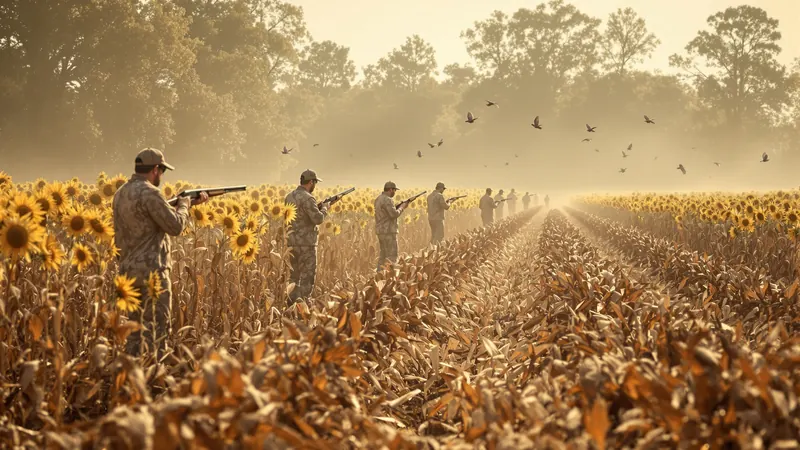
How to Plant, Manage and Run a Dove Field for Paid Hunts
From choosing sunflowers or millet to mowing strips that stay legal, spacing shooters safely and checking in a full field on opening morning, here is how paid dove hunts come together.
12 min read
Hunting Lease Agreement: The Clauses That Protect Both Sides
Clause by clause: what a written lease for hunting rights should say about boundaries, money, guests, stands, liability and ending the deal, from the landowner side and the outfitter side.
13 min read
How to Start a Hunting Club That Members Still Like in Five Years
A club lives or dies on its paperwork: who belongs, what dues cover, who signs the lease, how stands are assigned and where the money goes. Here is how to set that up.
12 min readSpend the season in the field.
Let HuntReserve run the office.
Tell us about your outfit. We'll call you, walk you through it with your own hunts and get you set up.