Home / Blog / By hunt type
Wingshooting operations: September planning
How to Plant, Manage and Run a Dove Field for Paid Hunts
From choosing sunflowers or millet to mowing strips that stay legal, spacing shooters safely and checking in a full field on opening morning, here is how paid dove hunts come together.
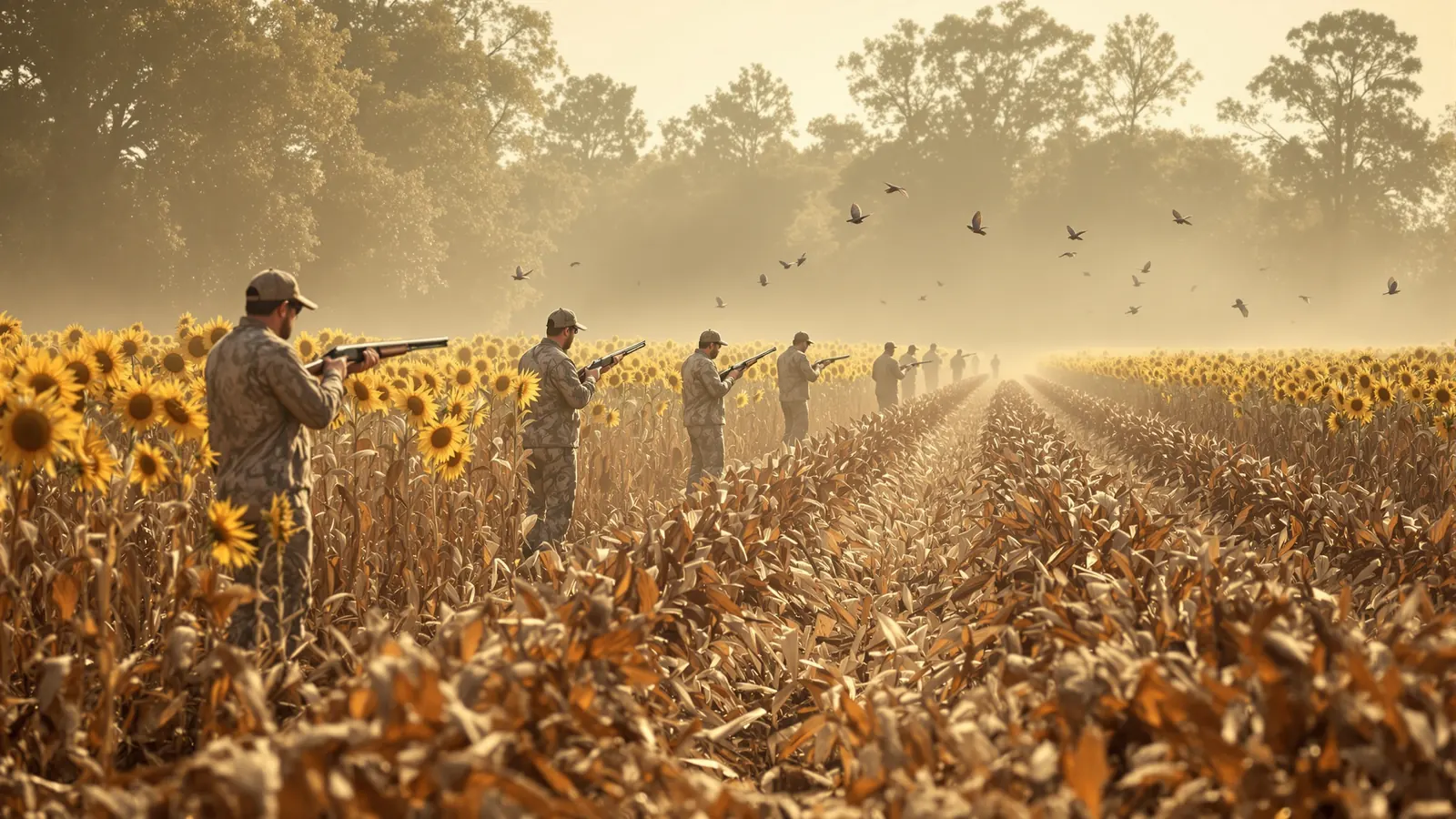
A good dove field is planned in the spring, legal by the end of summer and busy for a few weeks in September. For an outfitter, preserve or club selling paid dove hunts, the field is the product: the crop that pulls birds, the manipulation that makes seed available, the stations where shooters stand and the check-in that gets twenty or forty people into place before shooting hours.
This guide covers the full arc: crop choice, timing to opening day, what federal baiting rules allow, how to set safe stations and capacity, and how to run the day. Federal and state migratory bird rules apply to every step, and they are cited from the U.S. Fish and Wildlife Service and the federal regulations where they matter.
Short answer
A paid dove field usually starts with a crop like sunflowers, millet or wheat planted to State Extension recommendations and timed to mature before the September opener. Mowing or discing that crop where it grew is generally allowed for doves, while bringing in seed is baiting. Space stations safely and confirm each hunter's license and HIP before shooting.
Choosing the crop
Doves feed on the ground and prefer small seeds lying on open, fairly bare soil, and a productive dove field gives them exactly that. The crop you pick decides how much seed is on the ground on opening day and how easy it is to make that seed available legally. The common choices each have a different personality:
| Crop | Why operators like it | What to watch |
|---|---|---|
| Sunflowers | Large seed heads, strong draw, easy to manipulate in strips over several weeks | Needs good weed control and enough time to mature and dry down; bird and deer pressure before harvest |
| Browntop or proso millet | Shorter time to maturity, small seed doves favor, useful as a backup planting | Seed shatters as it ripens, so timing relative to opening day matters |
| Wheat | Can be harvested as a grain crop, leaving waste grain on stubble | Harvest timing is set by the grain crop, not by the dove season |
| Corn or grain sorghum | Harvested grain fields with waste grain draw birds | Field must be a genuine harvest; leftover grain from normal harvest only |
Many operators plant more than one crop in the same field or in adjacent fields, so there is something to manipulate early and something to hold back for the second or third hunt of the season. Your county Extension office has planting recommendations for your soils and region. Those recommendations are not just good farming. They are the legal yardstick for what counts as a normal planting, as explained below.
Working back from opening day
Every dove field plan starts with a date on the calendar: your state's September opener, or the first date you plan to sell. From there, work backward. Sunflowers need the longest window to grow, flower, mature and dry. Millets can be planted later. Wheat and other small grains follow their own harvest schedules.
A planning sequence that fits most operations:
- Winter: soil test the field and pick crops. Talk to your Extension office about planting dates and rates for your area, and keep a copy of the guidance you used.
- Spring: prepare the ground and control weeds. Plant on the dates your Extension recommendations give, not on whatever day the tractor was free.
- Summer: scout for stand, weeds and pests. Decide which strips will be manipulated for which hunt date.
- Late summer: begin manipulation in stages so seed is on the ground as birds start using the field. Mark station locations and walking lanes.
- Two weeks out: confirm bookings, assign stations and send what-to-bring reminders.
- Season: manipulate fresh strips between hunts to keep birds coming, within the legal limits covered next.
Keep a simple field log: what was planted, when, at what rate, on whose recommendation, and when each strip was mowed or disced. If a game warden ever asks, a dated log with Extension guidance attached answers the question quickly.
Dove field manipulation vs baiting: the federal rule
This is the section that protects your business. Federal regulations make it unlawful to take migratory game birds by the aid of baiting, or on or over a baited area, where a person knows or reasonably should know that the area is or has been baited. That standard is in 50 CFR 20.21(i), and it means a hunter or operator cannot rely on not having personally spread the seed.
The definitions in 50 CFR 20.11 explain the key terms:
- Normal agricultural planting, harvesting or post-harvest manipulation is defined as a planting or harvest done to produce and gather a crop, or manipulation after harvest, conducted in accordance with official recommendations of State Extension Specialists of the Cooperative Extension Service.
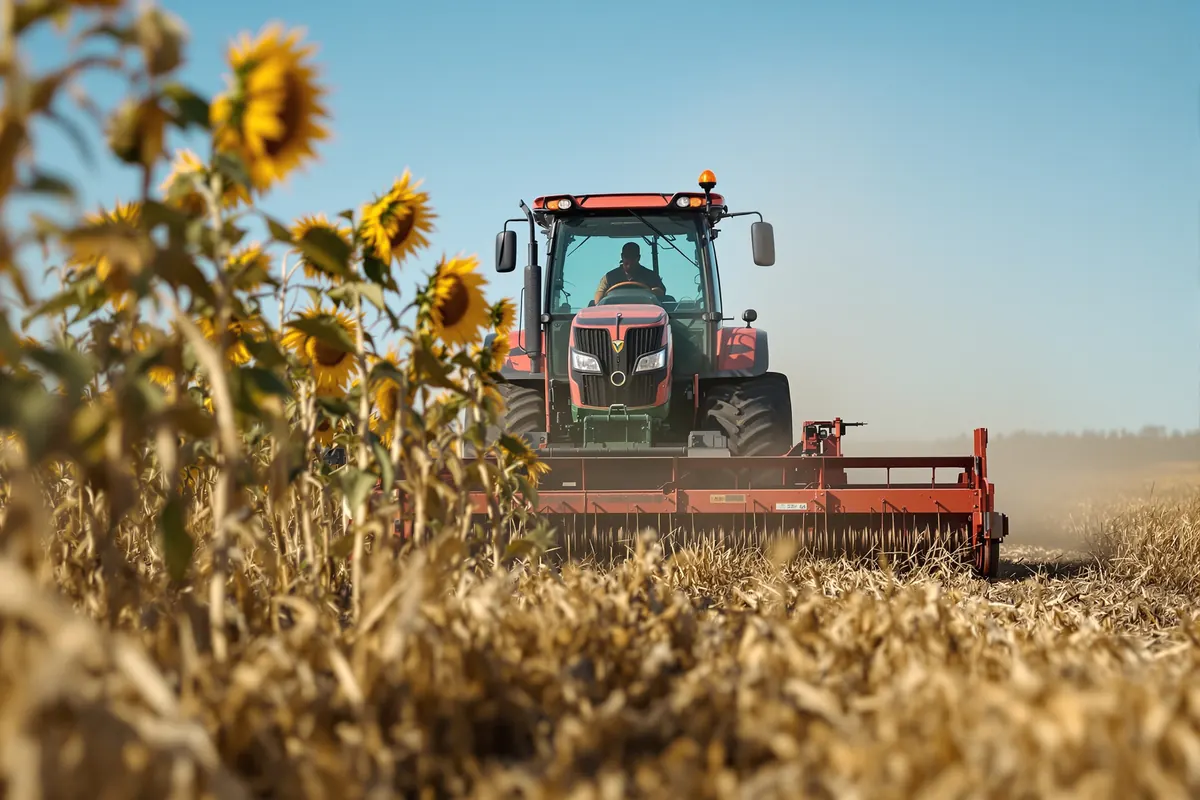
- Manipulation means altering natural vegetation or agricultural crops by activities such as mowing, shredding, discing, rolling, chopping, trampling, flattening, burning or herbicide treatments. It does not include distributing or scattering grain, seed or other feed after it has been removed from or stored on the field where grown.
- A baited area remains a baited area for ten days following the complete removal of all salt, grain or other feed.
Why doves are treated differently from ducks
For migratory game birds other than waterfowl, coots and cranes, 20.21(i)(2) allows hunting over areas where grain or feed has been scattered solely as the result of manipulation of an agricultural crop on the land where it was grown, or solely as the result of a normal agricultural operation. In plain terms: mowing or discing your own standing sunflowers or millet in the field where they grew is generally allowed for doves. The same manipulation would be a problem for waterfowl.
Practices that turn a dove field into a baited field
The Fish and Wildlife Service's information for dove hunters describes baiting as the direct or indirect placing, exposing, depositing, distributing or scattering of salt, grain or other feed, and warns that baiting an area and allowing hunting there risks federal charges. It also notes that removing bait does not remove the lure, which is why the ten day rule exists.
Patterns that commonly cause trouble:
- Hauling in seed. Spreading wheat, sunflower seed or millet that was grown somewhere else, or stored and brought back, is not manipulation.
- Top dressing a planted field. The same FWS page says land planted by top-sowing or aerial seeding can be hunted only where seed remains solely from a normal agricultural planting or soil stabilization practice.
- Plantings that do not follow recommendations. Seeding far outside Extension rates or dates can make a field look like it exists to scatter seed rather than grow a crop.
- Adding grain to "sweeten" a field. Any added feed creates a baited area that stays baited for ten days after it is completely removed.
State rules can be stricter than federal rules. Before your first paid hunt, read your state's dove regulations and, if anything about your plan is unclear, call your state wildlife agency or the nearest FWS Office of Law Enforcement. Asking before the season is far better than explaining after it, and a written answer from the agency belongs in the same folder as your dove field log.
Laying out stations, spacing and safe zones of fire
Dove shooting is fast, birds fly low over the dove field, and shooters on a crowded field swing toward each other. Station layout is the single biggest safety decision on a paid dove field. There is no national rule for spacing, so build your own standard around a few principles and enforce it every hunt.
- Distance first. Space stations far enough apart that falling shot from one station does not reach another. Check the distances with a rangefinder rather than pacing by eye.
- Use the terrain. Put stations along field edges, fence lines and tree lines where shooters naturally face the field, not in the open middle where they can turn a full circle.
- Mark every station. A stake, flag or bucket at each spot keeps shooters from creeping toward a neighbor who is getting more birds.
- Set no-shoot zones. Roads, houses, livestock, parked trucks and walking lanes need clear boundaries.
- Eye and ear protection. Require it, and keep spares at check-in.
- Low birds. Make "no low shots" a rule everyone hears at the briefing.
Our post on running a safety briefing covers what to say before shooting starts, including zones of fire and how to signal a cease fire across a field.
How many shooters can one dove field handle?
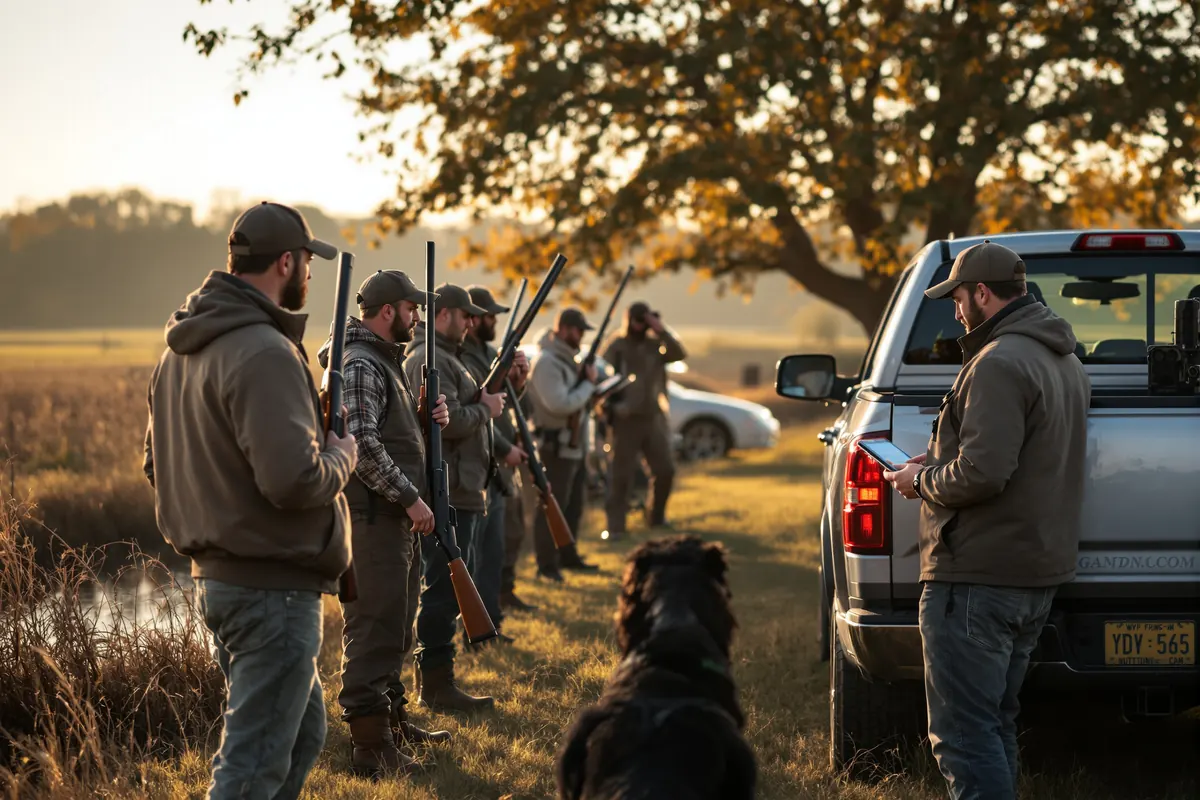
Capacity comes from the station map, not the other way around. Draw the field, place stations at your spacing standard along edges and lanes, mark no-shoot zones, then count. That number is the most guns the field can safely hold. Booking a dove field past that number just to fill a Saturday is how accidents and bad reviews happen.
Other factors that lower practical capacity:
- How many strips are manipulated and holding birds on that date.
- If you rotate fields so each one rests between hunts.
- Parking, restrooms, shade and water for a full field in September heat.
- How many staff you have to place shooters, pick up birds and handle problems.
In HuntReserve, the Hunt Calendar lets you set a daily limit per hunt type, so the booking page stops selling once the field is full, and blackout days keep rest days protected. Property maps hold your fields and stand or blind locations, so station assignments stay consistent from one hunt to the next. The dove and wingshooting software page shows how that fits a full season.
Packaging and selling the hunts
The same dove field can be sold several ways, and the model you choose changes how you plan crops, capacity and staff. The common structures:
- Per-gun day hunts. Each shooter books a station for a single date. Simple to sell, but every hunt is a new group to brief and check in.
- Group or corporate hunts. One party books the whole field for a date. Fewer strangers on the field and one point of contact, but a cancellation leaves the whole day open.
- Season memberships. A club or preserve sells access to a set number of hunts across the season, with dues collected up front.
- Combination days. A morning dove shoot paired with clays, a lunch or a cleaning service for the birds.
Write down exactly what each package includes: number of hunts, station assignment rules, guests, bird cleaning, meals, and what happens if the opener is rained out. Hunters compare those details more than they compare prices.
In HuntReserve, packages can be priced per hunter, per day or flat, with deposit rules and add-ons such as bird cleaning or meals, and the total updates as the hunter picks options. Memberships handle clubs, leases and season passes with dues and a ledger; the ranch, preserve and club software page covers that side. With split payments, each shooter in a group can pay their own share instead of one organizer fronting the whole dove field. Payments go to your own Stripe account, and the balance is invoiced automatically before the hunt.
Running check-in on opening morning
Opening day at a busy dove field is a parking lot full of trucks, coolers and shooters who all want their station now. A smooth check-in keeps it legal and safe.
Before anyone walks to a station, confirm for each hunter:
- A valid state hunting license, plus any state migratory bird permit or stamp your state requires.
- HIP enrollment. The FWS dove hunter page states that each hunter is required to enroll in HIP and carry proof of enrollment. Our HIP certification guide explains how that works by state.
- A plugged shotgun if the gun can hold more than three shells. FWS says it must be plugged with a one-piece filler that cannot be removed without disassembling the gun.
- A signed waiver, including a guardian signature for any hunter under 18.
- Their station assignment and the safety rules for the field.
Remind shooters that they may take only one daily bag limit in a day, and that legal shooting hours are set by the regulations, so nobody fires early.
HuntReserve handles most of this before the morning. Each hunter registers from the lead hunter's link, signs the waiver and uploads a license photo. The Check-In Board shows who has registered, signed, uploaded a license and paid, with one-click reminders. Camp Mode on a tablet works offline at a field with no signal.
After the hunt: records, birds and next year
When the last shots are fired, the work shifts to records. The Harvest Log tracks birds by field and guide, with season totals, so you can see which fields and dates produced. Log which strips were manipulated before each hunt, how birds used them and how many guns the field held. Over a few seasons, that becomes the real plan for next year's dove field.
Ask every group for a review while the day is fresh. HuntReserve sends a post-hunt feedback request automatically, so hunters rate the hunt privately and upload photos, and hunters can upload photos and are invited to review you on Google. A waitlist offers cancelled spots to the next hunter with a 24 hour claim link, and Open Spots pushes last minute openings to approved hunters, which matters when a weather forecast shakes a few shooters loose the night before.
If you are planning the broader habitat program around the field, our post on food plots covers soil tests and rotation for deer and turkey ground. See the full list of tools on the features page, and when you are ready to sell next September's hunts online, get started.
Frequently asked questions
Is it legal to mow a dove field?
Generally, yes, for doves. Federal rules allow hunting doves over areas where seed is scattered solely by manipulating an agricultural crop on the land where it was grown, or by a normal agricultural operation. Mowing or discing standing sunflowers or millet where they grew is the common example. Bringing in seed is baiting. State rules can be stricter.
How long after baiting can you hunt doves?
Under federal regulations, an area remains a baited area for ten days after all salt, grain or other feed has been completely removed. Hunting is prohibited where a person knows or reasonably should know the area is or has been baited, so the safest course is to never place feed on a field you plan to hunt.
What is the best crop for a dove field?
Sunflowers are the most common choice because of their large seed heads and how easily they can be mowed in strips, but browntop millet, proso millet, wheat and harvested grain fields all draw doves. Many operators plant a mix so they can manipulate different strips across the season. Follow your Extension office's recommendations.
Do dove hunters need HIP certification?
Yes. The U.S. Fish and Wildlife Service states that each migratory bird hunter is required to enroll in the Harvest Information Program and carry proof of enrollment. HIP is handled through each state's licensing system, so the steps differ by state. Outfitters often check HIP proof at check-in.
How far apart should dove hunters stand?
There is no single federal spacing rule. Space stations so that falling shot from one station cannot reach another, use field edges and tree lines, mark each station, and keep shooters from moving closer to neighbors. Measure distances with a rangefinder and set capacity from the station map.
Sources
- U.S. Fish and Wildlife Service: Information for Dove Hunters
- eCFR 50 CFR 20.21, Hunting methods (baiting provisions in paragraph (i))
- eCFR 50 CFR 20.11, Definitions
Rules, fees and policies change. This guide was checked against the official sources above in October 2026. It is general information, not legal, tax or insurance advice: confirm the current details with the agency or a licensed professional before you rely on them.
Keep reading
More from the HuntReserve blog
HIP Certification: What Migratory Bird Hunters Need Before the Hunt
Who needs to register in the Harvest Information Program, how it works state by state, why the survey matters, and what a guided duck or dove hunt will ask you to show.
12 min read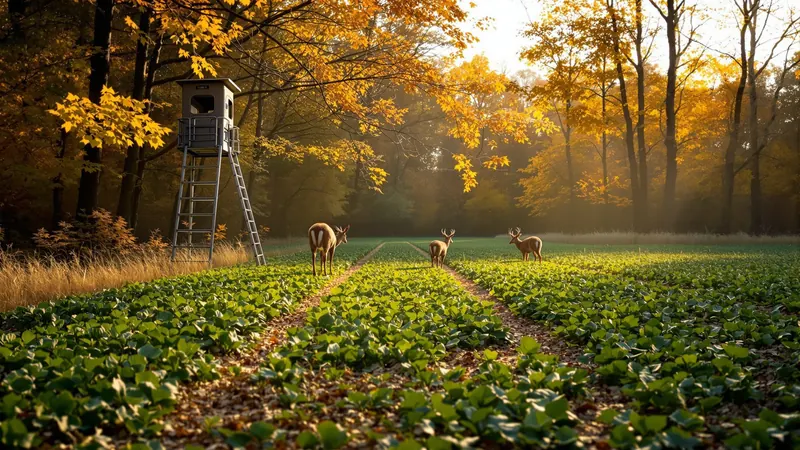
Food Plots for Outfitters and Lease Managers: Planning, Planting and Hunting Them
A plot that feeds deer is not always a plot you can hunt well. How to plan plantings around soil, season, stand access and the law, and keep records that pay off.
12 min read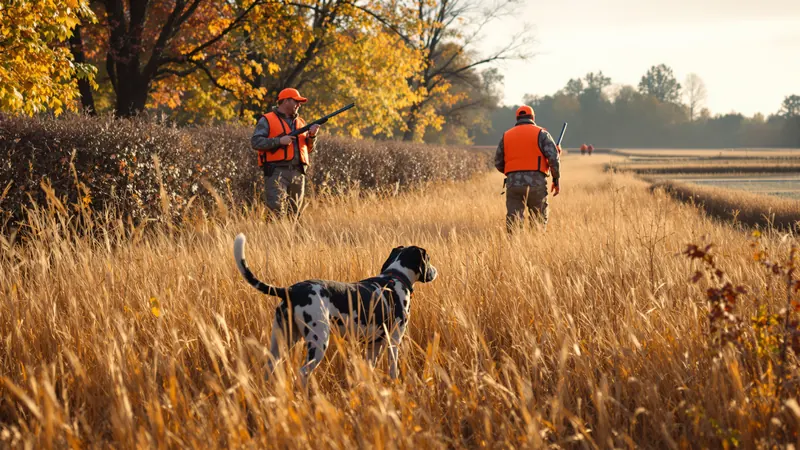
How to Start and Run a Licensed Shooting Preserve
Licensing examples from Georgia and Wisconsin, land and layout, buying healthy birds through NPIP flocks, release records, day hunts versus memberships, and how bird counts shape every booking.
12 min readSpend the season in the field.
Let HuntReserve run the office.
Tell us about your outfit. We'll call you, walk you through it with your own hunts and get you set up.