Home / Blog / Waivers & compliance
Compliance for outfitters and guides
The Harvest Report: Deadlines, Who Files It, and a Camp Routine That Never Misses One
Mandatory harvest reporting has short clocks and the hunter usually owns the duty. Here is how real state rules work and how an outfit makes sure every animal gets reported.
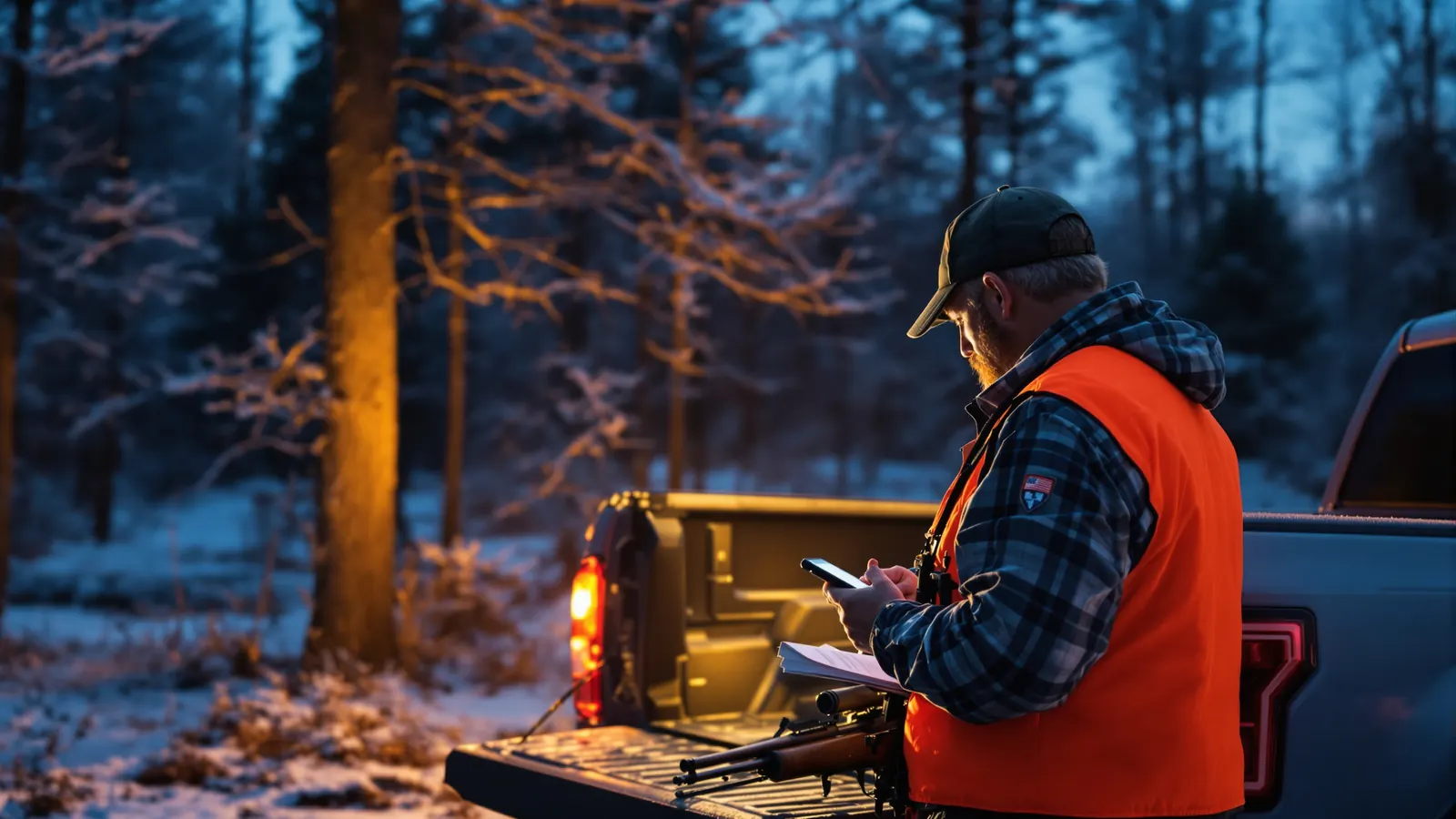
A harvest report is the record a hunter files with the state wildlife agency after taking certain game, usually within hours, and it is one of the easiest rules to break in a busy camp. The deer is down at dusk, the group is cold, the truck is running, and nobody is sure who was supposed to call it in.
For an outfitter, a missed report is not just the hunter's problem. It can delay processing, hold up a cape at the taxidermist and put your guides in an awkward spot with a game warden. This guide covers how reporting works, three real state examples, and a routine that makes it automatic.
Short answer
A harvest report tells the state wildlife agency that a hunter took a specific animal, when and where. Many states require it for deer and turkey and often for bear, elk or alligator, with short deadlines such as the same evening or within 24 hours. The hunter is usually responsible, but outfitters should build the habit into camp.
What a Harvest Report Is, and What It Is Not
Three different steps get lumped together under "checking a deer," and states use different words for each. Keeping them separate prevents most mistakes.
| Step | What happens | When |
|---|---|---|
| Tagging or notching | The hunter validates the license, permit or tag for that animal | Usually immediately, at the animal |
| Logging | Some states require a field record before the animal is moved | Before moving it, where required |
| Reporting, checking or registering | The harvest report is filed with the agency and a confirmation number issued | By a deadline set in hours or by time of day |
Missouri says it plainly on its tagging and Telecheck page: hunters must notch the permit immediately after harvest, and checking is a separate step that produces a confirmation number. Notching is not reporting.
A mandatory harvest report is also different from the voluntary surveys some agencies mail out after the season. Surveys help biologists estimate totals; the mandatory report is a legal requirement tied to a specific animal and deadline.
Missouri, Florida and Wisconsin Rules, Side by Side
The structure is similar from state to state, but the clock and the method are not. Here is how three agencies described their deer rules when we checked their pages in October 2026. Always confirm the current season's rules before you rely on them.
| State | Deadline | How hunters report | What they get |
|---|---|---|---|
| Missouri (deer and turkey) | By 10 p.m. on the day of harvest, before processing, or before leaving the state, whichever comes first | MO Hunting app, phone or online | Telecheck confirmation number |
| Florida (deer and wild turkey) | Log before moving the animal; report within 24 hours, before final processing, before transfer to a processor or taxidermist, or before leaving the state, whichever occurs first | Fish|Hunt Florida app, GoOutdoorsFlorida.com, or phone | Report confirmation |
| Wisconsin (deer) | By 5 p.m. the day after recovery | GameReg online, phone, or an in-person station | A 10-character confirmation number |
Sources: Missouri Department of Conservation, the Florida FWC deer harvest reporting page, and Wisconsin DNR's deer registration rules.
Notice the "whichever comes first" language in two of the three. A hunter who leaves a Missouri camp at noon to drive home has to check the deer before crossing the state line, not by 10 p.m. A Florida hunter dropping a buck at the processor has to report before handing it over, even if 24 hours have not passed.
Who Files the Harvest Report: Hunter or Outfitter?
In the state rules above, the duty sits with the hunter who took the animal. Florida's page states that deer taken under its Private Lands Deer Management Program or Antlerless Deer Program permits must be logged and reported by the hunter who harvested the deer. It also lists who is included: hunters under 16, resident hunters 65 and older, and others exempt from buying a license, who need an FWC customer ID number to report.
That does not mean the outfitter can ignore it. Your guide is standing next to the hunter, your truck is moving the animal, and your processor or cooler is where the deer ends up. If the harvest report has not been filed, the problems land in your camp.
Where the outfitter fits
- Before the hunt: make sure every hunter has the license, tags and any app or account they need to report, and knows the deadline.
- At the animal: the guide confirms the tag is validated before anyone touches the deer.
- Before moving it: in log-first states like Florida, the hunter logs on the phone or a paper log first.
- Back at camp: someone checks that each harvest report was filed and the confirmation recorded before the animal goes anywhere else.
Some states and some species put reporting duties directly on licensed guides or landowner program operators. Read your state's guide and outfitter rules and any program agreements, and check with the agency if you are unsure.
What to Tell Hunters Before They Arrive
The easiest harvest report to file is the one the hunter was ready for before leaving home. Put reporting in your pre-trip information the same way you list boots and ammunition.
- Name the system. Tell hunters which app, website or phone line the state uses, and ask them to install the app and sign in at home on good Wi-Fi.
- Accounts and IDs. Some systems need a customer ID or a license number to start. Hunters who are exempt from buying a license may still need an ID; Florida, for example, requires an FWC customer ID number for them.
- The deadline in plain words. "Report the same day, before we leave camp" is easier to remember than a paragraph of regulations.
- Who does what. Explain that the hunter files the report and the guide helps, so nobody assumes the other person handled it.
- What to bring home. Remind them to keep the confirmation with any meat, antlers or cape they carry.
An automatic "what to bring" reminder a week out, and a day-before message, cover this without anyone having to remember to send it.
Mistakes That Lead to Missed or Wrong Reports
When a harvest report goes wrong in a guided camp, it is usually one of a few predictable errors.
- Wrong tag filled. Two hunters in the same party, similar tags, and the guide notches the wrong one. A tag register by hunter prevents it.
- Waiting for the end of the hunt. A group on a three-day hunt decides to report everything on the last morning. In same-day states, that is too late.
- Assuming the guide reported it. In most states the guide cannot file for the hunter, and the hunter assumed someone else did.
- Wrong location or unit. On large properties that cross unit or county lines, the report asks for the right one. Mark unit boundaries on your property maps.
- Lost confirmation number. Written on a scrap of cardboard that ended up in the burn barrel. Record it in two places.
- Deer moved before logging. In log-first states, the animal should not move until the log entry exists.
Each of these is a process problem, not a people problem, which is why a fixed routine works better than reminders shouted across the skinning shed.
Possession, Transport and the Confirmation Number
The confirmation number is what lets the animal move through other hands legally. Missouri's page is a good example: before an animal is checked, only the person who harvested it may possess and transport it. After checking, it may be processed, stored or transported by anyone as long as it is labeled with the hunter's full name, address, date taken and Telecheck confirmation number.
That has practical consequences for an outfit:
- A guide hauling a client's unreported deer back to camp alone may be on the wrong side of the rule.
- The cooler or skinning shed should not accept an animal until its label shows the confirmation number.
- Meat and capes sent to a processor or taxidermist need the same label information.
- Hunters flying home with meat or antlers should have the confirmation with them.
Florida adds a useful allowance: once a deer has been logged, the hunter may field dress it and begin processing meat afield or at camp before the report is filed, as long as the reporting deadline is still met. Rules like this differ by state, so do not assume your state matches.
A Seven-Step Reporting Routine for Camp
The camps that never miss a report treat it like unloading a rifle: the same steps, in the same order, every time, no matter how late it is.
- At the animal: the hunter validates the tag. The guide checks it and takes a photo of the tag on the animal.
- Before moving: log it if the state requires it.
- Reporting window opens: as soon as there is signal, the hunter files the harvest report on the app or by phone, with the guide present.
- Confirmation recorded: the number is written on the tag or saved in the app, and logged in your camp records.
- Label: the carcass, cape or quarters get a label with name, address, date and confirmation number before going in the cooler.
- Evening check: the camp manager reviews every harvest from the day and confirms each one has a filed report.
- Departure check: no animal or parts leave camp without a confirmation on record.
When there is no signal
Plenty of camps have no service at the skinning shed. Know where the nearest signal is, and remember that phone and app reporting both need a connection at some point. Build the drive to the ridge or the gas station into the evening routine when the deadline is the same day.
Keeping a Tag Register for Every Hunter in Camp
A tag register is a simple list of every tag in camp: whose it is, what species and unit it covers, its number, its status (open, filled, reported) and the confirmation number once a harvest report is filed. It saves you when a warden stops by or when two hunters in the same party have similar tags.
| Field | Why you need it |
|---|---|
| Hunter name and license number | Matches the tag to the person |
| Tag or permit type and number | Prevents filling the wrong tag |
| Species, sex and unit or area | Confirms the harvest is legal for that tag |
| Harvest date, time and location | Feeds the report and your own records |
| Guide | Who to ask if questions come up later |
| Report deadline and confirmation number | Proof the duty was met |
Outfits that hold their own tags, such as landowner or ranch permits, need the register even more. See our guide to landowner tags for how those programs work.
Beyond Deer: Turkey, Bear, Elk, Alligator and Birds
Deer get the most attention, but reporting rules reach further. Missouri and Florida both include turkey in the same system as deer. Some states also require reports for black bear, elk, pronghorn or other big game, and some species add physical checks, tooth samples or tagging of hides.
Alligator programs have their own tags and reporting, including federal CITES tags on hides; see our posts on CITES tags and the alligator hunting license. Migratory bird hunters deal with a different system, the Harvest Information Program, covered in HIP certification.
Some big game programs require a report even when the tag goes unfilled. Utah's Cooperative Wildlife Management Unit page, for example, tells hunters to report information about their hunt within 30 days after it ends, even if they did not harvest an animal. Landowner and ranch programs can carry their own reporting terms on top of the general rules. When you guide on a permit like that, put its reporting duty on the tag register next to the deadline, so a guide can see at a glance whether a harvest report is still owed for an unfilled tag.
Because these rules change and differ by unit and season, build a one-page sheet for each species you guide, listing the deadline, method and any physical check, and update it from the agency's regulations every year. If something is unclear, call the agency's regional office before the season, not during it.
How HuntReserve Pre-Fills the Harvest Report
HuntReserve keeps a tag register for your own tags and your clients' tags. When a guide logs a harvest in the Harvest Log (species, location, guide), the state report is pre-filled with the details and a deadline countdown, ready to copy into the state's site or app. The hunter still files it; you just stop relying on memory.
- Every hunter uploads a license photo from a phone before arrival, so you know tags are in hand.
- Camp Mode on a tablet captures license photos and paperwork offline, then syncs when you are back in range.
- The processing tracker follows hides, meat, skulls and mounts, and hunters get a status page with text and email updates.
- Season totals and success rates build up from the same harvest entries.
The point is not to replace the state's system. It is to make sure that by the time the hunter opens the state app, every field the harvest report asks for is already sitting in front of the guide, and the camp manager can see which ones are still open before anyone loads a truck.
See how it fits on the whitetail outfitter software and turkey outfitter software pages, or the full features list. When you want it running before next season, get started.
Frequently asked questions
What is a harvest report in hunting?
It is a mandatory notice to the state wildlife agency that a hunter took a specific animal, filed by app, phone or website within a set deadline. The agency issues a confirmation number that proves the animal was reported and lets it be processed, transported or mounted legally. Rules vary by state and species.
How long do you have to report a deer harvest?
It depends on the state. As examples, Missouri requires deer to be checked by 10 p.m. on the day of harvest or earlier if processed or taken out of state, Florida requires a report within 24 hours or earlier triggers, and Wisconsin requires registration by 5 p.m. the day after recovery.
Does the outfitter or the hunter file the harvest report?
In most state rules the hunter who took the animal is responsible. Outfitters and guides still play a big part: making sure tags are validated, keeping unreported animals from moving through other hands, and confirming each harvest report was filed before the animal leaves camp. Check your state's guide rules for any added duties.
What happens if you forget to report a harvested deer?
Failing to report on time is a violation in states that require it, and the agency sets the penalty. It can also cause practical problems, since processors, taxidermists and anyone else handling the animal may need the confirmation number. If you miss a deadline, contact the state wildlife agency right away and follow its instructions.
Can you report a harvest without cell service?
Most reporting uses a phone call, an app or a website, so you need a connection at some point before the deadline. Some apps let you start entries offline, but the report is not filed until it reaches the agency. In remote camps, plan the evening drive to signal around the reporting deadline.
Sources
- Utah DWR: Cooperative Wildlife Management Units
- Missouri Department of Conservation: Tagging and Telecheck
- Florida FWC: Deer harvest reporting
- Wisconsin DNR: Deer registration
Rules, fees and policies change. This guide was checked against the official sources above in October 2026. It is general information, not legal, tax or insurance advice: confirm the current details with the agency or a licensed professional before you rely on them.
Keep reading
More from the HuntReserve blog
Landowner Tags in the West: How the Programs Work and How Outfitters Use Them
Colorado vouchers, New Mexico EPLUS authorizations and Utah CWMU permits all route big game tags through private land, with very different rules on transfers, access and sales.
12 min read
The Alligator CITES Tag: What Guides and Outfitters Need to Know
Why American alligators carry CITES tags, how Florida and Louisiana issue them, where the tag goes on the tail, what follows the hide to the tannery and the records an alligator guide should keep.
13 min read
HIP Certification: What Migratory Bird Hunters Need Before the Hunt
Who needs to register in the Harvest Information Program, how it works state by state, why the survey matters, and what a guided duck or dove hunt will ask you to show.
12 min readSpend the season in the field.
Let HuntReserve run the office.
Tell us about your outfit. We'll call you, walk you through it with your own hunts and get you set up.