Home / Blog / Waivers & compliance
Alligator hunts and hide compliance
The Alligator CITES Tag: What Guides and Outfitters Need to Know
Why American alligators carry CITES tags, how Florida and Louisiana issue them, where the tag goes on the tail, what follows the hide to the tannery and the records an alligator guide should keep.
A CITES tag is the small, numbered locking tag that follows every legally harvested American alligator hide from the boat to the tannery and, if it leaves the country, through export. For an alligator guide it is also the piece of plastic that turns a great night on the water into a legal harvest or a violation.
This article explains why alligators carry these tags, how two major alligator states issue and control them, where the tag goes, what happens to the hide and meat afterward and how to keep records that hold up when an officer asks. Rules below were checked today on federal and state sources; always read your state's current regulations before the season.
Short answer
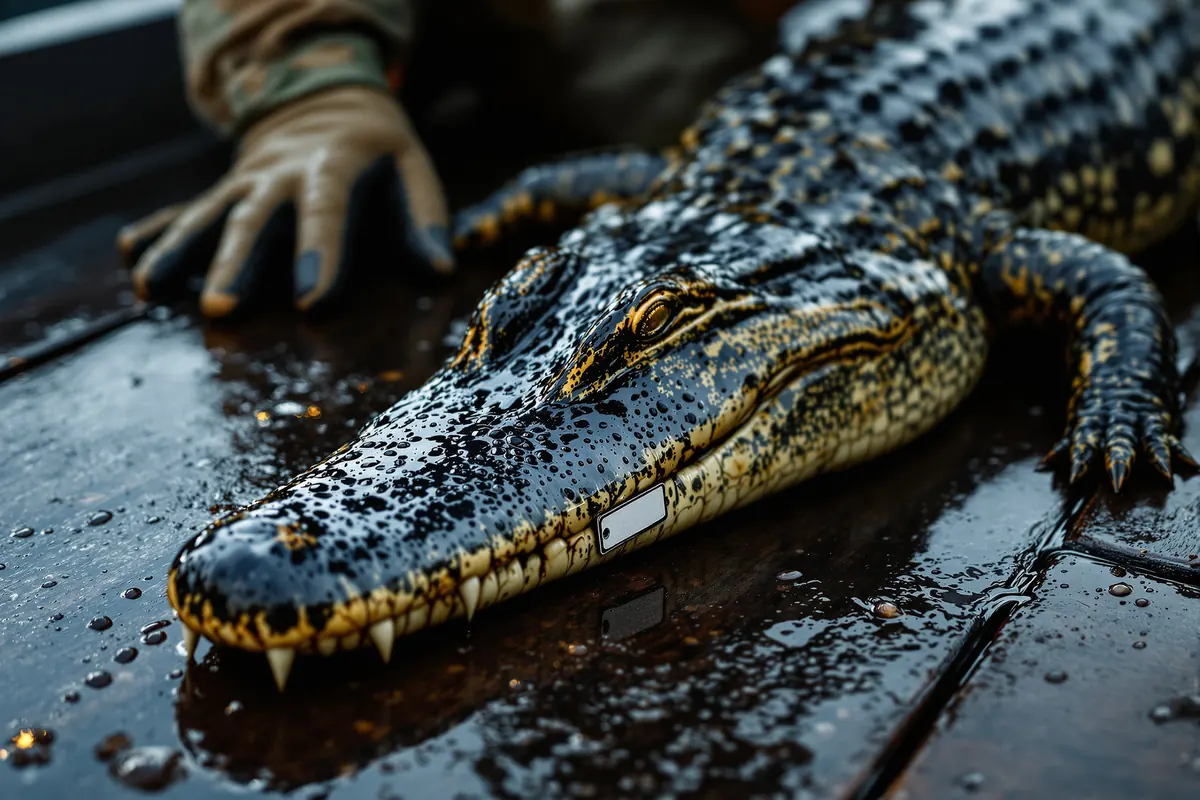
A CITES tag is a serially numbered, single-use locking tag issued through a state alligator program and attached to each harvested American alligator, usually through the tail. It documents that the hide was legally taken so it can be sold, tanned or exported under federal CITES rules. Unused tags must be returned to the state.
Why an Abundant Reptile Needs a CITES Tag
CITES is the Convention on International Trade in Endangered Species of Wild Fauna and Flora. American alligators are not endangered, so the tagging surprises some first-time hunters. The reason is resemblance. Louisiana's 2026 commercial alligator regulations put it plainly: alligators in the state "are not endangered but their similarity of appearance to endangered crocodilian species requires controls on commerce to minimize illegal trafficking."
In other words, a tanned alligator belly skin can look a lot like the skin of a protected crocodile or caiman. If alligator leather moved freely, it would be easy to launder protected skins through the same trade. Tagging every legal alligator hide with a unique, tamper-resistant number closes that gap.
How the federal and state pieces fit
- Federal rules set the tag standard and the conditions for export. Under 50 CFR 23.70, the U.S. Fish and Wildlife Service provides CITES export tags to states and tribes with approved alligator export programs.
- State agencies run the harvest: they decide who receives tags, how many, where they can be used, and how tags must be attached and reported.
- The hunter, guide or outfitter carries the tags, attaches one at the right moment, records the harvest and returns unused tags on time.
What Is Printed on an Alligator CITES Tag
The federal rule describes exactly what a crocodilian skin tag must be and say. Per 50 CFR 23.70, the tag must be tamper-resistant, self-locking, heat resistant and inert to chemical and mechanical processes, because it has to survive salting and tanning still attached to the skin.
| Marking on the tag | What it tells an inspector |
|---|---|
| US-CITES logo | The tag is an official U.S. CITES export tag |
| State or tribe abbreviation | Where the alligator was harvested |
| Species code MIS | Alligator mississippiensis, the American alligator |
| Year of harvest or skin production | Which season the hide came from |
| Unique serial number | The single animal this tag belongs to, linked to the license holder in state records |
The same rule says a skin may be exported only if a non-reusable tag is inserted through the skin and locked in place, and that skins, flanks and chalecos must be individually tagged. A mounted sport-hunted trophy must be accompanied by the tag from the skin used to make the mount. For a guide, the practical point is simple: the serial number on each CITES tag is the thread that connects one specific alligator to one specific permit holder.
How Florida Issues and Controls Tags
Florida's statewide alligator program is a common entry point for guided hunts. According to the FWC's alligator licenses and permits page, a successful applicant receives an alligator trapping license, a statewide alligator harvest permit and two alligator hide validation CITES tags. The permit allows the harvest of two alligators in a designated harvest unit or county.
- Delivery. The FWC says tags should arrive by U.S. mail at least two weeks before the hunt, and permit holders should check that both tag numbers match the license.
- Possession. FWC rules say tags may be possessed only by the permittee or the people the rule lists, and the tags remain Commission property until affixed.
- Helpers. People 16 and older who help with capture, restraint or dispatch need an agent license or a harvest permit, while passengers who only hold a light or drive the boat do not.
Attaching the tag in Florida
The FWC's alligator harvest regulations require that a Commission-issued CITES tag be attached immediately upon killing, locked through the skin of the carcass within six inches of the tip of the tail. The tag may not be altered to compromise the locking mechanism, and each tag can be used only once. Possessing an alligator hide not tagged as prescribed is prohibited.
Florida also requires harvest information to be submitted within 24 hours of taking each alligator and before the carcass is transferred to another person. Unused tags go back to the Commission within 14 days after the harvest permit expires. Guides who run several permit holders through a season should track each client's deadlines separately. Our article on harvest reporting goes deeper on that side of compliance.
How Louisiana Issues Tags by the Acre
Louisiana's system is built around land. The 2026 commercial alligator regulations from the Louisiana Department of Wildlife and Fisheries define the alligator hide tag as an official CITES serially numbered tag issued by the department, and tie tag allotments to specific properties.
- Who gets tags. Landowners, land managers and hunters apply on department forms, certifying the acreage they own or represent. Land managers and hunters must show a signed document from the landowner.
- Whose name is on them. Tags are issued only in the name of the license holder and are nontransferable.
- Where they can be used. A hunter must carry current tags issued for the property being hunted.
- Sport hunters. Louisiana's sport license holders cannot be issued hide tags; they hunt guided by a commercial, nonresident landowner or helper alligator hunter, whose tags are used.
- Attachment. A hide tag must be attached and locked using its locking device in the alligator's tail immediately upon possession by an alligator hunter.
- Returns. Unused tags go back to the department within 15 days following the close of the season.
That sport hunter rule matters to guided operations. When a paying client takes a Louisiana alligator on a commercial hunter's property, the CITES tag on that tail is the guide's or landowner hunter's tag, and the paperwork trail runs through that license. The department also requires notice of trophy skins not sold to commercial buyers within 30 days after the season, on its forms.
For a state-by-state look at the permits themselves, including draws and landowner programs, see our guide to the alligator hunting license in each major state.
Tagging the Alligator in the Boat
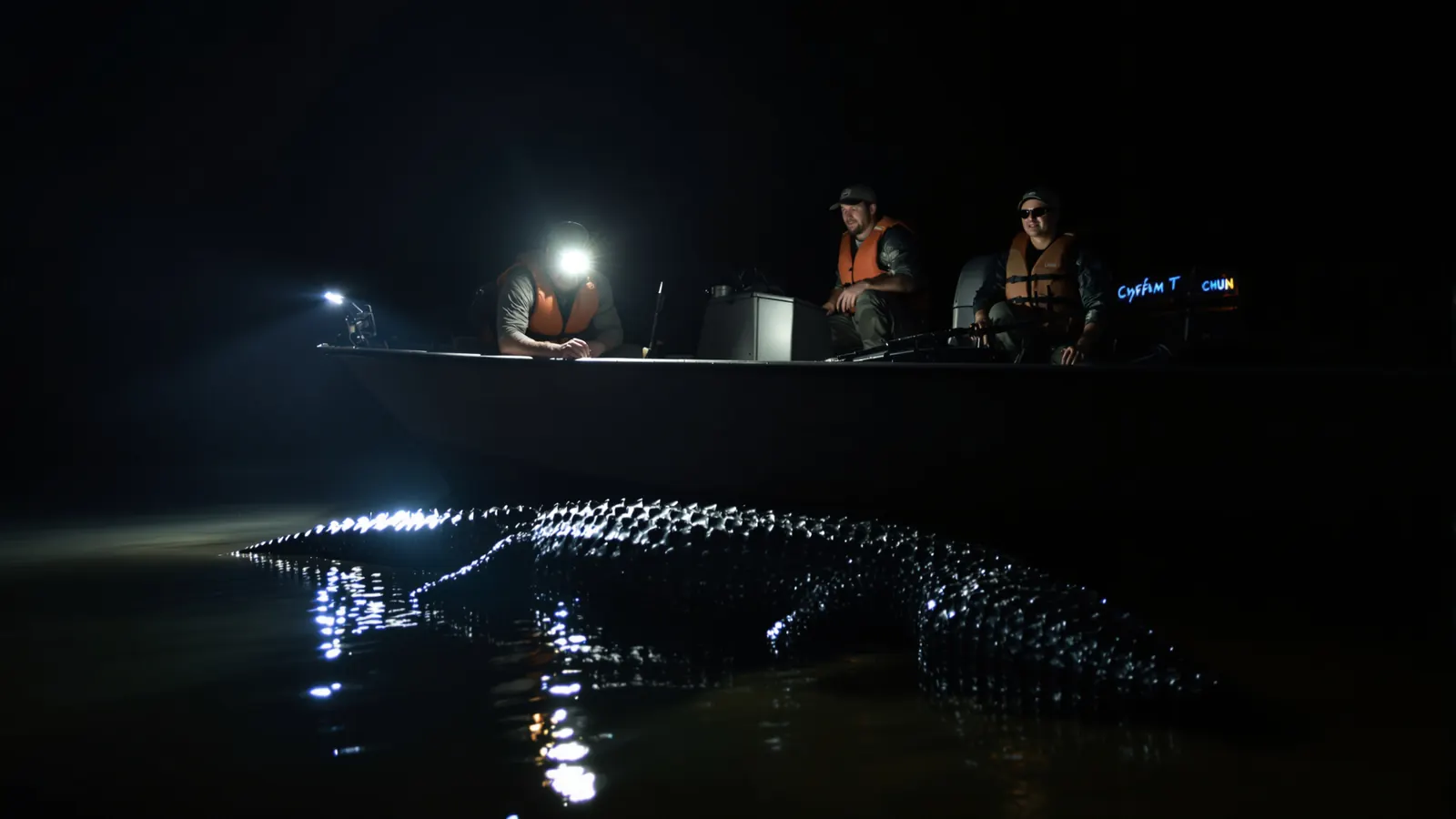
The law says "immediately," and the night itself makes that harder than it sounds. A big alligator alongside the boat at 1 a.m., lines everywhere and a client full of adrenaline is not the moment to look for tags. Build a routine so the CITES tag goes on every time without anyone thinking about it.
- Before launch: confirm whose tags are aboard, check the numbers against the permit or license, and store them in one waterproof pouch in a known place.
- After dispatch: secure the animal, then lock the tag through the tail at the location your state specifies. In Florida that is within six inches of the tip of the tail.
- Check the lock: make sure the tag is fully closed. Never cut, bend or modify the locking mechanism.
- Record it: note the tag number, time, location and length while still on the water, or right at the ramp.
- Photograph it: a quick photo of the tagged tail with the serial visible is cheap insurance for your records.
If a tag fails or detaches, follow your state's instructions. Louisiana's regulations describe reattaching a tag that has come loose and replacement through the department; federal rules allow replacement tags through the state of harvest and then through FWS Law Enforcement if the state cannot replace it.
From the Ramp to the Tannery and Beyond
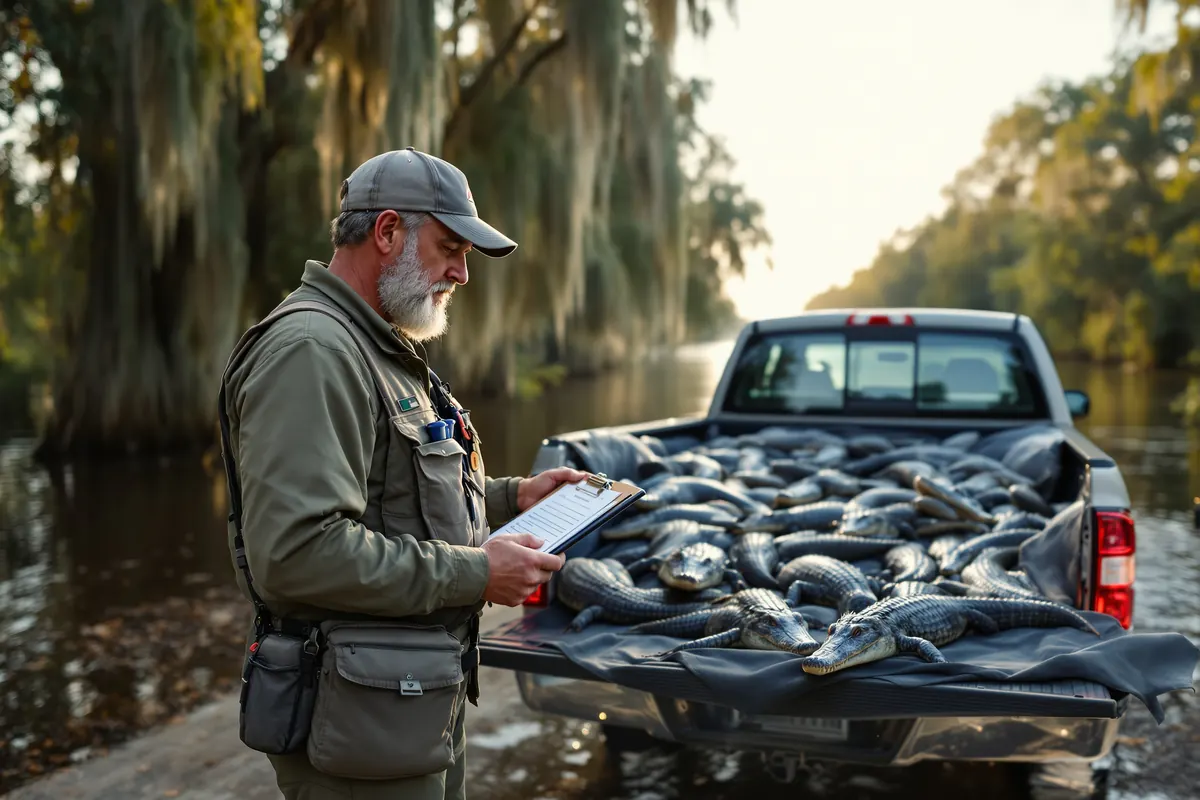
A tagged alligator usually goes to a processor or hide buyer, and the CITES tag number keeps following the animal.
| Product | How the tag number follows it |
|---|---|
| Hide | The tag stays locked in the skin through salting and tanning. In Florida, once a hide is cut, export-bound pieces must immediately have a CITES tag affixed, and tail pieces kept for the domestic market retain the tag of the originating hide. |
| Meat | Florida processors keep records of CITES tag numbers for the carcasses they handle, and sale packages carry the tag numbers of the source alligators. Federally, exported bulk meat containers must show the original U.S. CITES tag number of the corresponding skin. |
| Skull | Louisiana requires exported skulls to carry a tag with the CITES tag number and hunter's name and license number, with the skull physically marked with the original hide tag number. |
| Mount | Federal rules say a mounted sport-hunted trophy must be accompanied by the tag from the skin used to make the mount. |
For a client who wants a skull, a tanned hide or a full mount, explain this chain at booking. Hunters are often surprised that the plastic tag on the tail stays with their trophy, and they need to know not to remove it. If you track trophies for clients, a processing tracker that shows the status of each hide, skull and mount, with updates sent to the hunter, cuts down on calls asking where things stand.
Records an Alligator Guide Should Keep for Every CITES Tag
Most of the trouble outfitters run into with alligator compliance is not a bad harvest. It is a missing number, a late return or a tag nobody can account for. A simple register solves most of it.
A tag register, one row per tag
- Tag serial number and the license or permit it belongs to
- Holder's name: your own tag, a landowner's, or the client's
- Property, unit or county where it may be used
- Status: unused, attached, lost or returned
- For attached tags: date, time, location, length, client and guide
- Where the alligator went: processor, hide buyer, taxidermist or the client
- Report filed and confirmation, plus the return date for unused tags
HuntReserve includes a tag register that holds both your tags and your clients' tags. When a guide logs a harvest, the state report is pre-filled with a deadline countdown, ready to copy into the state's system, and the Harvest Log keeps species, location and guide for season totals. That is not a substitute for knowing the rules; it is a way to stop a 24-hour deadline from slipping past during a week of night hunts.
Keep records for as long as your state requires and longer if you can. Florida, for example, requires processors and hide dealers to keep their tag records for one year, and having your own matching file makes any question from a buyer or officer easy to answer.
Mistakes That Turn a Good Night Into a Citation
None of these require bad intent. They happen when a crew is tired, a boat is crowded or a client is excited. Each one is easy to prevent with a habit.
- Tagging at the ramp instead of in the boat. Both states quoted above use the word "immediately." Waiting until you are back at the truck is not what the rule says.
- Using the wrong person's tag. With several permit holders aboard, a CITES tag from one client's permit can end up on another client's alligator. Keep each holder's tags in a separate labeled pouch.
- Hunting the wrong property or unit. In Louisiana tags are issued for specific property; in Florida the permit names a harvest unit or county.
- Letting a client pocket spare tags. Unused tags have return deadlines. Collect them at the end of the trip and log who returns them.
- Removing the tag for a photo. Hunters sometimes want a clean tail in pictures. Do not let anyone pull a locked CITES tag for a photo; take the picture with it on.
- Losing the record. A tag number scribbled on a cooler lid is not a record. Write it where the whole office can find it.
If something does go wrong, call the state agency early and explain. Agencies deal with damaged tags and honest mistakes every season, and a prompt, documented call usually goes better than silence. Then fix the habit that caused it before the next trip goes out.
Explaining Tags to Clients Before the Hunt
Clients who understand the tag before they arrive are easier to guide and less likely to make a mistake that costs everyone. Put a short explanation in your confirmation email and repeat it at the ramp.
- Whose tag it is. In Florida, a client with their own permit brings their own tags. In Louisiana, a sport hunter uses the commercial or landowner hunter's tag.
- What counts against the tag. Each tag is one alligator. Once locked, it is used.
- What stays on the trophy. The tag stays in the hide through tanning and goes with a mount.
- What the client must sign or report. Some states put reporting on the permit holder, so the client may need to act within a short window.
Because alligator nights carry real risk, most outfitters also want a signed waiver that names the hazards; our article on the hunting liability waiver covers what it should include.
Every hunter in the party can register before the trip, sign your waiver on their phone and upload their license or permit, which gives you permit and tag numbers ahead of time on the check-in board, so you know before launch which CITES tag belongs to whom. Outfitters who also run deer, hog or waterfowl hunts can keep everything in one hunting outfitter software account, and our alligator guide software page shows how bookings, permits and harvests sit together, and the complete tool list is on our features page. When you want help setting it up for next season, get started here.
Frequently asked questions
What is a CITES tag on an alligator?
It is a numbered, single-use locking tag issued through a state alligator program and attached to each legally harvested American alligator, typically through the tail. The number links the hide to the permit or license holder, so the skin can be sold, tanned or exported under federal rules that control trade in crocodilian skins.
Why do alligators need CITES tags if they are not endangered?
Because alligator skins look similar to the skins of protected crocodilians. Louisiana's regulations explain that this similarity of appearance requires controls on commerce to limit illegal trafficking. Tagging each legal hide with a unique number makes it much harder to pass off a protected species as legal alligator leather.
Where do you put the tag on an alligator?
It depends on the state. Florida requires the tag to be locked through the skin within six inches of the tip of the tail immediately upon killing. Louisiana requires the hide tag to be locked in the tail immediately upon possession. Read your state's current regulations before the hunt.
Can a hunter transfer CITES tags to someone else?
Generally no. Louisiana issues hide tags only in the name of the license holder and makes them nontransferable, and Florida limits possession to the permittee and the people its rule lists. Agents or helpers may assist under each state's rules, but the tags stay tied to the permit holder. Confirm the current details with your state agency.
What happens to unused alligator tags?
They go back to the state on a deadline. Florida requires unused tags to be returned within 14 days after the harvest permit expires, and Louisiana requires return within 15 days after the season closes. Failing to return tags can be a violation and, in Florida, can affect future permit applications.
Sources
- eCFR 50 CFR 23.70: Trade in American alligator and other crocodilian skins, parts and products
- Florida FWC: Alligator harvest regulations
- Florida FWC: Alligator licenses and permits
- Louisiana LDWF: 2026 Commercial Alligator Regulations
Rules, fees and policies change. This guide was checked against the official sources above in October 2026. It is general information, not legal, tax or insurance advice: confirm the current details with the agency or a licensed professional before you rely on them.
Keep reading
More from the HuntReserve blog
Alligator Hunting License Rules by State, and How Guided Hunts Fit In
Gator licensing works differently in every southern state. Here is how Florida, Louisiana, Texas and Alabama handle permits, tags, helpers and guided hunts, checked against each agency's own pages.
12 min read
The Harvest Report: Deadlines, Who Files It, and a Camp Routine That Never Misses One
Mandatory harvest reporting has short clocks and the hunter usually owns the duty. Here is how real state rules work and how an outfit makes sure every animal gets reported.
12 min read
Hunting Liability Waiver: What Yours Should Cover, Clause by Clause
The hunting specific risks, clauses and signing habits that belong in an outfitter's waiver, from tree stands and firearms to minors, guardians, medical consent and how state law can change the picture.
12 min readSpend the season in the field.
Let HuntReserve run the office.
Tell us about your outfit. We'll call you, walk you through it with your own hunts and get you set up.