Home / Blog / Running your outfit
Sportsman shows for outfitters
Hunting Expo Playbook: How Outfitters Turn a Booth Into Booked Hunts
A working plan for outfitters at sportsman shows: which shows fit, what to budget, booth setup, capturing every lead, taking deposits on the floor, fast follow-up and measuring what the weekend returned.
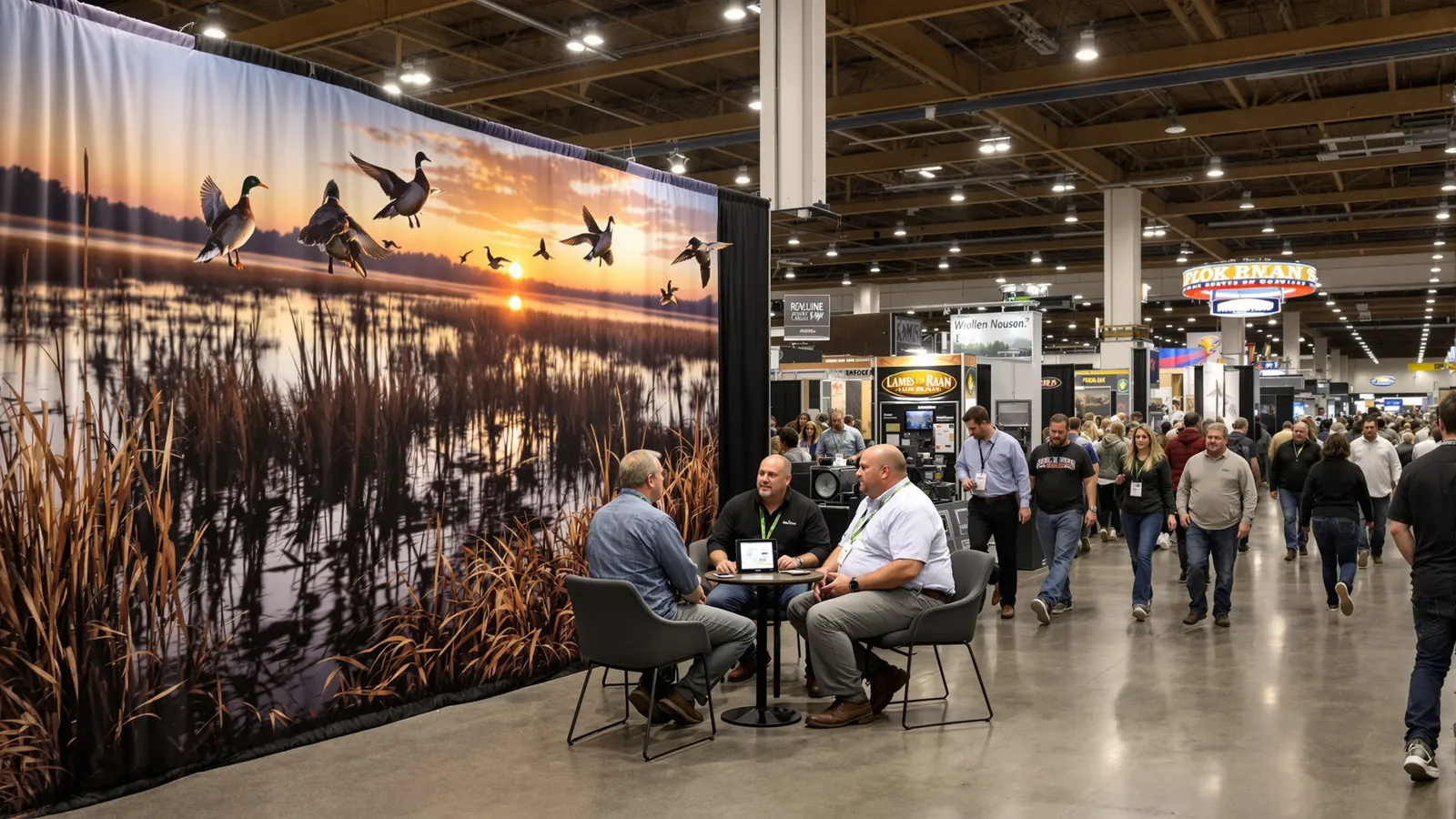
A hunting expo can fill a season or empty a bank account, and the difference is rarely the booth. It is what happens before the doors open and in the two days after they close. Outfitters who book well at shows treat the weekend as a sales process with a start, a middle and an end, not as a place to hand out brochures.
This playbook covers choosing the right show, budgeting without surprises, setting up a booth that starts conversations, capturing leads you can actually use, taking deposits on the floor and following up fast enough to matter.
Short answer
To book hunts at a hunting expo, choose shows whose attendees live where your clients come from, budget for the booth and travel up front, capture every lead with hunt, dates and party size, take deposits on the spot from ready buyers, and follow up with everyone else within 48 hours.
Choosing a Hunting Expo Worth the Trip
Not every show deserves your weekend. A hunting expo with huge attendance can still be the wrong room if the crowd came for bass boats and trail cameras. The best fit is a show where the people walking the aisles are the people who already book hunts like yours, at prices like yours.
Questions to ask the organizer
- Who attends? Ask for the audience profile: home states, species interest, and whether the crowd skews toward families, serious trophy hunters or waterfowlers.
- Who else exhibits? A floor full of outfitters means buyers came to book. A floor full of retail gear means shoppers came to browse.
- What does the booth include? Power, Wi-Fi, carpet, tables, chairs, drape and badges all vary by show.
- Is there a seminar stage? A short talk on hunting your species can draw people to your booth afterward.
- Where will the booth sit? Traffic patterns matter. Ask for a floor plan and where the entrances, food and seminar areas sit.
Match the show to your client map
Look at where your past hunters live. If most of your duck clients drive in from two or three metro areas, a regional sportsman show in one of those cities may beat a famous national hunting expo on the other side of the country. Treat the first year at any hunting expo as a test. A guided elk or sheep outfit, by contrast, often draws from a national pool and can justify a big destination show.
Budgeting the Weekend Without Surprises
Show costs pile up in places people forget. We will not quote numbers here because they vary widely by show and city, but list every line before you commit so you can decide what a booked hunt has to be worth to break even.
| Cost line | What to include |
|---|---|
| Booth fee | Space rental, corner premium, any required membership |
| Booth services | Electricity, internet, furniture, carpet, cleaning, freight and drayage |
| Display | Banners, backdrop, lighting, monitor, mounts or decoy displays |
| Travel | Fuel or flights, hotel, meals and parking for every person working the booth |
| Staff time | Guide or office wages, plus the scouting or prep work that does not happen that week |
| Print and giveaways | Rack cards, business cards, any drawing prizes |
| Follow-up | The hours it takes to respond to every lead after the show |
Add those up and divide by the profit on a typical hunt. If your outfit sells several hunt types, use the hunt you most expect to sell at this hunting expo. That gives you the number of bookings the show must produce to pay for itself. It is a sobering number for a first show, and it makes the rest of this plan feel less optional.
Setting Up a Booth That Starts Conversations
Hunters walking a hunting expo floor make decisions in seconds. Your booth needs to say what you hunt, where and for whom before anyone reads a word of copy.
- One clear headline. Species and state, large enough to read from the aisle. "Guided Arkansas Duck Hunts" beats a logo and a slogan.
- Real photos. Your blinds, your lodge, your guides and clients with birds or animals from your ground. Visitors can tell stock images from the real thing.
- A screen with a slideshow or short video. Flight footage over decoys or a stalk on a mule deer stops people.
- A place to sit. Serious buyers want to talk dates and party sizes, and they will do it longer if there is a chair.
- Visible availability. A whiteboard or screen showing open dates creates urgency without hype.
Keep the table clear. A stack of brochures in front of you becomes a barrier, and a brochure is a poor substitute for a captured lead. More on that next.
If the show offers a seminar slot, take it
A twenty minute talk on something practical, such as reading wind for late season whitetails or setting a spread for pressured ducks, puts you in front of a seated audience that chose to listen. Teach for real and keep the sales pitch to one sentence at the end, with your booth number. People who liked the talk walk over afterward already trusting you, and those conversations tend to be the warmest of the weekend.
Who works the booth
Bring the people who can sell the hunt honestly: the owner and a guide who has actually run the hunts. Visitors ask detailed questions about blinds, terrain, success, licenses and lodging, and a straight answer from the person who will be in the field with them builds trust fast.
Capturing Every Lead on the Show Floor
The biggest leak at any hunting expo is a good conversation that ends with a promise to call. Most of those calls never happen. Your goal is to leave every serious conversation with a record you can follow up on.
What a usable lead record contains
- Name, phone and email
- Hunt or species they asked about
- Rough dates or season
- Party size
- How ready they are: booking now, this season, or just dreaming
- The show name, so you know where the lead came from
- Permission to email or text, noted plainly
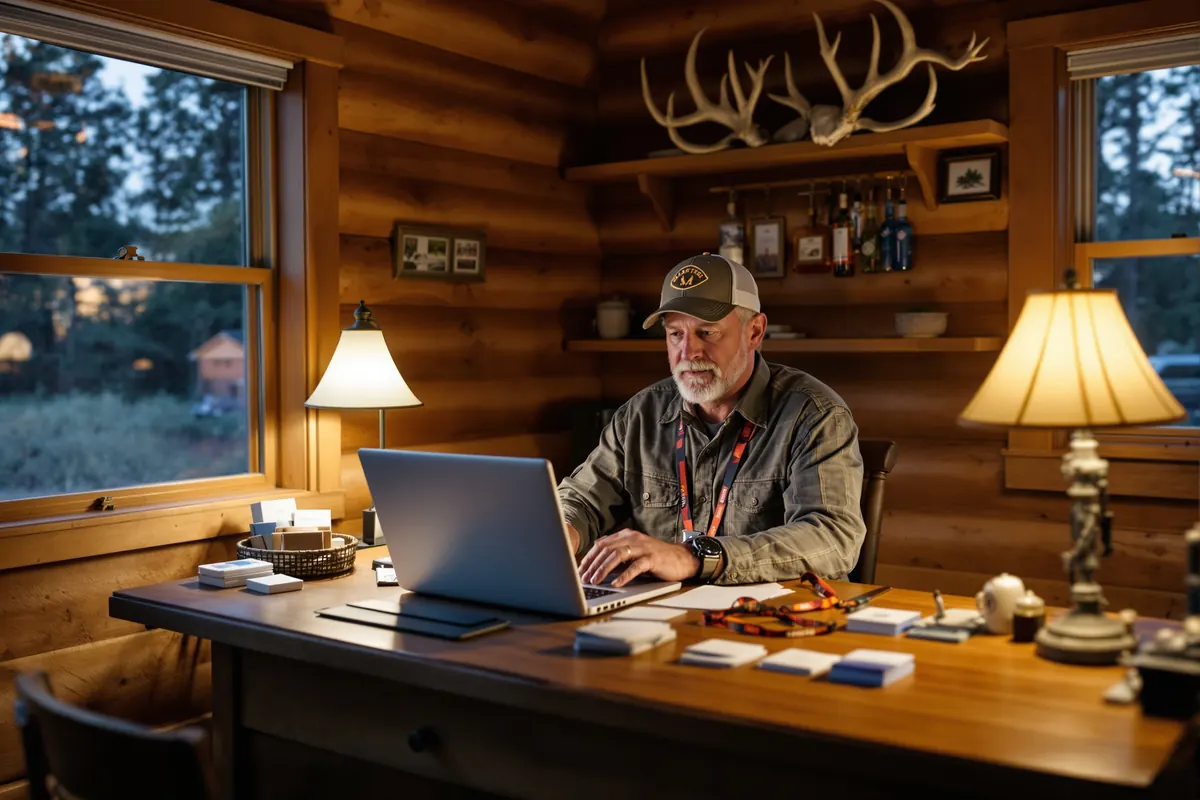
Paper cards work but have to be typed in later, which is where leads go stale. A tablet or phone at the booth opened to your online inquiry form puts the lead straight into your system. In HuntReserve, each inquiry lands on an Inquiries board with the hunt, dates, party size and source, and sends an instant email and notification so nothing sits in a stack of cards in the truck.
Assign one person to own the lead list for the whole weekend. When three people each think someone else is entering cards, nobody does, and the Monday after the show starts with a shoebox of guesswork.
Skip the fishbowl drawing unless you have a plan for it. A bowl full of business cards from people who wanted a free hunt rarely contains many real buyers.
Working the Aisle: Conversations That Become Bookings
A booth is a stage, but the selling happens one conversation at a time. The outfitters who book the most at a hunting expo tend to ask more questions than they answer in the first minute.
Openers that beat "Can we help you?"
- "What are you hunting this year?"
- "Have you hunted ducks in flooded timber before?"
- "How many are usually in your group?"
Each one gets the visitor talking about their own plans, which tells you within a minute whether they are a fit. A father looking for a first youth turkey hunt needs a different conversation than four friends planning a late season goose trip.
Qualify kindly, then move on
Not every visitor is a buyer, and that is fine. Some are dreaming about a hunt five years out. Give them a card, invite them to join your email list and turn to the next person. Spending twenty minutes with someone who will never book can cost you the group of six standing behind them.
Answer the questions every hunter asks
Have short, honest answers ready for the predictable questions: what is included, what licenses and stamps they need, how many hunters per guide, what happens if the weather is bad, and how the deposit works. If you cannot answer a license question with certainty, say so and point them to the state agency. Overpromising at a hunting expo is the quickest route to an unhappy client in November.
Taking Deposits Before They Leave the Hall
Some visitors walk up ready to book. They hunted with a friend last year, they already know your reputation, or they came to the show specifically to find a hunt like yours. Do not send those people home with homework.
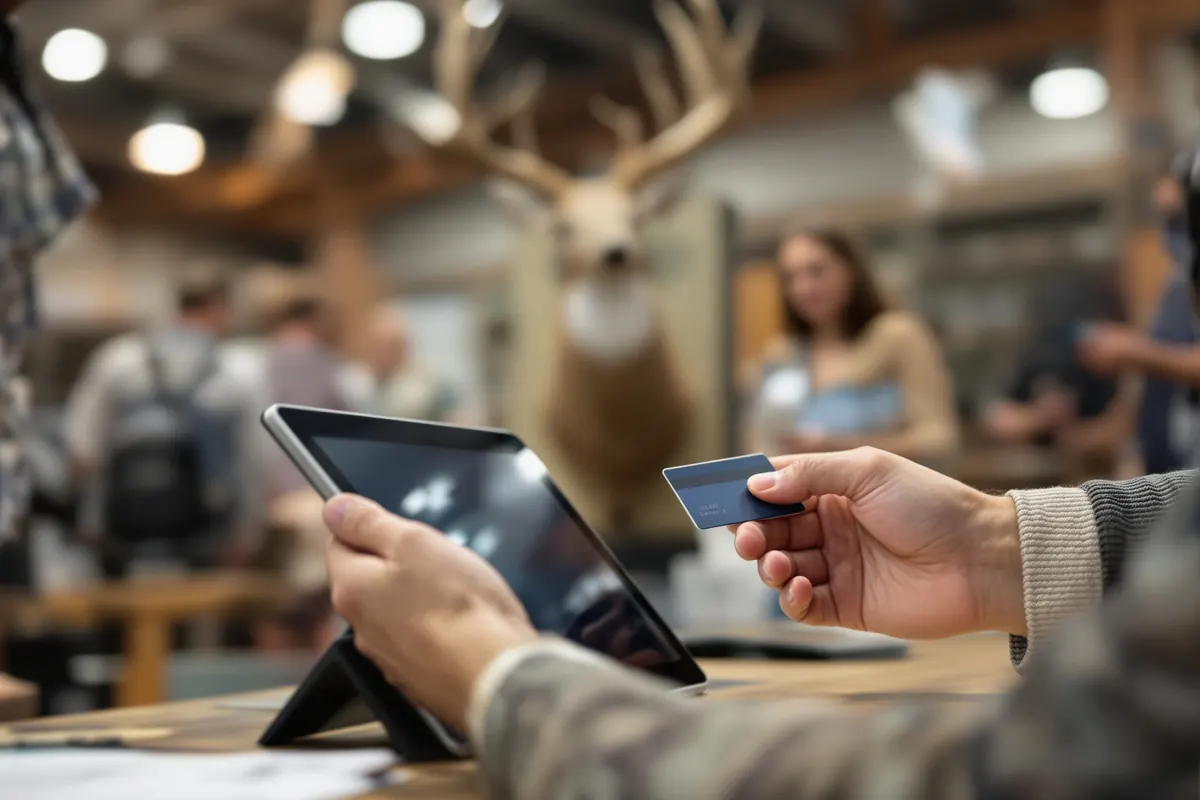
The cleanest way to book on the floor is to have your booking page open on a tablet. The hunter picks the hunt and date, sets the party size, adds lodging or extras, sees the total and pays the deposit with a card. In HuntReserve, deposits go into your own Stripe account, and the balance is invoiced automatically before the hunt with a pay link. If the group wants to split the cost, each hunter can pay their own share later.
When to slow down instead
For high-end or private-land hunts you may want to talk with a hunter before accepting a booking. An approve-before-they-book setup handles that: you approve the hunter after the conversation, and they receive a one-time booking code to finish online. That keeps premium dates from going to someone you have not vetted.
Be clear about your deposit and cancellation terms at the booth, in writing. A hunter who books on impulse and later regrets it is more likely to dispute the charge if the terms were fuzzy. Our article on non-refundable deposits covers how to word them.
The 48-Hour Follow-Up After a Hunting Expo
Interest fades fast after a hunting expo. Visitors met dozens of outfitters, and by Tuesday they remember the ones who reached out first. Plan your follow-up before the show so it happens on schedule even though you will be tired.
| When | Who | What to send |
|---|---|---|
| Same evening | Hot leads (ready to book) | A personal text or call if they gave permission, plus a direct link to the hunt and date they wanted |
| Within 24 hours | Warm leads (this season) | A short personal email: what you discussed, open dates, the link to book, and an offer to talk |
| Within 48 hours | Everyone else who opted in | A thank you email with photos, your hunt list and the best time to book |
| Two to three weeks later | Leads who have not replied | A useful update: new dates, last open spots or a short field report |
Commercial emails must follow federal rules. The FTC's CAN-SPAM compliance guide lists the basics, including no misleading headers or subject lines, a valid physical postal address in each message, a clear way to opt out, and honoring opt-out requests within 10 business days. For ongoing newsletters to show leads, see our guide to email marketing for small business.
Measuring What a Hunting Expo Actually Returned
The weekend felt busy. Was the hunting expo profitable? You cannot answer that unless every lead and booking is tagged with the show it came from. That is why the source field on each inquiry matters so much.
The numbers to track per show
- Leads captured and how many were hot, warm or cold
- Bookings on the floor with deposits taken
- Bookings within 90 days traced back to show leads
- Revenue booked from show leads, not just deposits
- Total show cost from the budget table above
- Repeat value, since a hunter who books once often returns
Compare cost per booking against your other channels. If a show costs more per booked hunt than your search ads or referrals, you either need a better plan for that show or a different show. Some outfitters also keep expenses and profit by hunt in the same system as bookings; HuntReserve tracks expenses and profit and loss by month and by hunt, which makes this comparison less of a spreadsheet project.
Keep notes on every hunting expo while they are fresh: traffic, the crowd, the questions people asked, the booth location and what you would change. That file is how you decide which hunting expo makes next year's calendar.
A Show Week Checklist You Can Copy
Most mistakes at a hunting expo are small logistics failures: a dead tablet, a missing price sheet, a lead list nobody owns. Print this, tape it inside the display case and work through it before and during the show.
Two weeks before
- Open dates confirmed and visible on your booking page
- Deposit and cancellation terms written and printed
- Inquiry form tested on the tablet you will bring, with the show name set as the source
- Follow-up emails drafted and ready to send
- Booth staff briefed on prices, packages and what is included in each hunt
At the show
- Charge every device overnight and bring a battery pack
- Use a phone hotspot as backup if the venue Wi-Fi struggles
- Log every serious conversation before the person walks away
- Note hot leads separately for same-day contact
After the show
- Send follow-ups on the schedule above
- Count leads and bookings by source
- Write your notes for next year
A hunting expo is just one channel in a bigger plan. Our overview of hunting marketing shows how shows fit with your website, reviews and search. For big game outfits that live on destination shows, our big game outfitter software page shows how bookings, deposits and paperwork come together, and the full list of tools lives on our features page. When you are ready to put your next season on a booking page, get started with us.
Frequently asked questions
Are hunting expos worth it for outfitters?
They can be, if the attendees live where your clients come from and you have a plan to capture and follow up on leads. Add up every cost, including travel and staff time, and divide by the profit on a typical hunt. If the show cannot plausibly produce that many bookings, a different show or channel may be a better use of the money.
What should an outfitter bring to a hunting expo booth?
Bring a clear banner naming your species and state, real photos from your hunts, a screen with video, a tablet open to your inquiry form and booking page, printed deposit and cancellation terms, business cards, chargers and a hotspot. Most importantly, bring a guide or owner who can answer detailed questions about the hunts honestly.
Can outfitters take deposits at a sportsman show?
Yes, if your booking system takes cards online. A hunter can pick the hunt and date on a tablet at your booth, see the total and pay the deposit before leaving. Make sure your deposit and cancellation terms are shown clearly first, and have a backup internet connection in case the venue Wi-Fi is slow or overloaded.
How fast should outfitters follow up with leads from a show?
Hot leads should hear from you the same evening, warm leads within a day, and everyone else who opted in within two days. Visitors meet many outfitters over a weekend and tend to remember the ones who reached out first. Draft your emails before the show so tired hands can send them on time.
How can an outfitter tell which show produced bookings?
Tag every inquiry and booking with the show name as its source, then count leads, bookings and revenue per show for at least a few months afterward. Compare that against the full cost of attending. Without a source on each record, results from shows blur together with referrals and website traffic.
Sources
Rules, fees and policies change. This guide was checked against the official sources above in October 2026. It is general information, not legal, tax or insurance advice: confirm the current details with the agency or a licensed professional before you rely on them.
Keep reading
More from the HuntReserve blog
Hunting Marketing for Outfitters: A Year-Round Plan That Books Hunts
A complete plan for filling hunts: a clear position, hunt pages that answer every question, search and AI visibility, reviews, email, video, shows and referrals, measured by bookings.
12 min read
Email Marketing for Small Business, Explained Through a Hunting Outfit
Where an outfitter's email list really comes from, a month-by-month sending calendar, segments by species, the CAN-SPAM basics, inbox delivery rules and how to measure email by bookings.
12 min read
The Non-Refundable Deposit for Guided Hunts and Charters: How to Set It, Word It and Defend It
A deposit that keeps your calendar honest without starting fights: what it should cover, how to word and disclose it, what to do when you cancel, and how to win disputes.
12 min readSpend the season in the field.
Let HuntReserve run the office.
Tell us about your outfit. We'll call you, walk you through it with your own hunts and get you set up.